Roof Repairs
Parapet Wall Leak Checks for Dublin City and Lucan Homes
A practical guide to spotting parapet wall roof leaks, coping defects, flashing problems, damp patches, and gutter issues around homes in Dublin City, Lucan, Bray, Wicklow, Naas, and nearby areas.

Parapet walls are common on Dublin City terraces, extensions, flat roofs, garages, and some older or renovated homes. They can look simple from the street, but they add several roof details that must work together: coping stones, lead or membrane flashing, roof coverings, gutters, outlets, render, and sometimes a hidden flat roof behind the wall.
When one of those details fails, water can enter the wall, track behind plaster, stain ceilings, or appear well away from the actual leak point. That is why parapet leaks often need careful diagnosis rather than another quick bead of sealant.
This guide explains what homeowners in Dublin City, North Dublin, South Dublin, Lucan, Bray, Wicklow, Naas, and nearby areas can check safely, what usually causes parapet leaks, and when to ask Perfect Roofing to inspect the roof properly.
What is a parapet wall on a roof?
A parapet is a low wall that continues above the roof edge. On homes, it may sit:
- Between two terraced houses
- Around a flat roof extension
- Along a garage or porch roof
- Beside a valley, dormer, or roof terrace
- At the edge of a rear return or side extension
- Near a chimney, party wall, or box gutter
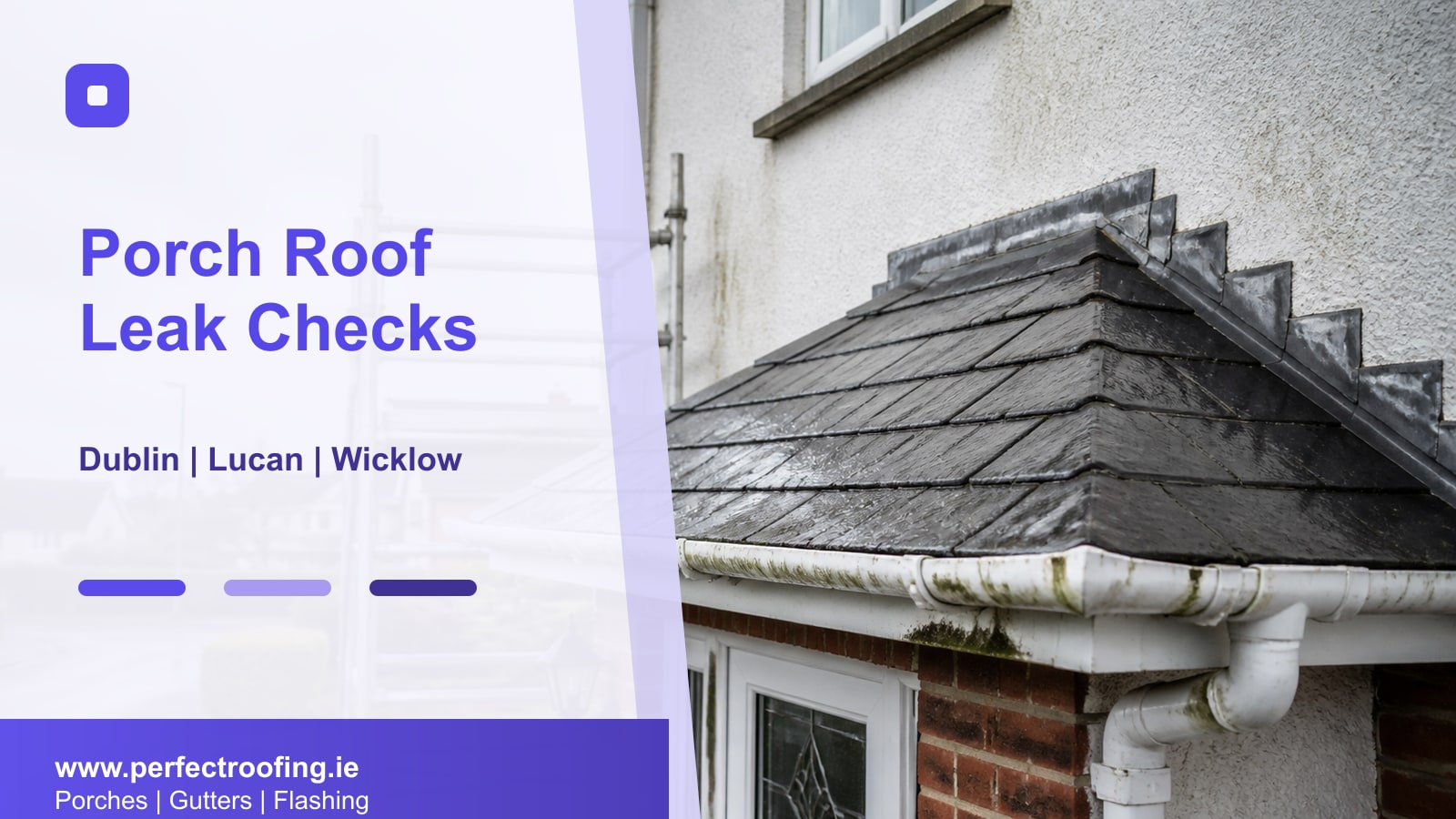
The top of the parapet usually has coping stones, concrete capping, metal capping, or another protective finish. The sides should be weathered with flashing, render, leadwork, membrane upstands, or other roof-edge details that direct rain away from the building.
If water gets through the top, side, or base of the parapet, it can be difficult to trace. It may soak into masonry first, then show up indoors after a delay.
Signs a parapet wall may be leaking
Start with indoor checks. They are safer and often give useful clues before any roof access is arranged.
Look for:
- Brown or yellow staining near the top of an external wall
- Damp patches close to the ceiling line
- Bubbling paint or plaster along a party wall or extension wall
- Peeling wallpaper after heavy rain
- Musty smells in a room below a flat roof or parapet
- Damp marks that appear after wind-driven rain
- Staining below a chimney, valley, or roof edge close to the parapet
- Water appearing near a window reveal or boxed-in beam
Take photos from the same angle every few days if the mark is changing. Note whether it appears after rain, after wind from one direction, or during colder indoor conditions. That helps separate likely external water entry from condensation or ventilation issues.
Common parapet leak sources
Parapet leaks are often caused by a combination of small defects. A roof may have one obvious crack, but water could also be entering through a hidden upstand, blocked outlet, or loose flashing.
Common sources include:
- Cracked, loose, or poorly bedded coping stones
- Open joints between coping stones
- Missing or failed overhangs and drip grooves
- Split lead flashing or poorly dressed flashing edges
- Flat roof membrane that does not turn up high enough
- Felt, EPDM, GRP, or liquid coating that has pulled away from the wall
- Cracked render or exposed brickwork on the parapet face
- Blocked box gutters or outlets behind the parapet
- Slipped slates or tiles that discharge water towards the wall
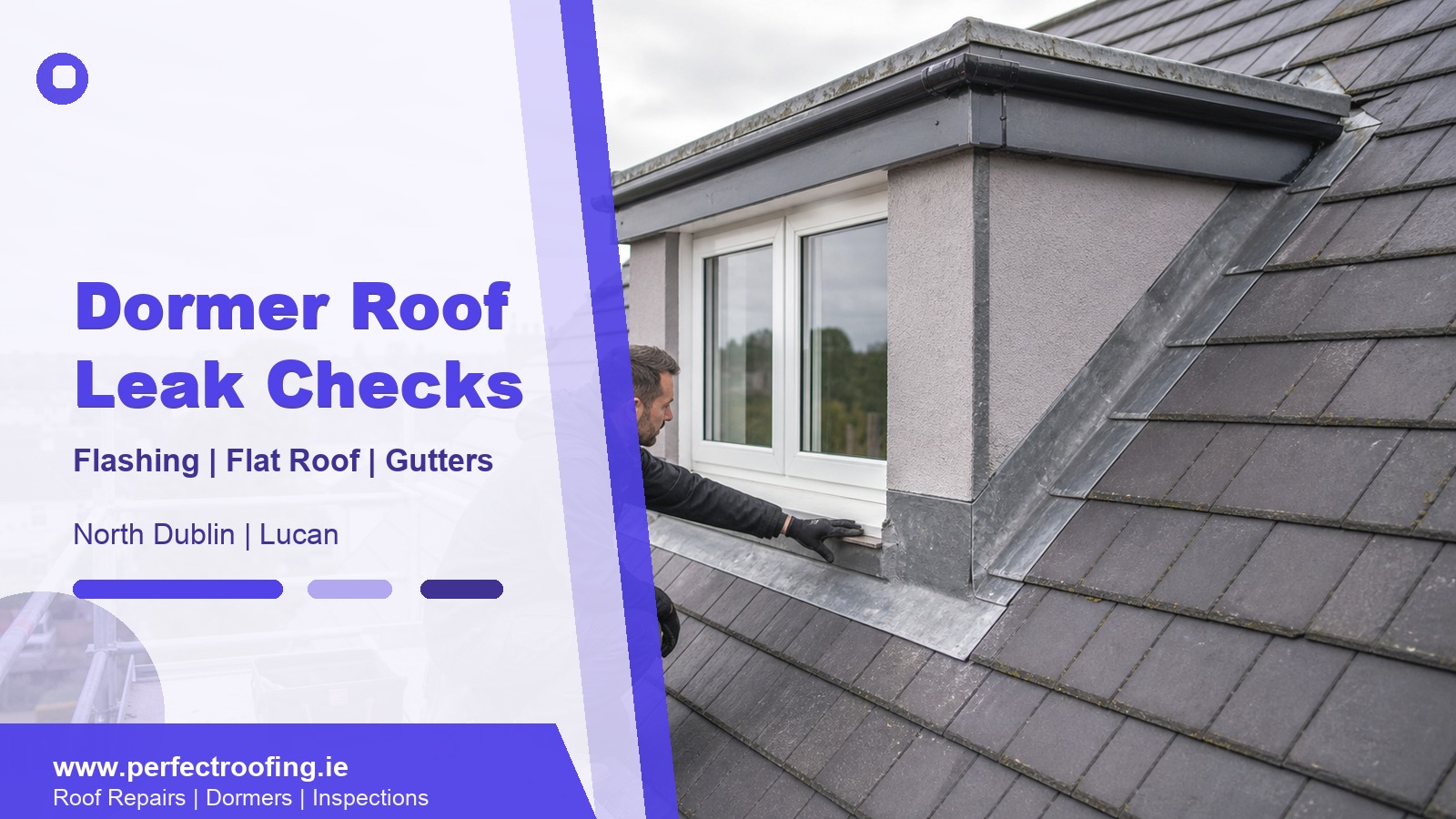
- Poor junctions where a parapet meets a chimney, dormer, or valley
The repair should match the source. Repointing coping joints will not solve a leak if the real failure is a split roof membrane at the base of the wall.
Coping stones and capping details
The top of the parapet gets direct rain, frost, wind, and sun. If the coping detail is weak, water can soak down through the wall rather than being thrown clear.
From the ground or a safe upstairs window, check whether you can see:
- Cracked or rocking coping stones
- Open joints between stones
- Staining below one section of coping
- Vegetation growing from joints
- Old sealant or cement patches
- Copings that appear flat, narrow, or badly aligned
- Damp streaks down the rendered face
A good coping detail should help rain shed away from the wall face. If water runs back under the edge or sits in open joints, the wall below can remain damp long after the rain has stopped.
Do not climb onto the roof to press, lift, or test coping stones yourself. Loose capping can move unexpectedly, and the roof edge may be slippery or fragile.
Flashing and membrane upstands
Where the roof covering meets a parapet wall, there should be a reliable upstand and flashing detail. This is especially important on flat roofs, low-pitched extensions, and small roof areas hidden from street view.
Possible issues include:
- Lead flashing that has lifted from the wall
- Cracked mortar where flashing is chased into masonry
- Membrane that has split where it turns up the parapet
- Blistered felt near the wall
- GRP or liquid coating cracked at an internal corner
- EPDM pulling away from a vertical surface
- Poorly sealed corners at outlets or returns
- Temporary sealant repairs that have failed again
Flat roof and parapet details need enough height, good corner work, and clean drainage. If water can pond against the wall, even a small weakness can become a persistent leak.
Box gutters and hidden drainage
Some parapets hide a gutter channel behind the wall. These box gutters can be difficult to see, but they are a common reason for damp near roof edges.
Warning signs include:
- Overflow during normal rain
- Staining below the parapet or down a wall
- Damp appearing near a ceiling corner below the gutter line
- Moss, leaves, slate dust, or grit visible near an outlet
- A downpipe that gurgles, overflows, or stays dry during rain
- Previous patch repairs along the same roof edge
Homes in Dublin City and older parts of South Dublin can have narrow access and shared roofline details, so drainage problems may affect more than one property. In Lucan, Bray, Wicklow, and Naas, rear extensions and flat roof areas can also send extra water into older gutter routes if the drainage layout was not updated properly.
How parapet leaks differ from ordinary roof leaks
An ordinary slipped slate or cracked tile often leaves clues on the roof slope below it. Parapet leaks can be less direct because water may enter masonry, travel sideways, or appear inside after the wall has absorbed moisture.
That means the inspection may need to consider:
- The roof covering on both sides of the wall
- The coping and wall face above the suspected leak
- Nearby chimneys, valleys, dormers, roof windows, and gutters
- Whether the damp is worse after wind-driven rain
- Whether staining appears after repeated wet days rather than one shower
- Whether condensation is also present inside the room
Avoid assuming the nearest visible stain is the exact leak source. Water can travel along timbers, behind plasterboard, or inside masonry before it appears indoors.
Safe checks before calling a roofer
You can gather useful information without climbing onto the roof.
Safe checks include:
- Photograph the damp patch indoors and mark the date.
- Check whether the stain grows after rain or stays unchanged.
- Look from the ground for cracked render, open coping joints, or vegetation.
- Use an upstairs window to photograph the roof edge if you can do so safely.
- Check attic or eaves areas for damp insulation or dark timber marks.
- Note whether nearby gutters overflow during rain.
- Check if any previous repair patches are visible from a safe position.
Do not stand on flat roofs, climb ladders, walk along parapets, or lean out of windows to inspect the problem. Roof edges and wet surfaces are high-risk areas without proper access equipment.
Repair options a roofer may recommend
The right repair depends on what the inspection finds. A small, local defect may be repairable, while an older parapet or flat roof edge may need a more complete rebuild of the weathering detail.
Possible repairs include:
- Re-bedding or replacing damaged coping stones
- Repointing open coping or masonry joints
- Repairing or renewing lead flashing
- Improving drip details so water sheds away from the wall
- Repairing a split flat roof membrane at the upstand
- Renewing a failed felt, EPDM, GRP, or liquid-applied edge detail
- Clearing and repairing box gutters or outlets
- Repairing cracked render or damaged wall surfaces
- Checking adjacent slates, tiles, valleys, dormers, chimneys, and gutters
Ask the roofer to explain the likely water path, not just the visible repair. A good parapet repair should deal with water entry, drainage, and the roof edge detail together.
When to arrange an inspection quickly
Do not wait too long if the signs suggest active water entry.
Arrange a roof inspection if you notice:
- Active dripping during or after rain
- A stain that spreads across a ceiling or wall
- Damp plaster near electrical fittings
- Loose coping, missing flashing, or visible open joints
- Overflow from a hidden gutter or roof edge
- Soft plasterboard, sagging ceiling areas, or damp insulation
- Repeated leaks after previous patch repairs
If water is entering the living space, protect belongings, contain drips where possible, and avoid touching damp electrical fittings. Then contact a roofer for a proper external inspection.
Contact Perfect Roofing about a parapet wall leak
Perfect Roofing helps homeowners across Dublin City, North Dublin, South Dublin, Lucan, Bray, Wicklow, Naas, and nearby areas with parapet wall leaks, roof repairs, flat roofing, flashing, gutters, roof inspections, Velux windows, skylights, roof ventilation, and related roofing work.
If you have damp near a parapet wall, extension roof, terrace roof edge, or hidden gutter, contact Perfect Roofing by WhatsApp, phone, or email. Send photos if you can take them safely, describe when the damp appears, and tell us whether the problem is near a flat roof, pitched roof, chimney, valley, or gutter. We can inspect the roof and recommend a practical repair based on your property, access, exposure, and long-term plans.
Need a roofer to take a look?
Send a few photos on WhatsApp, email us, or tap the number to call. We cover Dublin City, North Dublin, South Dublin, Lucan, Bray, Wicklow, Naas, and nearby locations.