Materials
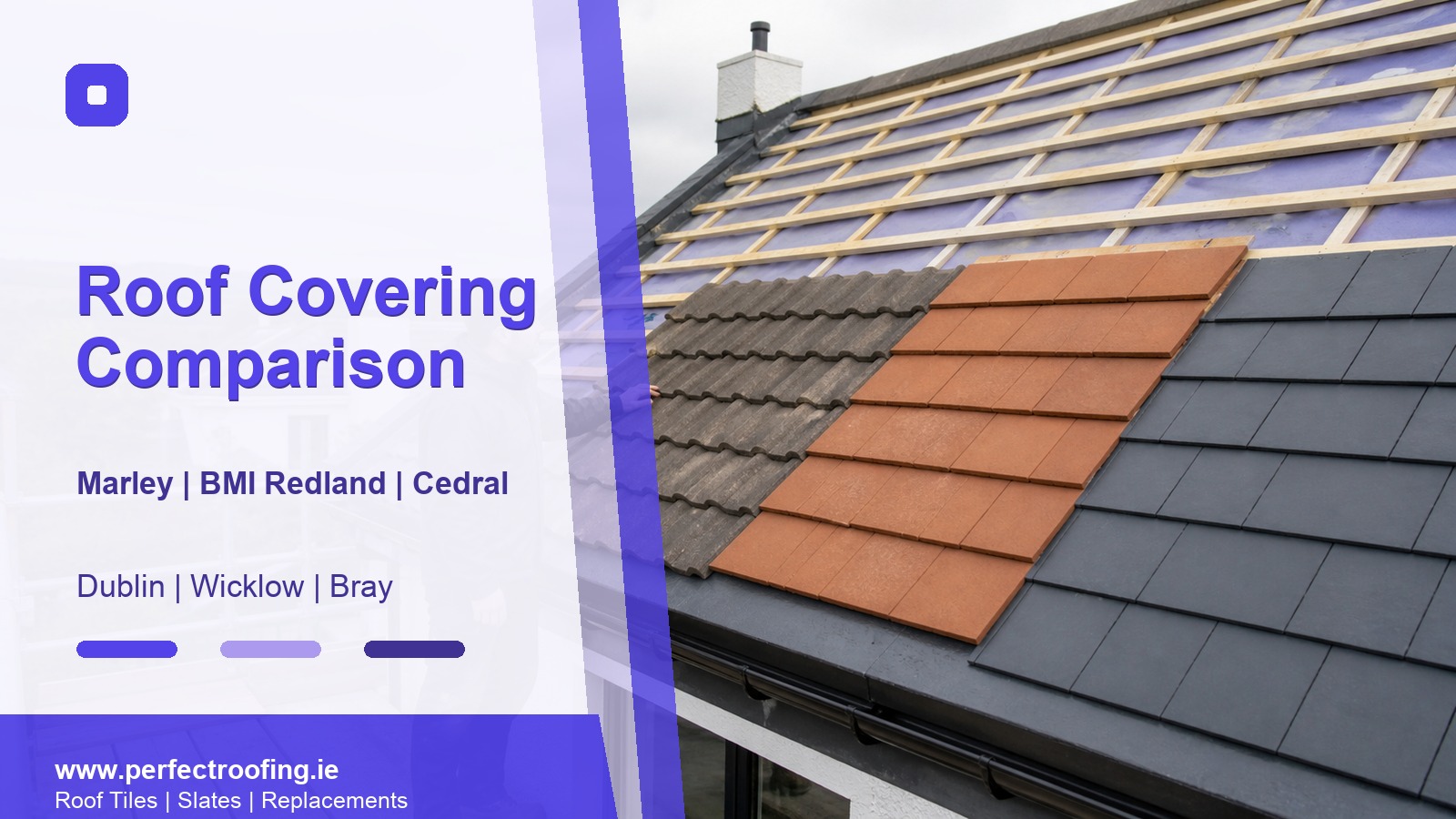
Concrete Tiles vs Clay Tiles vs Natural Slate for Dublin Homes
A practical roof covering comparison for Dublin, Wicklow, Naas, Lucan, Bray, and nearby homeowners comparing concrete roof tiles, clay roof tiles, and natural slate.
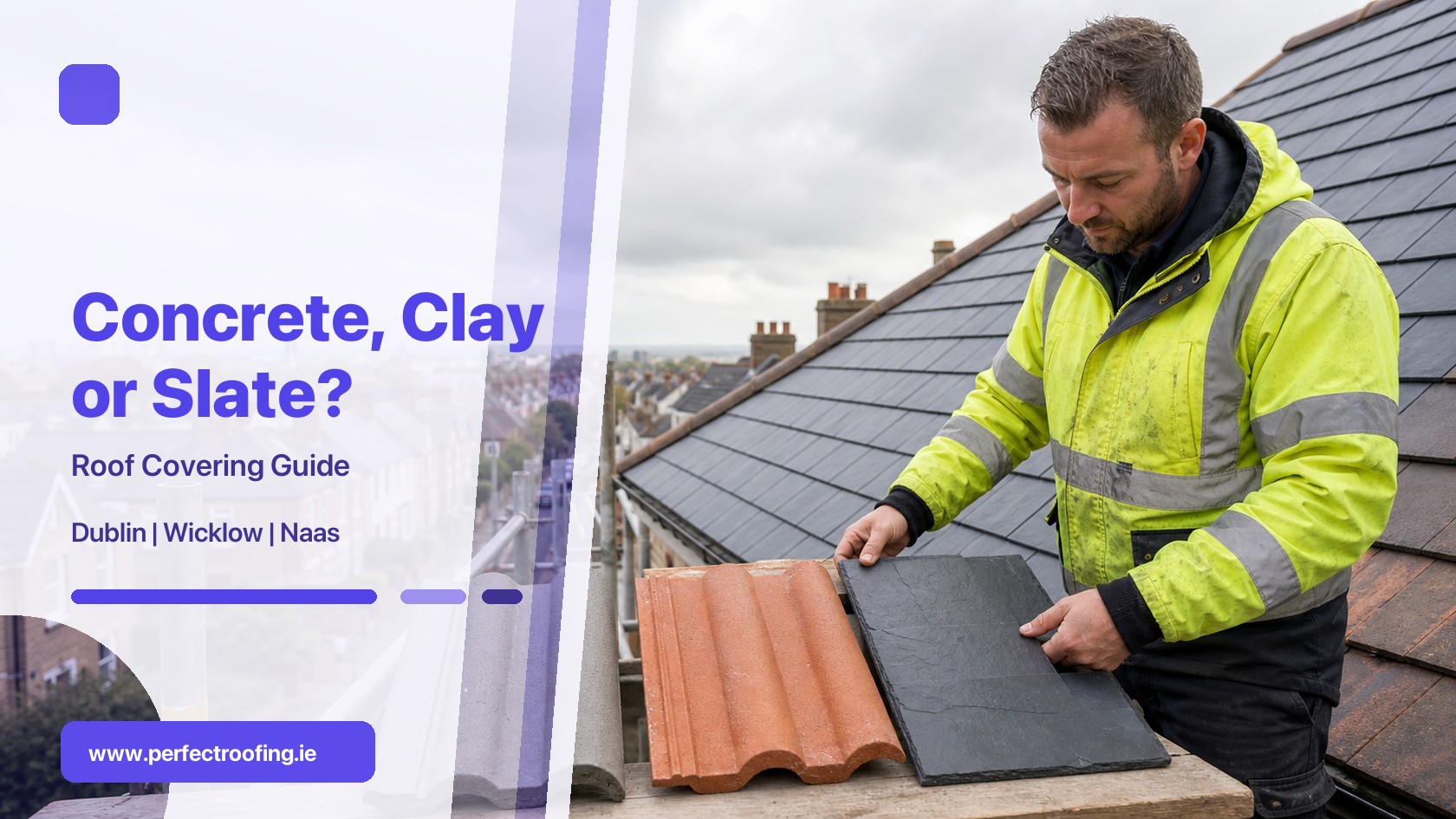
Choosing a roof covering is not just a colour decision. Concrete roof tiles, clay roof tiles, and natural slate can all look right on Irish homes, but they behave differently once roof pitch, weight, fixing, exposure, access, existing structure, and long-term maintenance are considered.
For homeowners in Dublin City, North Dublin, South Dublin, Lucan, Bray, Wicklow, Naas, and nearby areas, the best option depends on the house as much as the material. A compact terrace, a 1970s semi-detached home, a coastal-exposed property near Bray, and a rural Wicklow roof can each need a different recommendation.
This guide compares the three main pitched roof covering choices in practical terms so you can ask better questions before planning a roof replacement, extension roof, or major roof repair.
Quick comparison
| Roof covering | Often suits | Check carefully |
|---|---|---|
| Concrete roof tiles | Standard domestic reroofs, extensions, many semi-detached homes, and projects where practical value matters | Roof pitch, tile profile, roof weight, fixing specification, ventilation, ridges, hips, valleys, and whether the existing structure is suitable |
| Clay roof tiles | Period-style homes, visible elevations, renovations, and homeowners who want a warm traditional finish | Pitch, tile format, fittings, colour variation, planning or conservation context, breakage risk during later work, and skilled installation |
| Natural slate | High-quality reroofs, older homes, premium finishes, and roofs where a slim blue-grey appearance suits the building | Slate size, grading, headlap, fixings, underlay, battening, roof pitch, weight, access, and whether the budget supports specialist slating |
There is no single best roof covering for every home. The right answer comes from matching the material to the roof shape, weather exposure, house style, and the homeowner's long-term plans.
Concrete roof tiles
Concrete tiles are common on Irish homes because they offer a practical balance of availability, profile choice, colour choice, and everyday performance. They can suit many pitched roof replacements, extensions, garages, porches, and standard domestic rooflines.
Marley describes its concrete roof tile range as including plain, large-format flat, and profiled tiles in a range of colours and finishes. Its product information also notes that concrete tiles are made mainly from sand, cement, and water, with pigments used for colour.
Concrete tiles may be worth considering when:
- The home already has concrete tiles and a like-for-like reroof is sensible.
- The roof shape is straightforward, with standard hips, ridges, valleys, and verges.
- You want a reliable domestic roof covering without moving into a premium natural slate specification.
- A flat, profiled, or interlocking tile would suit the style of the house.
- Matching nearby roof finishes in a Dublin estate or suburban street matters.
The main caution is weight and specification. Concrete tiles are not automatically suitable just because they are familiar. The roof structure, battening, underlay, ventilation, ridge system, hip detail, valley detail, and mechanical fixing all need to be assessed together.
BMI Redland lists concrete interlocking flat tiles, clay and concrete plain tiles, profile tiles, accessories, and pitched roof support as part of its pitched roofing range. Its profile tile information also refers to profile roofing used across the UK and Ireland, which is relevant for homeowners comparing familiar domestic tile styles.
Clay roof tiles
Clay tiles are often chosen for appearance. They can bring warmth, texture, and a more traditional roofline to a home, especially where the elevation is visible from the street or where a renovation needs to respect an older building style.
Marley describes its pitched clay roof tiles as a traditional material adapted with modern manufacturing, with interlocking clay options, low ongoing maintenance, and compliance information for pitched roof standards. BMI Redland also lists clay and concrete plain tiles in a range intended to work with building character and locality.
Clay tiles may be worth considering when:
- The home has a traditional, period, cottage, or renovation character.
- A warmer red, brown, brindled, or weathered appearance suits the building.
- The roof is prominent and the finish will strongly affect kerb appeal.
- A conservation-aware or architect-led finish is being considered.
- You want the roof covering to feel less uniform than some standard concrete tile finishes.
The trade-off is that clay should be specified carefully. The chosen tile needs to suit the pitch, exposure, roof details, and fittings required. Later access for chimneys, solar work, roof windows, or repairs also needs care because any pitched roof covering can be damaged by poor access.
Clay can be excellent on the right house, but it is not a shortcut around the basics. Flashing, valleys, verge details, ridge ventilation, eaves ventilation, and correct fixing still matter.
Natural slate
Natural slate gives a slim, crisp, blue-grey roof finish that suits many older and higher-spec Irish homes. It can look especially appropriate on terraces, period properties, certain Dublin city roofs, and houses where a heavier-looking profiled tile would change the character too much.
CUPA PIZARRAS describes CUPA 50 as a natural slate suited to Ireland, with large-format options aligned with Irish slating traditions and performance in Irish conditions. The same page presents natural slate as a long-life roof covering and gives traceability and certification information for that slate range.
Natural slate may be worth considering when:
- The existing roof is slate and the homeowner wants to preserve the original character.
- A slim, clean roofline is important.
- The property is older, more visible, or in a location where slate is expected.
- The homeowner is planning a long-term reroof rather than the lowest upfront specification.
- The roof pitch, layout, and access suit proper slate installation.
Slate quality, size, grading, fixing, and workmanship matter a lot. A good slate roof is a system of slates, nails or hooks, battens, underlay, ventilation, flashings, ridges, hips, valleys, and careful detailing. Poor set-out around roof windows, chimneys, valleys, or dormers can undermine an otherwise good material.
What changes the recommendation?
The material name is only one part of a roof covering decision. Before recommending concrete, clay, or slate, a roofer should consider:
- Roof pitch and whether the chosen covering is suitable for it
- Existing roof structure and whether weight is a concern
- Exposure to wind-driven rain, especially on open or coastal sites
- Chimneys, valleys, dormers, roof windows, and awkward junctions
- Whether the project is a repair, partial reroof, extension, or full replacement
- How the new roof will be ventilated
- Ridge, hip, verge, eaves, and valley details
- Access for scaffolding, materials, waste removal, and future maintenance
- How the roof should look beside neighbouring homes
In Dublin City, matching an older terrace roof may matter more than choosing the newest-looking tile. In Lucan or Naas, a practical concrete tile may be a strong fit for many suburban homes. Around Bray and Wicklow, exposure and roof detailing may have a bigger influence on the final specification.
Pros and cons by homeowner priority
| Priority | Concrete tiles | Clay tiles | Natural slate |
|---|---|---|---|
| Practical domestic replacement | Often a strong fit for standard homes | Good where appearance justifies the specification | Good where slate suits the building and budget |
| Traditional appearance | Depends on profile and colour | Strong option for warm, traditional finishes | Strong option for slim blue-grey rooflines |
| Matching existing roof | Good if existing roof is concrete tile | Good if the original or desired finish is clay | Strong if the roof is already slate |
| Complex roof details | Works when the profile and fittings suit the details | Needs careful specification and compatible fittings | Needs skilled set-out and detailing |
| Long-term visual character | Reliable, but some profiles look more modern or uniform | Often chosen for texture and colour variation | Often chosen for premium, natural character |
Do not decide from a sample alone. A tile or slate can look very different across a full roof, beside neighbouring homes, and under Irish grey light.
Repairing versus replacing the roof covering
If only a few tiles or slates are damaged, a repair may be enough. If the roof has widespread slipping, repeated leaks, failing battens, torn underlay, poor ventilation, or many patch repairs, a full roof replacement may be more sensible.
Warning signs that the roof covering needs closer inspection include:
- Repeated leaks after local tile or slate repairs
- Many slipped, cracked, or missing units
- Powdery, rotten, or uneven battens visible during repairs
- Torn or brittle underlay
- Loose ridges, hips, verges, or valley details
- Moss and debris holding moisture around laps or gutters
- Damp attic timbers, musty smells, or staining after rain
- Roof windows or chimney flashings failing at the same time as the covering
Do not climb onto the roof to check these issues yourself. Use ground-level photos, attic observations, and safe window views, then ask a roofer to inspect the roof with proper access and safety equipment.
Questions to ask before choosing
Before you approve a concrete tile, clay tile, or natural slate specification, ask:
- Is this covering suitable for my roof pitch and exposure?
- Does the existing roof structure suit the proposed material?
- What underlay, battens, fixings, ridge system, and ventilation will be used?
- How will valleys, chimneys, roof windows, dormers, and abutments be detailed?
- Will the roof be stripped fully, or are any areas being repaired only?
- Are matching fittings available for hips, ridges, verges, and eaves?
- How will scaffolding, waste removal, and rain protection be handled during the job?
- What maintenance should I expect after installation?
- Would another material better suit the home, the budget, or the surrounding street?
The best quote should explain the roof as a system, not just name the material.
Ask Perfect Roofing for a site-specific recommendation
Perfect Roofing can inspect pitched roofs, roof coverings, ridges, valleys, gutters, chimneys, roof windows, and ventilation before recommending a repair or replacement approach.
If you are comparing concrete roof tiles, clay roof tiles, and natural slate for a home in Dublin City, North Dublin, South Dublin, Lucan, Bray, Wicklow, Naas, or nearby areas, contact Perfect Roofing by WhatsApp, phone, or email. We can look at your roof shape, access, existing covering, weather exposure, budget, and long-term plans before advising what is most suitable.
Need a roofer to take a look?
Send a few photos on WhatsApp, email us, or tap the number to call. We cover Dublin City, North Dublin, South Dublin, Lucan, Bray, Wicklow, Naas, and nearby locations.