Chimneys
Disused Chimney Stack: Repair, Cap or Remove? A Guide for Dublin, Lucan and Naas Homes
Not using your chimney any more? Compare repairing, capping or removing a disused stack, with planning, shared-stack and ventilation checks for Dublin homes.
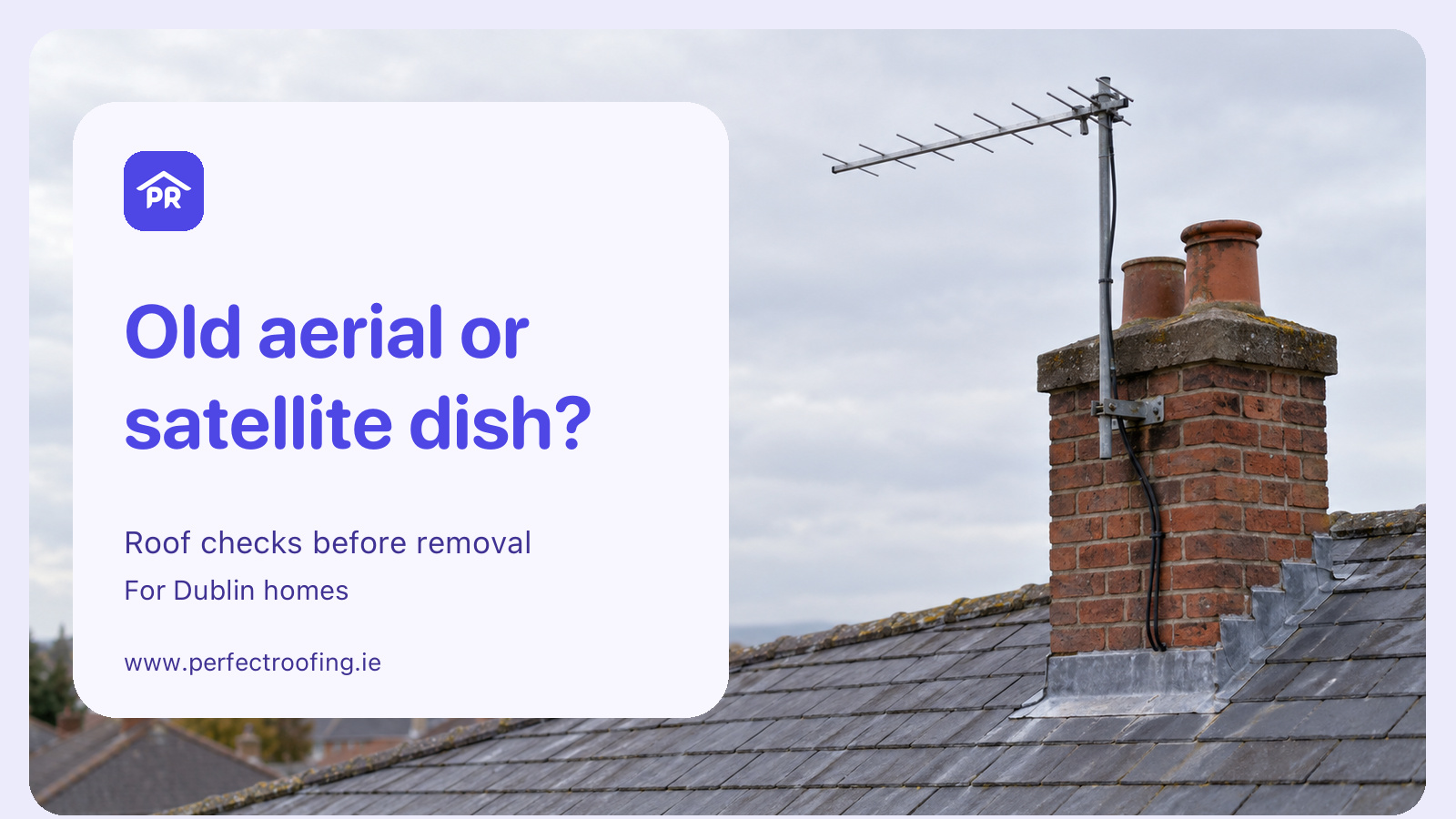
Thousands of homes around Dublin, Lucan and Naas have a chimney that has not seen a fire in years. The open fire was replaced by gas or a heat pump, the fireplace was boarded up, and the stack on the roof was forgotten.
But a disused chimney still sits in the wind and rain every day. Once the winter storms arrive, an old stack is one of the most common sources of damp patches on bedroom walls, loose pots and cracked flaunching that we are called out to.
If your chimney is no longer used, you have three realistic options: repair it, cap and ventilate it, or take it down. This guide explains how to choose, and what to check before you book any work. It is general guidance, not legal or planning advice.
Signs a disused chimney needs attention
You can spot most of these from the garden, the street or inside the house. Please do not climb onto the roof to look.
- Damp patches on a chimney breast in a bedroom or the attic, often worse after wind-driven rain.
- Brown staining or peeling paint around a boarded-up fireplace.
- Cracked or missing mortar between the bricks of the stack.
- A leaning stack or pots, or pieces of pot or render in the gutter.
- Crumbling flaunching, the mortar bed around the base of the pots.
- Gaps or lifted lead flashing where the stack meets the slates or tiles.
- Birds nesting in the open pots, or debris falling into the hearth.
- Cold draughts from the fireplace opening.
If you can see the stack moving in strong wind, or bricks are loose, keep people away from that side of the house and call a roofer straight away.
Option 1: Repair the stack
Repairing usually makes sense when the stack is structurally sound and the problems are limited to mortar, flaunching, flashing or a loose pot. Typical work includes:
- Repointing open joints in the brickwork.
- Renewing the flaunching around the pots.
- Replacing or re-dressing lead flashings and the back gutter.
- Re-bedding or replacing a loose pot.
Repair keeps the option of using the fireplace in the future and keeps the look of the house unchanged. It is often the right choice for period houses and for homes in a terrace or estate where every house has a matching stack. We cover the details in our guides to chimney stack repointing and chimney flashing leaks.
Option 2: Cap and ventilate the flue
If the chimney will not be used again but the stack is in reasonable condition, capping the pots stops rain, birds and debris getting in. The important word is ventilate.
A flue that is sealed tight at the top and the bottom traps moisture inside the brickwork. That moisture often shows up later as damp on the chimney breast. The usual approach is:
- At the top: a ventilated cap or cowl that keeps out rain and birds but still lets air move. Our chimney cowl comparison explains the main types.
- At the bottom: a small vent in the fireplace board or chimney breast, so air can flow through the flue.
Some homeowners fit a removable chimney balloon to stop draughts in winter. Bath and North East Somerset Council's chimney draughtproofing guidance describes balloons as a simple way to cut heat loss from unused flues, while noting that open flues also help with ventilation, so permanent blocking is not always best. Historic England's guide to open fires, chimneys and flues makes the same point for older buildings.
Important: never cap or block a flue that is still connected to a working appliance, such as a gas fire, stove or old back boiler. If you are not sure, have the appliance checked and disconnected by a qualified installer first. For gas appliances in Ireland, that means a Registered Gas Installer.
Option 3: Take the stack down
Removing the stack below roof level and roofing over the gap gets rid of the maintenance for good. It can make sense when:
- the stack is badly damaged, leaning or would need rebuilding;
- the house has several stacks and only one is a problem;
- you are re-roofing anyway, so the roof covering is already being renewed;
- the chimney breasts inside have already been removed or are being removed as part of a renovation.
What removal involves:
- The stack is taken down brick by brick, usually from scaffolding.
- The flue is capped and ventilated below the roof line, inside the attic.
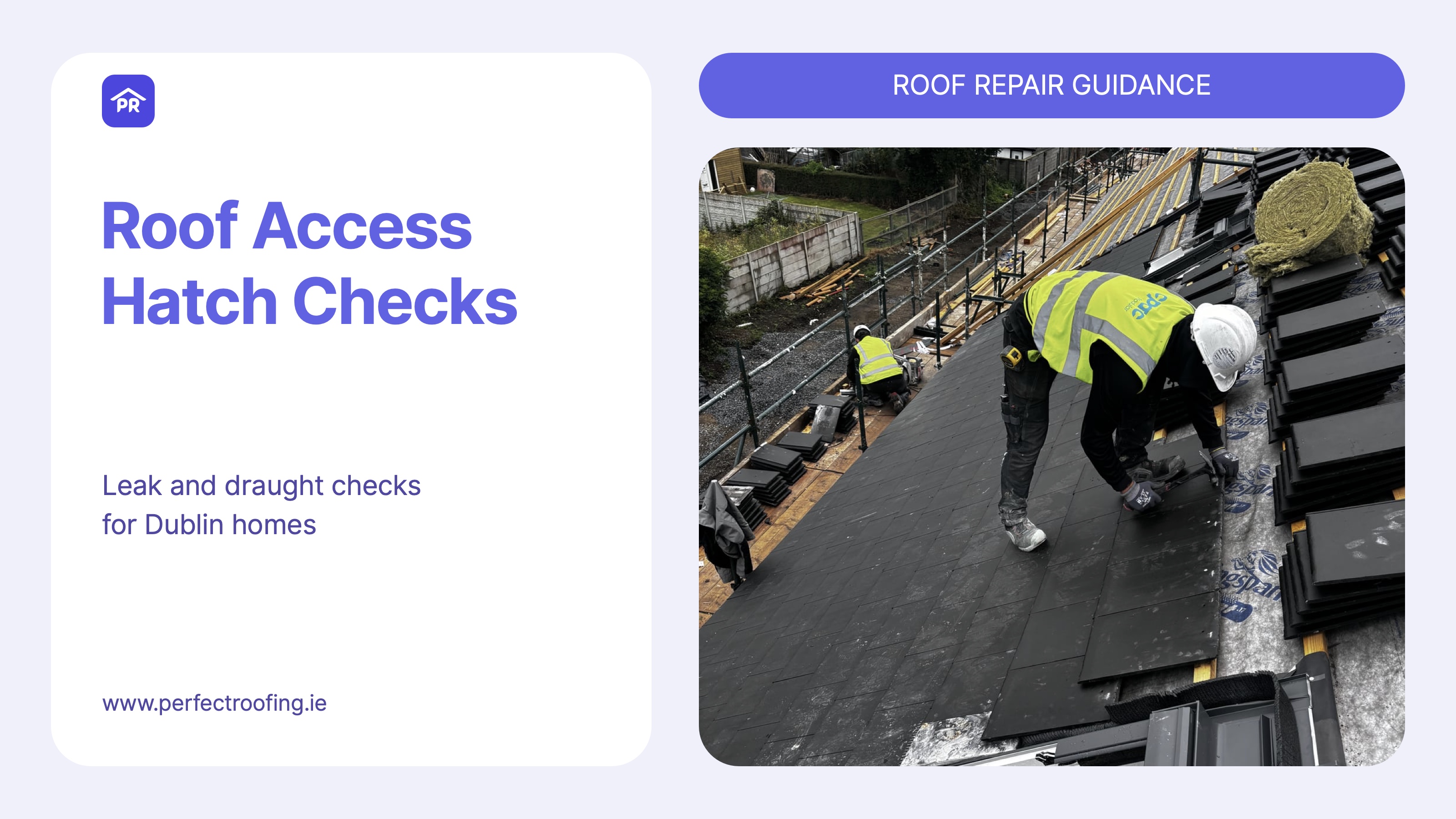
- The roof structure is made good, with new battens, membrane and slates or tiles matched to the rest of the roof.
- Any lead flashings and back gutter are removed.
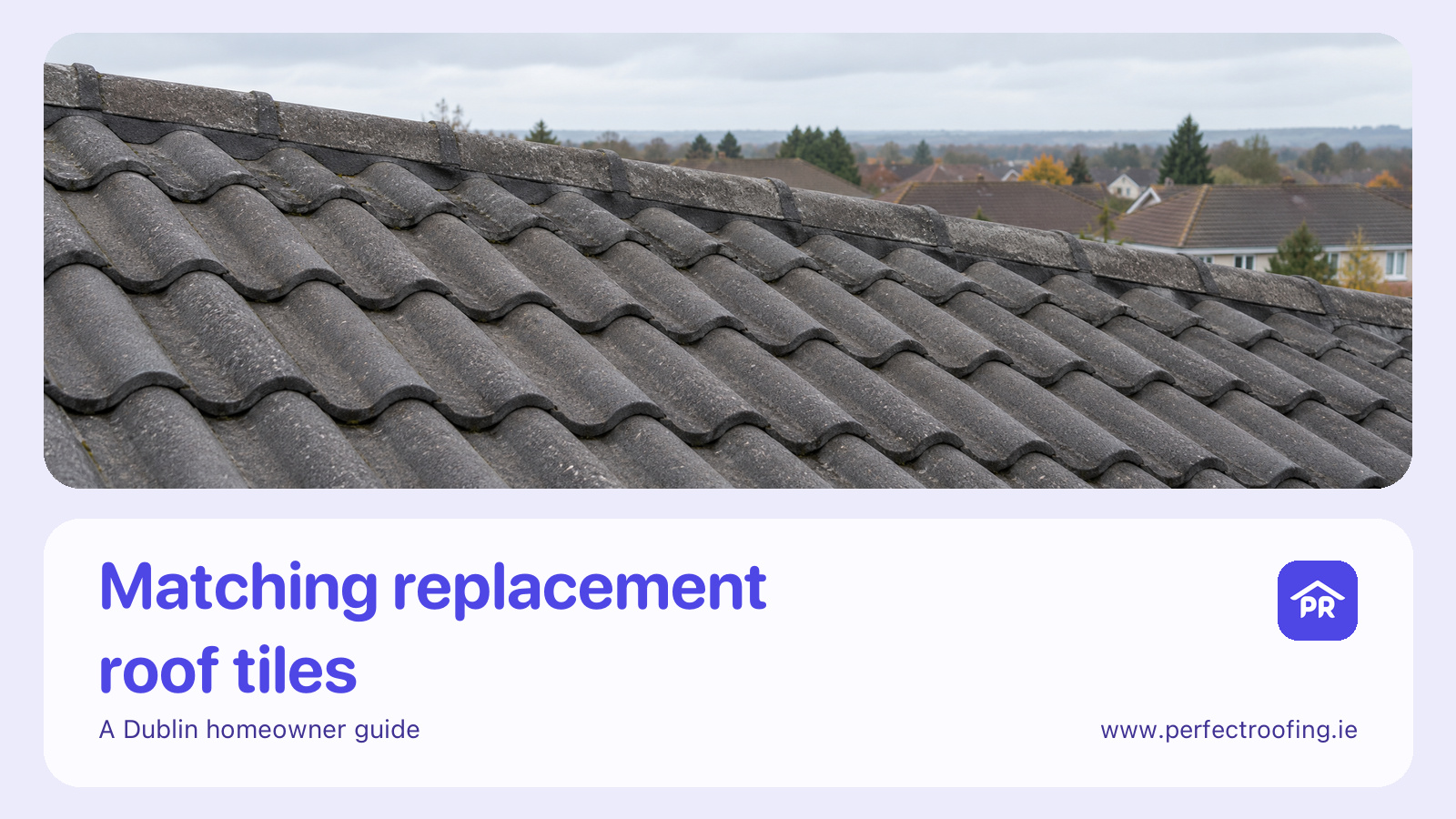
The hardest part on many Dublin roofs is matching the roof covering, especially on older concrete tiles that are no longer made. See our guide to matching replacement roof tiles for more on this.
Never take out a chimney breast inside the house while leaving the stack above it unsupported. If breasts have been removed in the past, the stack may be sitting on very little. Removing internal breasts is structural work and needs an engineer's design for support.
Quick comparison
| Repair | Cap and ventilate | Remove | |
|---|---|---|---|
| Best for | Sound stacks with local defects | Sound stacks you will never use | Damaged or unwanted stacks |
| Keeps a future fireplace | Yes | Yes, if reopened properly | No |
| Changes how the house looks | No | Very little | Yes |
| Ongoing maintenance | Still needed | Still needed, less often | None for that stack |
| Scaffolding usually needed | Often | Often | Yes |
| Planning check advised | Only for protected or ACA homes | Only for protected or ACA homes | Yes |
Planning: check before you remove a stack
Taking down a chimney changes the outside of the house, so check the planning position before you book it.
- Section 5 declarations. If you are unsure whether the work needs planning permission, you can ask your council for a Section 5 declaration. Dublin City Council's Section 5 page explains that it is a formal written ruling on whether a specific project needs permission. At the time of writing it lists a fee of €80 and a decision within four weeks. South Dublin, Fingal, Dún Laoghaire-Rathdown, Wicklow and Kildare councils offer the same service.
- Protected structures and ACAs. Dublin City Council's page notes that exemptions do not apply to a protected structure or in an Architectural Conservation Area. If your home is protected or in an ACA, read our guide to roof repairs on protected structures and talk to the council's conservation officer before touching the stack.
- Matching houses. In estates and terraces where every house has the same stacks, the visual change is greater, which is another reason to ask the council first.
Shared stacks on semi-detached and terraced houses
Many semi-detached houses in Lucan, Clondalkin, Naas and across North Dublin share a central chimney stack with the house next door. Each side usually has its own flues, but the stack itself is one structure sitting across the boundary.
In Irish law, a wall or structure like this is generally a party structure. Sections 43 to 47 of the Land and Conveyancing Law Reform Act 2009 set out the rules. In summary, section 44 allows a building owner to carry out works to a party structure for purposes that include preserving it, exempted development or development with planning permission, and other works that will not cause the neighbour substantial damage or inconvenience. In return, the owner doing the work must:
- make good any damage caused to the neighbour, or pay their reasonable costs of doing so;
- pay the neighbour's reasonable costs of getting professional advice on the works; and
- pay reasonable compensation for any inconvenience.
If there is a dispute, the District Court can be asked to make a works order under section 45.
In practice, the simplest route is to talk to your neighbour early. Common outcomes are:
- Repairing the whole shared stack together and splitting the scaffolding and labour.
- Capping only your own flues and leaving theirs open if they still use a fire.
- Reducing the stack only when both owners agree. Taking down half of a shared stack is rarely practical, and it can leave the other half weak and exposed.
Get any agreement in writing, and ask your solicitor if the neighbour objects.
Why autumn and winter matter
Storm season is here, and a chimney stack is the most exposed part of most roofs. A loose pot or weak stack is a real risk to people and cars below, and Met Éireann's weather warnings are worth watching for wind warnings in your county. If your chimney already shows signs of damage, have it checked before a storm rather than after. Temporary work, such as removing loose pots or fitting caps, can make a stack safe until a full repair or removal can be scheduled in better weather.
What to ask your roofer
- Is the stack structurally sound, or does it need rebuilding?
- Are any flues still connected to an appliance?
- Will capped flues be ventilated at the top and bottom?
- If removing, how will the roof be made good, and can the tiles or slates be matched?
- Is the stack shared, and what is the plan for the neighbour's side?
- Will you supply photos of the stack before and after the work?
Talk to Perfect Roofing about your chimney
Perfect Roofing repairs, caps and removes chimney stacks on homes across Dublin City, North Dublin, South Dublin, Lucan, Bray, Wicklow, Naas and nearby areas. We will look at the stack, check the flashings and roof around it, and give you an honest recommendation on whether to repair, cap or take it down, with photos so you can see what we see.
Contact us by WhatsApp, call 083 066 3462, or email hi@perfectroofing.ie. If you can, send a photo of the chimney taken safely from the ground or the street, and let us know whether the stack is shared with a neighbour.
Need a roofer to take a look?
Send a few photos on WhatsApp, email us, or tap the number to call. We cover Dublin City, North Dublin, South Dublin, Lucan, Bray, Wicklow, Naas, and nearby locations.