Roof Windows
Double vs Triple-Glazed Roof Windows and Rooflights for Dublin Homes
Compare double and triple glazing for roof windows and rooflights in Dublin, including comfort, noise, installation details and questions to ask before choosing.
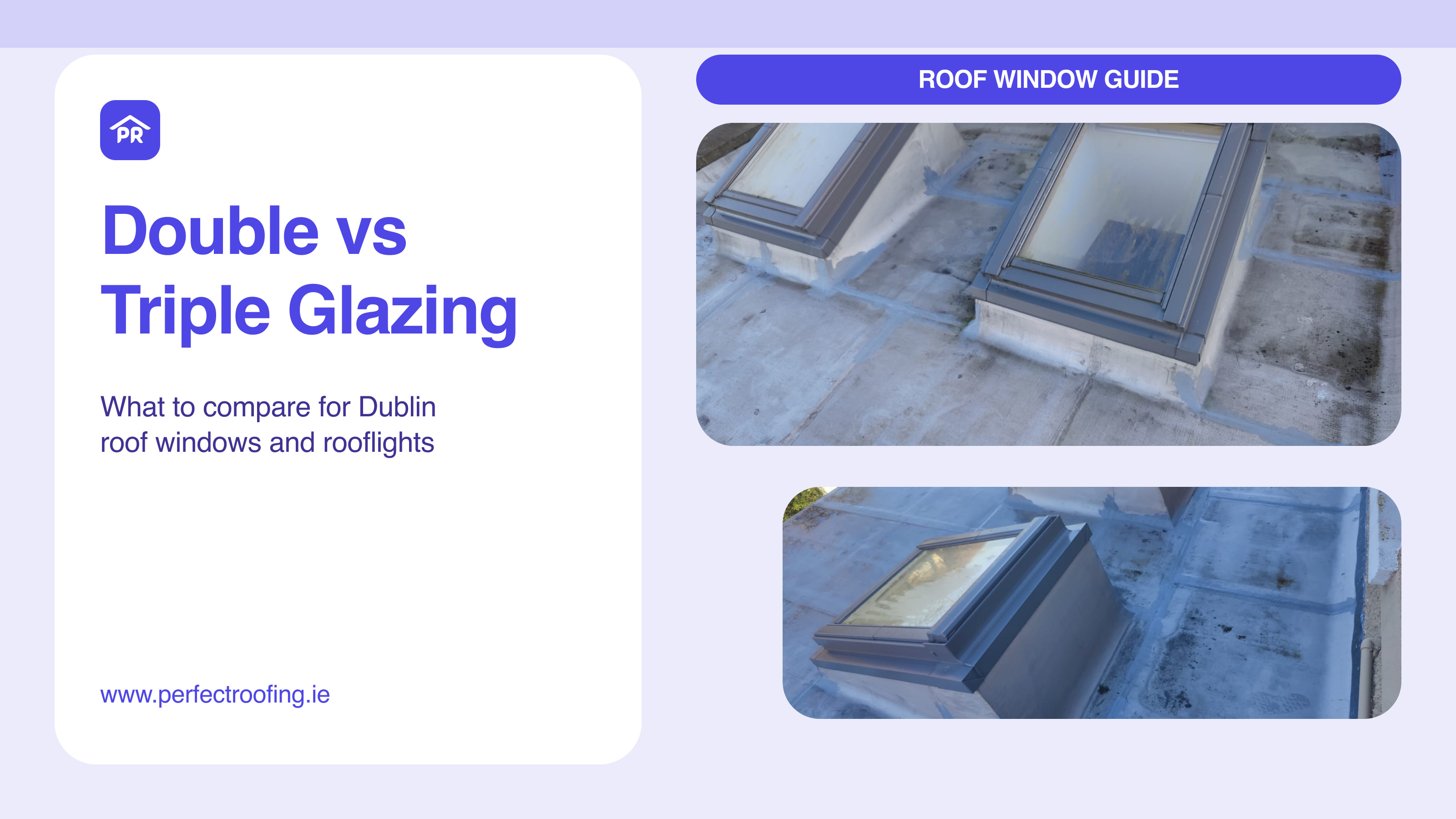
Choosing between double and triple glazing is a practical part of planning a new or replacement roof window. The choice can affect how the room feels in colder weather, how outside noise is managed and the overall specification of the window. It is not, however, a decision to make from the glass alone. The roof pitch, opening size, flashing, insulation around the frame, internal finish and condition of the surrounding roof all matter.
For homeowners in Dublin City, South Dublin, North Dublin, Lucan, Bray, Wicklow, Naas and nearby areas, a site visit is the best way to match a roof window or rooflight to the existing roof and the room below it.
Double glazing and triple glazing: the practical difference
Double-glazed units have two panes of glass separated by a sealed space. Triple-glazed units have three panes and two sealed spaces. A product's actual performance depends on the complete window, its size and its glazing specification, rather than the pane count alone.
| Question | Double glazing | Triple glazing |
|---|---|---|
| Everyday use | Often a practical option for a like-for-like replacement or modest upgrade | Often considered where improved thermal comfort or sound reduction is a priority |
| What to compare | Whole-window U-value, glazing specification, safety glass and installation detail | Whole-window U-value, glazing specification, safety glass and installation detail |
| Potential trade-off | The right option may depend on the room, budget and roof detail | May offer a higher-performing specification, but should be compared as a complete installed solution |
| Best next step | Ask for the exact proposed window and flashing system | Ask for the exact proposed window and flashing system |
For a current Irish example, VELUX lists both two-layer and three-layer glazing options on its Classic roof window page. Its published figures vary by glazing option, which is why a quote should name the actual window rather than simply saying “double” or “triple glazed”.
Start with how the room is used
The best glazing choice is usually linked to the room below the roof.
- A bedroom, nursery or home office may make noise control and winter comfort more important.
- A bathroom or kitchen also needs a suitable window finish, ventilation approach and waterproofing around the opening.
- A stairwell or small landing may benefit more from the right opening size and daylight layout than from selecting glazing in isolation.
- A loft conversion or larger renovation may involve several roof windows, so consistency of flashing, internal reveals and ventilation planning matters across the whole run.
- A flat-roof extension needs a rooflight system that is appropriate for its roof build-up, upstand and drainage details.
Do not assume that a higher specification automatically solves condensation, a cold draught or a leak. Those symptoms can also point to ventilation, insulation, seals, flashings or the surrounding roof construction.
Compare the whole window, not just the glass
When you receive a proposal, ask for the product information in writing. The useful comparison is between complete, installed systems with like-for-like sizes and details.
Check:
- The manufacturer, product range, opening style and exact glazing option.
- The published whole-window U-value for that size and configuration.
- Glass safety features where relevant, including laminated inner panes or toughened outer panes.
- The flashing kit and how it suits the roof covering and pitch.
- Insulation and vapour-control detailing around the frame and internal reveal.
- The condition of nearby tiles, slates, membrane, gutters, roof edges and existing timber.
- The approach to ventilation, blinds or solar-control accessories if the room is prone to heat or condensation.
- What making-good is included inside and outside after installation.
The manufacturer information can help you compare specifications, but it does not replace a survey of the actual roof. On an exposed property around Bray or Wicklow, for example, the junctions around the opening deserve as much attention as the glazing selection. In a Dublin City terrace, access and the relationship with adjoining roof details may shape the scope of work.
When triple glazing may be worth discussing
Triple glazing is worth putting on the shortlist when you are replacing an older window, improving an attic room, or trying to improve comfort in a space that feels cold near the glass. It can also be relevant where outside noise is a concern, provided you compare the published performance of the exact options being quoted.
It is sensible to ask how the proposed product performs as a whole window, not only how many panes it has. For example, the VELUX page above shows different U-values and sound-reduction figures across its double- and triple-glazed variants. Those figures are product-specific, so they should not be used as a blanket promise for another make, size or installation.
When double glazing may still suit the project
A well-specified double-glazed roof window can be a sensible fit for many homes, especially where the project is a straightforward replacement and the wider roof condition is good. The key is to avoid treating it as a lower-detail installation. Correct flashing, neat integration with the roof covering and careful internal finishing remain essential.
If budget is part of the decision, ask for two comparable scopes rather than a vague upgrade price. Each should identify the window, flashing, glazing, access, making-good and any repairs needed around the opening. That makes it easier to decide whether a glazing upgrade changes the long-term value of the work for your home.
Installation details that protect the roof
Roof windows and rooflights interrupt the roof covering, so the junction needs to direct water safely around the frame. A reliable installation starts with checking the opening and the roof around it, then using compatible flashing and completing the surrounding tile, slate or flat-roof detail properly.
Before work begins, ask:
- Is this a like-for-like replacement, a new opening or a larger opening?
- What condition are the surrounding roof materials and the existing window flashings in?
- Which flashing system is included, and is it compatible with the roof pitch and covering?
- Will any rotten timber, damaged lining or wet insulation be identified before the new window is fitted?
- How will the inside reveal and vapour-control layer be finished?
- What safe access is needed for the work?
Never climb onto a roof or try to apply sealant around a roof window without suitable safety equipment and professional access. A visible gap may not be the source of a leak, and a surface fix can hide the detail that needs proper repair.
Ask Perfect Roofing which glazing suits your roof
Perfect Roofing can inspect existing roof windows, rooflights, flashings and the surrounding roof before recommending repair or replacement options. We work across Dublin City, North Dublin, South Dublin, Lucan, Bray, Wicklow, Naas and nearby areas.
Contact us by WhatsApp, call 083 066 3462, or email hi@perfectroofing.ie. Send safe photos and ask for a recommendation based on your roof, budget, weather exposure, access and long-term plans.
Need a roofer to take a look?
Send a few photos on WhatsApp, email us, or tap the number to call. We cover Dublin City, North Dublin, South Dublin, Lucan, Bray, Wicklow, Naas, and nearby locations.