Roof Repairs
Lead Flashing and Roof Wall Junction Leak Checks for South Dublin and Naas Homes
A practical guide to spotting lead flashing, abutment, and roof-to-wall junction leaks around extensions, porches, garages, and main roofs in South Dublin, Naas, and nearby areas.

Lead flashing is one of the details homeowners rarely think about until a stain appears inside. It sits where the roof covering meets a wall, chimney, parapet, dormer, porch, garage, or extension, helping rainwater shed away from the joint instead of tracking into the building.
For homes in South Dublin, Naas, Lucan, Wicklow, Bray, North Dublin, Dublin City, and nearby areas, flashing problems are common around extensions and older roof junctions. A small crack, lifted edge, blocked channel, or failed patch repair can let water travel behind the roof covering before it shows up on a ceiling or internal wall.
This guide explains what to check safely, why roof-to-wall junctions leak, and when to ask Perfect Roofing for a closer inspection.
What lead flashing does
Flashing is used where a roof has to meet another surface without leaving a direct water entry point. On many Irish homes, it can appear around:
- Extension roofs meeting the main house wall
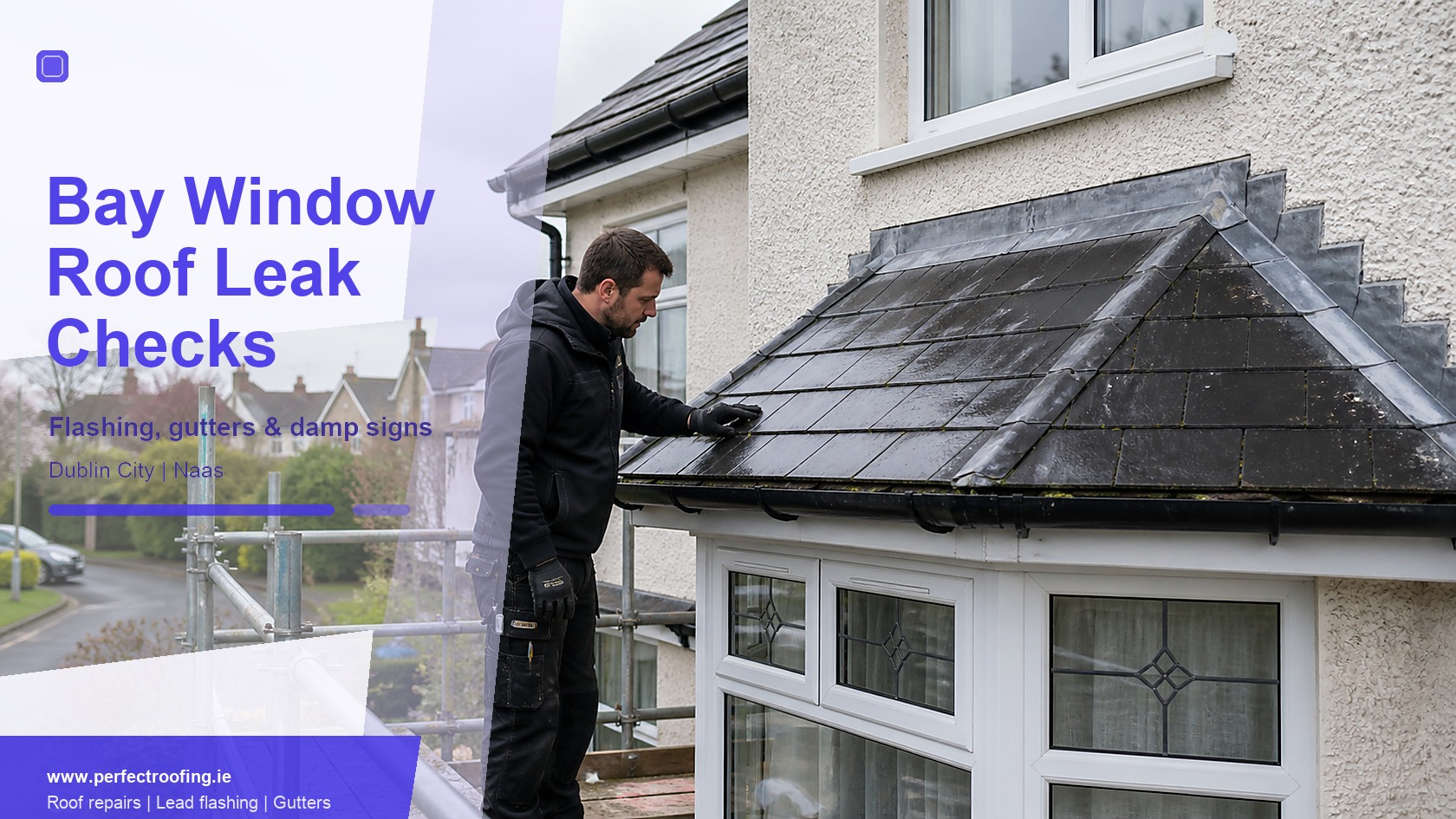
- Porch roofs, bay roofs, garages, and utility-room roofs
- Dormer cheeks and vertical roof junctions
- Chimneys and side walls
- Rooflights, skylights, and Velux window surrounds
- Parapet walls, valleys, and awkward roof intersections
Lead is often used because it can be formed into roof shapes and dressed into masonry joints. The important point is not just the material. The flashing must be correctly lapped, fixed, dressed, and connected with the surrounding slates, tiles, underlay, gutters, and wall finish.
Safe signs to check from inside
Do not climb onto the roof or lean out of windows to inspect flashing. Roof junctions are often slippery, awkward, and close to edges. You can still gather useful clues safely from inside the house.
Look for:
- Brown or yellow staining where a ceiling meets an external wall
- Damp marks above an extension, porch, garage, or bay window
- Peeling paint or bubbling plaster below a roof junction
- A leak that appears after wind-driven rain, not every shower
- Damp smells in an upstairs room, attic, or converted space
- Staining that returns after being painted over
- Drips close to downlights, sockets, or ceiling corners
Take photos when the mark is visible and note when it appears. A damp patch after a particular direction of rain can help a roofer understand whether water is being driven into a wall junction, under flashing, or through another part of the roof.
What to look for from ground level
From the garden, driveway, pavement, or a safe upstairs window, you may be able to see warning signs without touching the roof.
Useful external clues include:
- Lead that looks lifted, cracked, wrinkled, split, or loose
- Gaps where flashing should tuck into the wall
- A dark stain running below the roof-to-wall junction
- Moss, leaves, or grit collecting along the flashing line
- Slipped slates or broken tiles close to the wall
- A gutter or valley discharging water toward the same area
- Surface sealant smeared over old leadwork
- Render, brickwork, or mortar cracks directly above the roof junction
Wide photos are usually more helpful than tight close-ups. Try to include the wall, roof slope, gutter, nearby windows, and any extension layout so the junction can be understood in context.
Why roof-to-wall junctions start leaking
Most flashing leaks are caused by a combination of movement, weathering, water flow, and previous repair history. The visible lead may not be the only issue.
Common causes include:
- Leadwork cracking after years of expansion, contraction, or movement
- Flashing coming loose where it meets brickwork, render, or a chasing joint
- Roof tiles or slates slipping beside the wall junction
- Debris holding water against the flashing during heavy rain
- A roof pitch, valley, or gutter feeding too much water into one detail
- Previous sealant patches splitting away from older material
- Extension work where new and old roof details were not joined cleanly
- Wall render or pointing allowing water behind the flashing line
South Dublin and Naas homes often include rear extensions, porch roofs, garages, and converted attic spaces. Those changes can create several roof junctions close together, so a leak may start at one detail and appear somewhere that seems unrelated inside.
Flashing leaks can look like other roof problems
Water does not always fall straight down from the entry point. It can travel along underlay, battens, rafters, plasterboard, insulation, or the back of a wall before showing itself.
A flashing issue may be confused with:
- A slipped slate or cracked roof tile
- A blocked gutter or downpipe
- A valley leak higher up the slope
- Condensation around an attic or roof window
- A flat roof outlet problem
- Damp coming through cracked render or brickwork
- A chimney or parapet leak nearby
That is why a proper inspection should look at the whole roof area, not just the damp patch. A small visible split in the lead may be the cause, but it may also be one symptom of a wider roof junction problem.
Repair options Perfect Roofing may recommend
The right repair depends on the roof type, access, exposure, wall finish, and the condition of the surrounding roof covering. A good repair should deal with the source of water entry rather than only covering the visible crack.
Possible repairs include:
- Refitting loose flashing where the material is still sound
- Replacing cracked or poorly dressed leadwork
- Repairing damaged slates or tiles beside the junction
- Clearing debris from valleys, gutters, and channels that feed the area
- Correcting old sealant patches that have failed
- Repairing mortar, render, or masonry details above the flashing
- Improving roof junctions around extensions, dormers, or flat roofs
- Checking underlay, battens, or timber where water has tracked in
Sometimes a local repair is enough. In other cases, a wider roof repair may be more sensible, especially if several junctions, gutters, valleys, or roof edges are failing at once.
When to arrange a roof inspection
Book a flashing or roof leak inspection if you notice:
- Damp marks after rain near an external wall or extension ceiling
- Leadwork that has visibly moved, cracked, or lifted
- Repeated staining below the same roof junction
- Debris sitting against flashing or a gutter outlet
- Water overflowing close to a wall junction
- A previous patch repair that is cracking again
- A leak near electrics, ceiling lights, or an attic conversion
Do not wait until the plaster is badly stained. Early roof junction repairs are often easier to manage before water damages insulation, timber, plasterboard, or decorated rooms.
Lead flashing checks for South Dublin, Naas, and nearby homes
Perfect Roofing helps homeowners with lead flashing repairs, roof-to-wall junction leaks, extension roof repairs, roof inspections, gutter repairs, flat roofing, Velux windows, skylights, roof ventilation, and roof replacement planning across South Dublin, Naas, Lucan, Bray, Wicklow, North Dublin, Dublin City, and nearby locations.
Local roof shapes vary. South Dublin homes may have older main roofs with newer rear extensions. Naas properties often include garages, porches, valleys, and mixed roof sections. Dublin City homes can have tighter access and shared rooflines. The inspection should match the property, not rely on a one-size-fits-all answer.
Ask Perfect Roofing before a small flashing leak spreads
If you can see damp near a wall junction, suspect lead flashing has lifted, or have a leak around an extension roof, do not climb onto the roof to investigate it yourself. Take clear photos from a safe place and note when the leak appears.
Contact Perfect Roofing by WhatsApp, phone, or email for practical advice, a roof inspection, or a repair quotation. We can check whether the issue is lead flashing, damaged slates or tiles, blocked drainage, flat roofing, wall detailing, or a wider roof repair that needs planned access.
Need a roofer to take a look?
Send a few photos on WhatsApp, email us, or tap the number to call. We cover Dublin City, North Dublin, South Dublin, Lucan, Bray, Wicklow, Naas, and nearby locations.