Roof Maintenance
Moss on Roof Tiles and Gutters: Checks for Dublin and Wicklow Homes
A practical guide to spotting moss on roof tiles, blocked gutters, valley build-up, and damp warning signs around homes in Dublin, Bray, Wicklow, Lucan, Naas, and nearby areas.
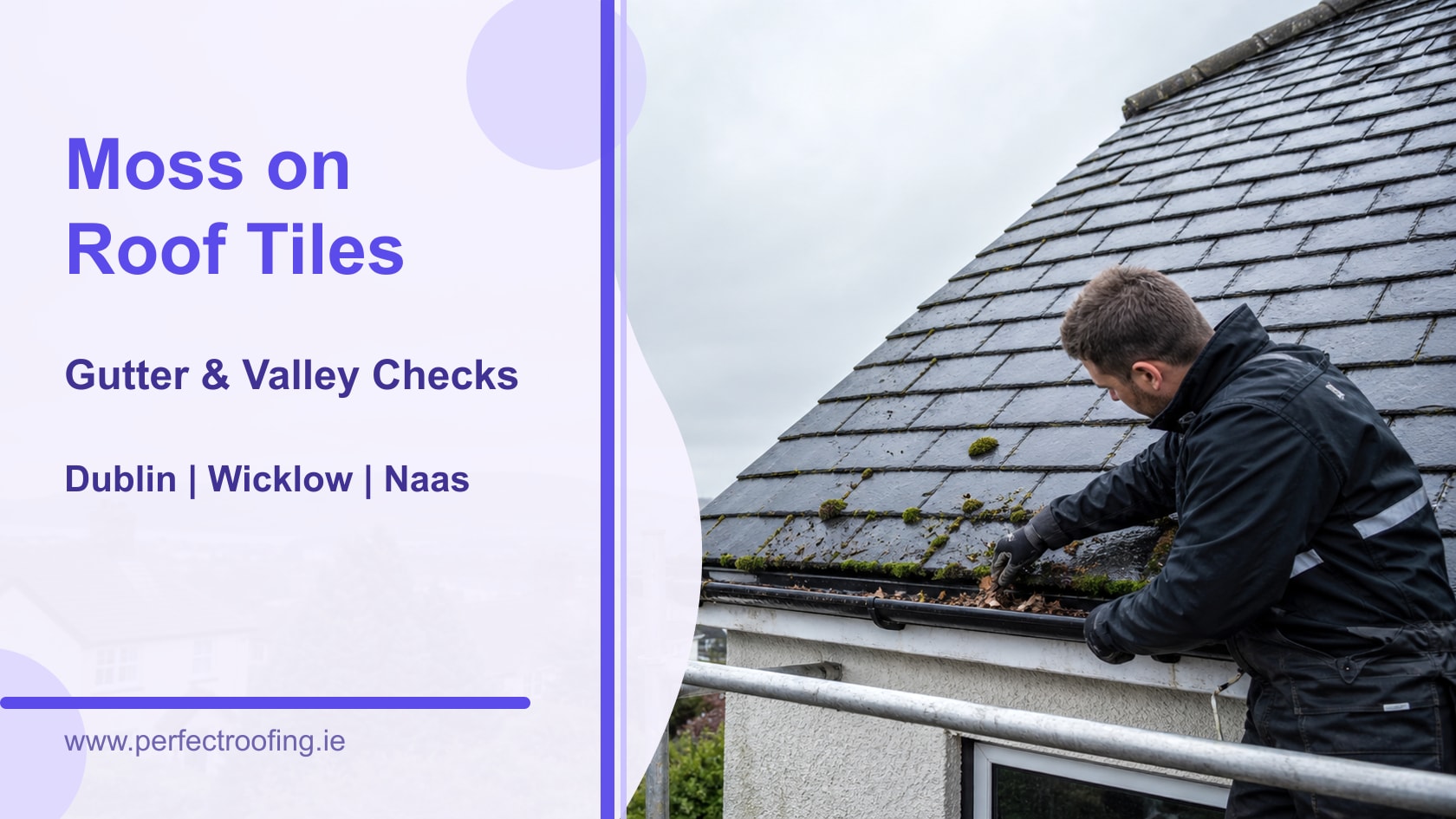
Moss on roof tiles is common on Irish homes, especially where roofs are shaded by trees, nearby buildings, north-facing slopes, or coastal and hillside exposure. A little moss does not always mean the roof is failing, but it can hide cracked tiles, slow down rainwater, block gutters, and make valleys work harder during heavy showers.
For homeowners in Dublin City, North Dublin, South Dublin, Bray, Wicklow, Lucan, Naas, and nearby areas, the useful question is not simply whether moss is present. It is whether the moss is affecting drainage, roof condition, gutter flow, or damp marks inside the home. This guide explains what you can check safely from the ground and when to ask Perfect Roofing for a closer roof maintenance inspection.
Why moss grows on roof tiles
Moss likes damp, shaded surfaces. On pitched roofs, it often appears first where roof slopes dry slowly after rain or where leaves and grit collect.
Common reasons include:
- Trees overhanging the roof or dropping leaves into valleys and gutters
- North-facing or shaded roof slopes that get less direct sun
- Older concrete tiles with a rougher surface texture
- Valleys, gutters, dormers, chimneys, and roof-window areas that collect debris
- Poor airflow around the roof edge or attic space
- Previous repairs that changed how water runs across part of the roof
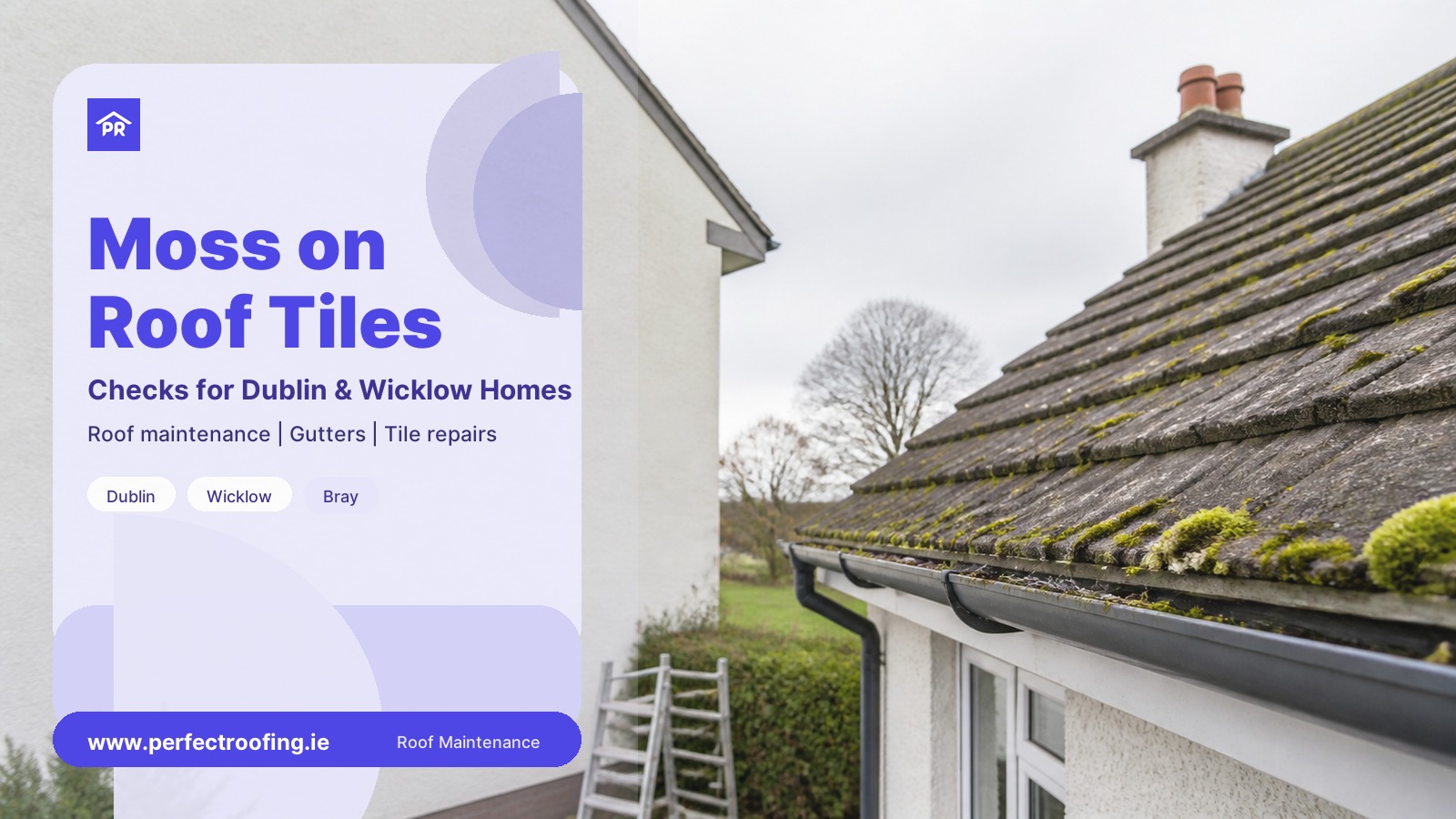
Moss can also gather along the lower edge of a roof, just above the gutter. That is the area worth watching because loose moss can fall directly into the gutter outlet or downpipe.
When moss is mostly cosmetic
Not every mossy roof needs urgent work. If the roof is otherwise tidy and water is draining properly, moss may be more of a maintenance item than an emergency.
It is usually less urgent when:
- The moss is light and patchy rather than thick and spongy
- Gutters are flowing freely during rain
- There are no damp stains on ceilings, attic timbers, or around roof windows
- Tiles or slates still look flat, aligned, and secure
- Valleys are clear and not holding heavy debris
- There is no water spilling behind the gutter or down the wall
Even then, it is worth keeping an eye on the roof after wet and windy spells. Moss rarely causes one obvious problem on its own. It usually becomes an issue when it combines with blocked drainage, cracked tiles, loose pointing, ageing gutters, or an already weak roof detail.
Warning signs moss may be causing problems
Moss becomes more concerning when it changes how rainwater moves off the roof. If water cannot run cleanly into the gutter, it may back up under tiles, spill over gutter edges, or sit in valleys longer than it should.
Ask for a roof or gutter inspection if you notice:
- Water overflowing from the same gutter section during normal rain
- Moss, leaves, or grit packed around the gutter outlet
- Damp patches near the top of an external wall
- Staining on fascia boards, soffits, or render below the gutter
- Loose, slipped, cracked, or uneven tiles near moss build-up
- Moss collecting in a roof valley or around a chimney side
- Damp marks in attic spaces, ceiling corners, or around roof windows
- A downpipe that stays quiet while nearby gutter sections overflow
Homeowners in Bray and Wicklow often ask about moss where homes are more exposed, shaded, or close to mature trees. In Dublin City and North Dublin, we also see moss and debris trapped around older gutters, chimney junctions, roof valleys, and extension rooflines.
Check gutters before blaming the roof
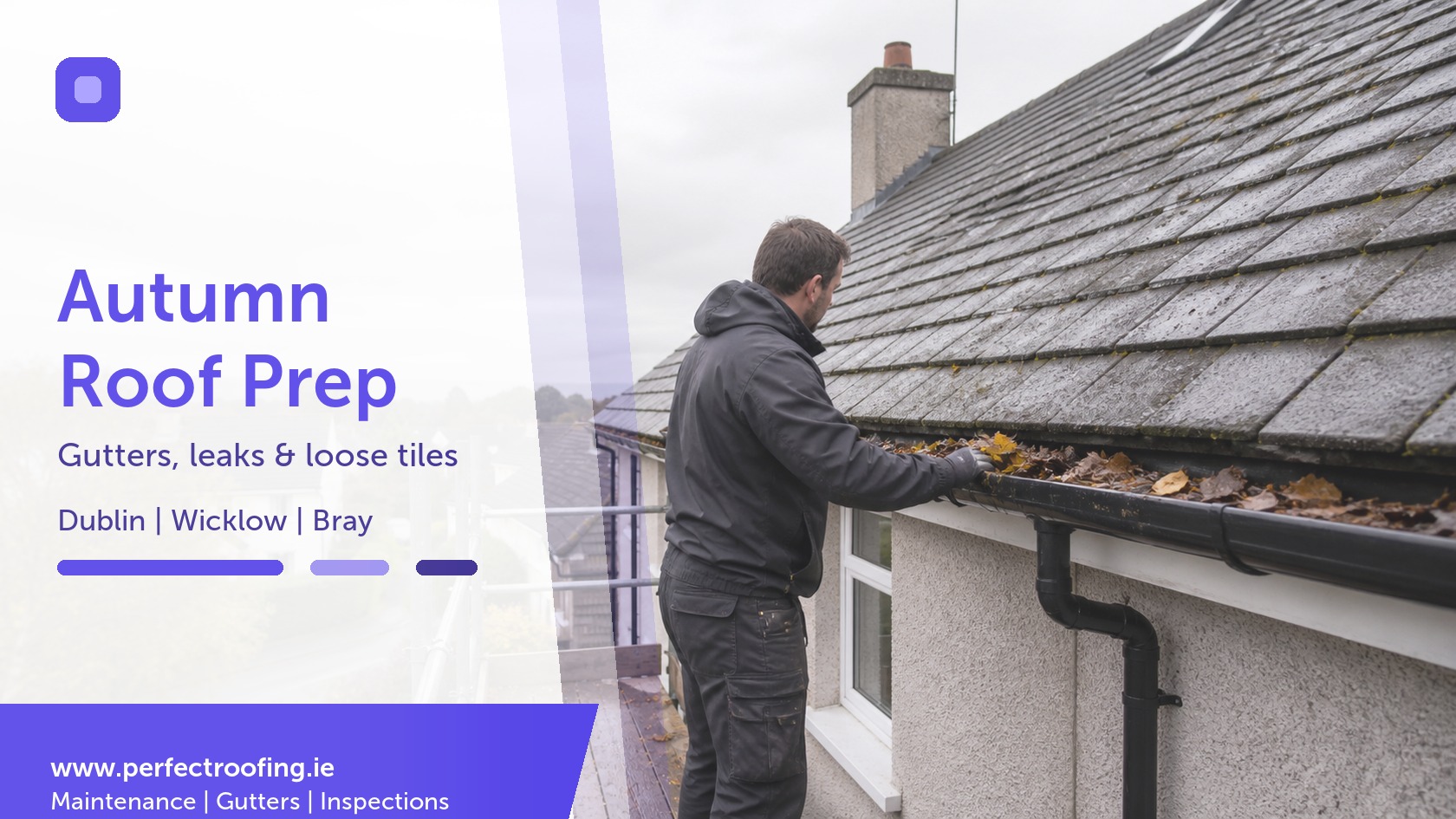
A blocked gutter can make a roof problem look worse than it is. If moss falls from tiles and sits in the gutter, rainwater may spill over the front, run behind the gutter, or splash against walls and windows.
From the ground, look for:
- Plants or grass growing from the gutter
- A dark wet line below one gutter section
- Water marks behind the gutter or on the fascia
- Staining near a downpipe bend
- Overflow that happens at one corner rather than along the whole roof edge
- Moss balls or tile grit visible near the outlet
Do not climb a ladder or walk on the roof to clear moss unless you have proper access, safety equipment, and the right training. Wet moss, old tiles, and roof edges are a bad combination. Perfect Roofing can inspect the roofline safely and check whether the gutter issue is simple cleaning, poor fall, a blocked outlet, fascia movement, or a roof covering problem above.
Pay attention to valleys, chimneys, and roof windows
Moss and roof debris often collect in places where the roof shape changes. These details already handle more water than a simple roof slope, so a blockage can show up indoors quickly.
Key areas to watch include:
- Roof valleys: Moss, leaves, and broken mortar can slow water in the valley channel.
- Chimney flashing: Moss can hide cracked mortar, lifted lead, or loose slates around the stack.
- Dormer cheeks: Debris can sit where the dormer meets the main roof.
- Velux windows and skylights: Moss above the unit can add extra water and debris around the flashing and drainage channels.
- Flat roof outlets: Moss and leaves from nearby pitched roofs can block outlets on extensions, garages, and dormers.
If a damp patch appears below any of these areas, the visible moss may be only part of the story. The repair may involve clearing debris, replacing damaged tiles, checking flashing, improving gutter flow, or reviewing the surrounding roof detail.
Should you pressure wash a mossy roof?
Pressure washing can look like a quick fix, but it is not suitable for every roof. High pressure can disturb tiles, force water under laps, strip surface coatings, damage older materials, or expose weaknesses that were previously hidden.
Before any cleaning method is chosen, the roof should be checked for:
- Tile or slate condition
- Roof pitch and safe access
- Age and surface wear
- Gutter and valley drainage
- Existing leaks or damp marks
- Nearby roof windows, flashing, solar panels, or fragile details
For many homes, a careful maintenance approach is better than aggressive cleaning. That may include safe debris removal, gutter clearing, checking valleys and outlets, replacing damaged tiles, and advising whether moss treatment or further roof work is appropriate for the specific roof.
A simple safe checklist for homeowners
You can learn a lot without leaving the ground.
Use this checklist after a spell of rain:
- Stand back from the house and compare each roof slope.
- Look for heavy moss near the gutter line, valleys, chimneys, dormers, and roof windows.
- Watch whether gutters overflow from one section.
- Check external walls below gutters for staining.
- Look inside the attic for damp smells, wet insulation, or dark marks on timbers.
- Check ceilings below roof valleys, chimneys, and roof windows.
- Note whether the issue appears only in wind-driven rain or every time it rains.
- Take photos from the ground so a roofer can understand the pattern.
Avoid walking on mossy tiles, leaning out of roof windows, or using tools from a ladder. If the roof is high, steep, wet, fragile, or hard to access, leave the inspection to a properly equipped roofer.
Ask Perfect Roofing to check the roof before moss becomes a leak
If moss is blocking gutters, sitting in roof valleys, hiding loose tiles, or appearing near a damp patch, it is worth getting the roof checked before the next heavy spell of rain exposes the weak point.
Perfect Roofing helps homeowners across Dublin City, North Dublin, South Dublin, Lucan, Bray, Wicklow, Naas, and nearby areas with roof inspections, roof repairs, gutter work, flat roofing, Velux window checks, and roof maintenance advice. We can inspect the problem safely, explain what is cosmetic and what needs action, and recommend the right repair or maintenance plan for your roof.
To arrange a roof or gutter inspection, contact Perfect Roofing by WhatsApp, phone, or email.
Need a roofer to take a look?
Send a few photos on WhatsApp, email us, or tap the number to call. We cover Dublin City, North Dublin, South Dublin, Lucan, Bray, Wicklow, Naas, and nearby locations.