Roof Maintenance
Moss on Roof Tiles: Checks for Dublin and Wicklow Homes
A practical homeowner guide to moss on roof tiles, blocked gutters, slipped tiles, valley debris, damp clues, and roof maintenance decisions in Dublin, Wicklow, Bray, Lucan, Naas, and nearby areas.
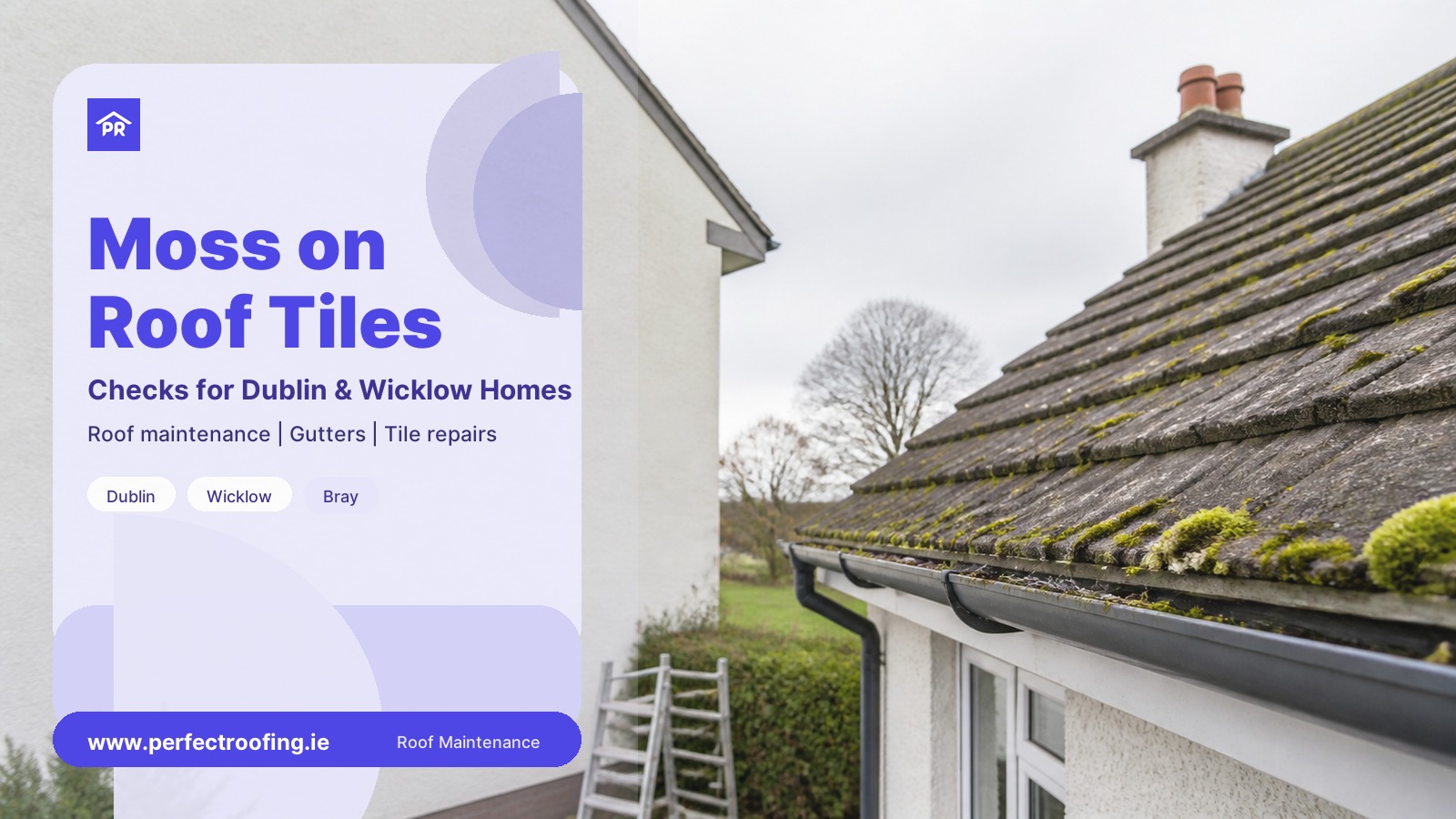
Moss on roof tiles is common on Irish homes, especially where a roof is shaded by trees, nearby buildings, north-facing slopes, or damp coastal air. A small amount of moss does not automatically mean the roof is failing, but heavy growth can hide cracked tiles, slow water down, feed debris into gutters, and make it harder to spot early leak warning signs.
For homeowners in Dublin City, North Dublin, South Dublin, Lucan, Bray, Wicklow, Naas, and nearby areas, the important question is not simply "Is there moss?" It is "Is the moss affecting drainage, tile condition, gutters, valleys, roof windows, or damp inside the home?"
This guide explains what you can check safely, when moss is mostly cosmetic, and when Perfect Roofing may recommend roof maintenance, gutter work, tile repairs, or a closer roof inspection.
Start with safe ground-level checks
Do not climb onto a roof, walk on mossy tiles, lean a ladder into gutters, or reach out of a roof window to inspect moss. Moss can make surfaces slippery, and old tiles, slates, gutters, flat roof edges, and roof windows can be damaged by unsafe foot traffic.
Start from safe places only:
- The driveway, garden, footpath, or street.
- An upstairs window where you can look without leaning out.
- A safe attic hatch view or boarded attic area.
- A neighbouring viewpoint, only with permission.
- Ground level using phone zoom for wider roof photos.
Take one wide photo of the whole roof slope before close-ups. A roofer needs to see where the moss sits in relation to the ridge, gutters, valleys, chimneys, roof windows, dormers, extensions, and neighbouring rooflines.
When moss is usually lower priority
Light moss growth can be a lower-priority maintenance issue when the roof is otherwise sound, water still drains freely, gutters are clear, and there are no indoor damp signs. Many tiled and slated roofs will show some organic growth over time.
Moss is usually less urgent when:
- It appears as scattered patches rather than thick mats.
- Tiles or slates still sit flat and even.
- Gutters are not overflowing.
- Valleys and outlets look clear from safe viewpoints.
- There are no ceiling stains, attic damp patches, or musty smells.
- There is no regular roof debris on paths, patios, or lower roofs.
Even then, it is useful to keep dated photos. Compare the same roof slope every few months so you can see whether growth is spreading, drainage is changing, or individual tiles are moving.
When moss can become a roof maintenance problem
Moss becomes more important when it affects how water leaves the roof. Thick growth can hold moisture, lift slightly at tile edges, break loose into gutters, and collect in valleys or behind chimneys. It can also disguise cracked tiles, slipped slates, tired mortar, damaged underlay, and older patch repairs.
Warning signs include:
- Heavy moss sitting along tile laps or slate edges.
- Moss building up near the gutter line.
- Gutters overflowing during ordinary rain.
- Downpipes that gurgle, back up, or spill from joints.
- Moss, grit, tile fragments, or mortar pieces on the ground.
- Valleys that look dark, blocked, or uneven.
- Damp marks below eaves, around ceilings, or beside chimney breasts.
- Roof windows or skylights with debris around the flashing channels.
If you see several of these signs together, the job may be more than cosmetic cleaning. The roof and drainage path should be checked as a system.
Check gutters before assuming the roof needs major work
Moss often causes trouble after it leaves the roof surface. It can roll into the gutter, mix with leaves and grit, and block outlets. Once a gutter overflows, water can run behind fascia boards, soak soffits, stain walls, or spill onto lower roofs, porches, bay windows, and extensions.
Useful gutter clues include:
- Water spilling over the same section during rain.
- Plants, moss, or dark sludge visible in the gutter.
- A downpipe that stays dry while the gutter above is full.
- Damp staining on render or brickwork below the roof edge.
- A gutter run sagging under debris weight.
- Water dripping from joints long after rain stops.
In Dublin terraces and semi-detached homes, a blocked gutter can affect neighbouring rooflines or shared downpipes. In Lucan, Naas, Bray, and Wicklow homes with extensions or garages, overflow can also drop onto flat roofs, lower gutters, rooflights, and wall junctions.
Pay attention to valleys, chimneys, and roof windows
Moss is most likely to cause problems where water already slows down. Valleys, chimney backs, dormer cheeks, wall junctions, roof windows, and low-pitch extensions all need clear drainage routes.
Check safely for:
- Moss packed into a valley channel.
- Debris gathering behind a chimney stack.
- Slates or tiles beside a valley that look uneven.
- Damp marks indoors near a chimney breast or ceiling corner.
- Roof-window flashing channels that look blocked.
- Staining below a Velux window, skylight, or rooflight.
- Moss sitting above a flat roof outlet or lower gutter.
Do not scrape or pressure-wash these areas yourself from a ladder. Poor cleaning can break tiles, force water under laps, damage flashings, or leave the roof more vulnerable than before.
Look for tile and slate movement
Moss can make it harder to see whether a roof covering is still aligned. A few dark patches may be harmless, but uneven rows, raised edges, missing corners, or broken pieces should be taken seriously.
From a safe viewpoint, look for:
- One tile or slate sitting lower than the others.
- Lifted edges where wind can catch the covering.
- Cracked tiles hidden under moss clumps.
- Missing ridge, hip, or verge mortar pieces.
- A line of moss that follows a sagging or uneven roof area.
- Fresh roof debris on paths after windy weather.
A local repair may be enough if the surrounding roof is sound and the issue is limited to a small number of tiles or slates. A wider inspection may be better when several areas have moved, old underlay is visible, or earlier repairs keep failing.
Check the attic after rain
The attic can help separate surface moss from a leak risk, but only if you can inspect it safely. Do not step between joists, move through loose insulation, or crawl toward the eaves unless the space is designed for safe access.
If safe, look for:
- Damp or stained insulation.
- Dark marks on rafters, battens, or old felt.
- Water tracks running down from one roof area.
- Rust marks around nails or fixings.
- Daylight around damaged tiles, vents, ridges, or valleys.
- Musty smells near the eaves or chimney.
- Condensation that may point to blocked roof ventilation.
Take photos and note timing. Damp that appears after wind-driven rain may point to a roof covering or flashing issue. Damp that appears during cold mornings may involve ventilation or condensation as well as the roof covering.
Should moss be removed from roof tiles?
Sometimes moss removal is sensible. Sometimes the better first step is a roof inspection, gutter clean, valley clearance, or local repair. The answer depends on roof pitch, covering type, access, tile condition, exposure, and how much debris is reaching the drainage system.
| Situation | What it may mean | Sensible next step |
|---|---|---|
| Light scattered moss | Often a monitoring issue | Keep safe photos and check gutters |
| Moss filling gutters | Drainage is already affected | Arrange gutter cleaning and roofline checks |
| Moss packed into valleys | Water flow may be restricted | Ask for valley and surrounding tile inspection |
| Moss hiding cracked tiles | Leak risk may be local | Check the affected slope before cleaning |
| Moss around roof windows | Flashing drainage may be blocked | Inspect the roof-window area and nearby tiles |
| Moss plus attic damp | More than cosmetic growth | Book a roof leak investigation |
Avoid harsh cleaning methods that can damage tiles, slates, coatings, flashings, gutters, or roof membranes. A practical roofer should explain whether cleaning, repair, maintenance, or replacement planning is the better route for your roof.
When to book a roof inspection
You do not need to call a roofer for every small green patch. You should arrange a closer look when moss is linked with water movement, visible damage, or repeated damp.
Book a roof inspection if you notice:
- Gutter overflow below mossy roof sections.
- Moss or broken roof pieces falling onto paths.
- Damp ceilings, attic stains, or musty smells after rain.
- Blocked valleys, roof-window channels, or flat roof outlets.
- Slipped tiles, cracked slates, loose ridges, or damaged verges.
- Old patch repairs hidden by moss.
- A roof that is already being disturbed for gutters, Velux windows, skylights, flat roofing, attic work, or a roof replacement plan.
Perfect Roofing can check whether the problem is local debris, gutter failure, tile damage, flashing wear, poor ventilation, flat roof drainage, or a wider maintenance issue.
Ask Perfect Roofing about roof moss, gutters, and maintenance
If moss is collecting on your roof tiles, blocking gutters, hiding cracked tiles, or appearing alongside damp marks inside the home, do not climb onto the roof to investigate it yourself. Take clear photos from a safe place and note when any damp, overflow, or debris appears.
Contact Perfect Roofing by WhatsApp, phone, or email for practical advice, a roof inspection, or a repair quotation. We help homeowners across Dublin City, North Dublin, South Dublin, Lucan, Bray, Wicklow, Naas, and nearby areas with roof maintenance, roof repairs, gutters, roof inspections, flat roofing, roof replacements, new roofs, Velux windows, skylights, roof ventilation, and related roofing consultation.
A mossy roof does not always need major work, but it should not be ignored when it starts affecting drainage or hiding damage. A careful inspection can separate routine maintenance from a leak risk before the problem spreads.
Need a roofer to take a look?
Send a few photos on WhatsApp, email us, or tap the number to call. We cover Dublin City, North Dublin, South Dublin, Lucan, Bray, Wicklow, Naas, and nearby locations.