Gutters
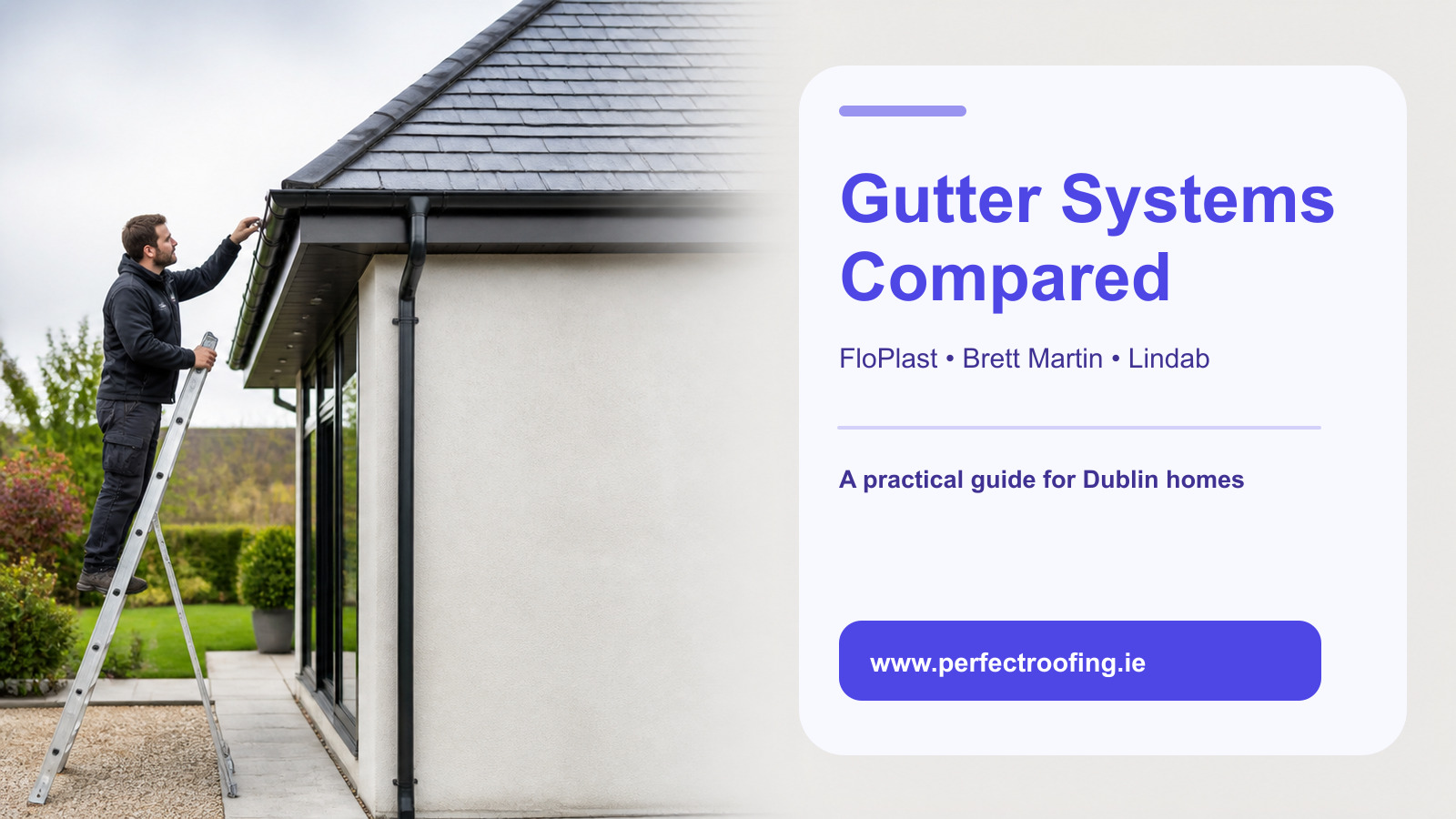
PVC-U vs Cast-Iron-Style vs Metal Gutters for Dublin Homes
A practical gutter material comparison for Dublin, Lucan, Naas, Bray, Wicklow, and nearby homeowners comparing PVC-U, cast-iron-style, steel, and aluminium rainwater systems.
Gutters do a quiet job until they fail. A blocked outlet, sagging run, cracked joint, undersized profile, or poorly fixed downpipe can send rainwater down walls, behind fascia, into soffits, or towards the base of the house. In Dublin and nearby areas, wind-driven rain and regular wet weather make the right gutter choice more important than the colour alone.
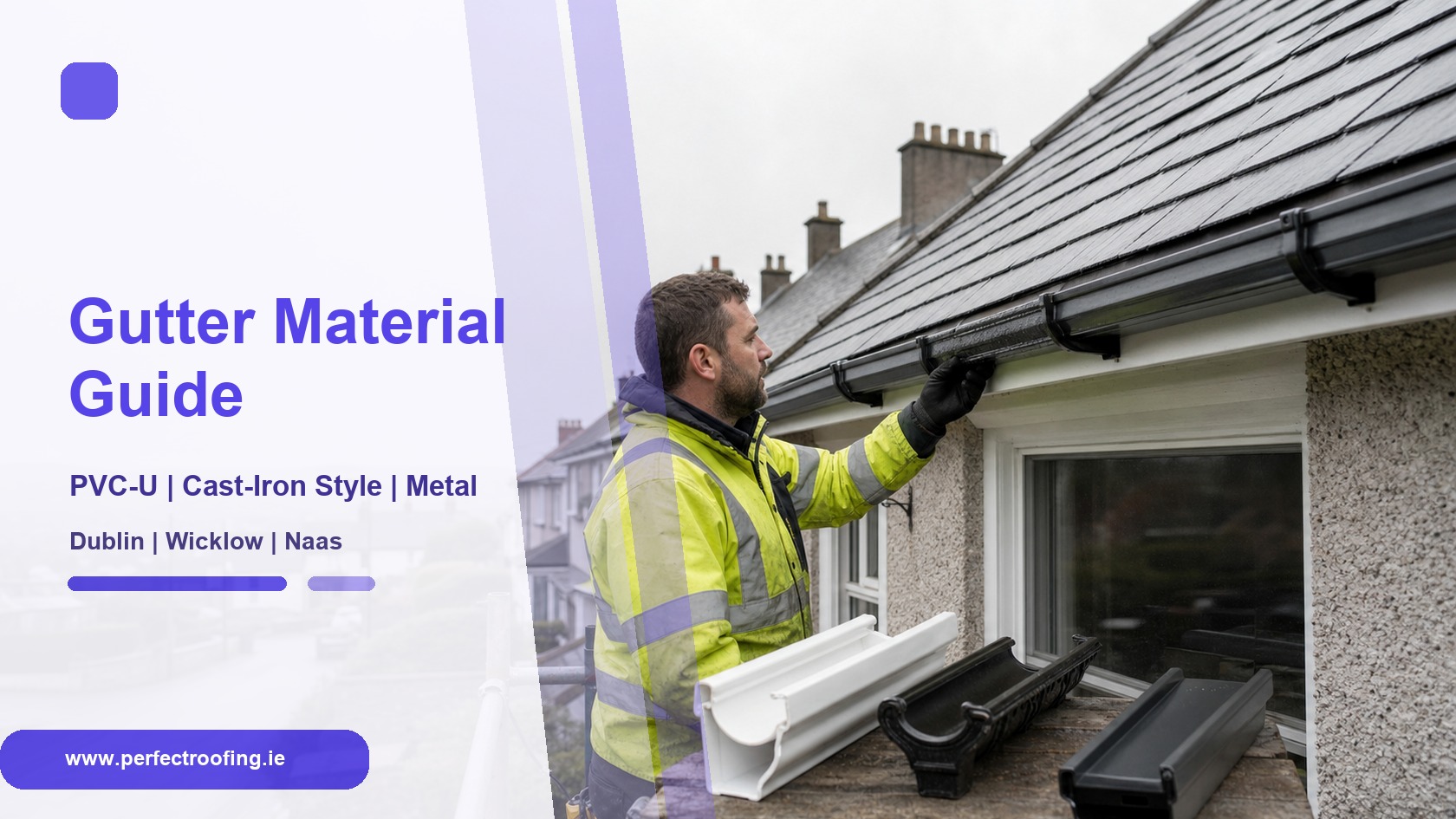
Homeowners usually compare three broad options: PVC-U plastic gutters, cast-iron-style plastic gutters, and metal systems such as steel or aluminium. Each can work well when the roof area, outlet positions, fascia condition, access, and house style are considered properly.
This guide explains the practical differences for homes in Dublin City, North Dublin, South Dublin, Lucan, Bray, Wicklow, Naas, and nearby locations, so you can ask better questions before replacing gutters or planning wider roofline work.
Quick comparison
| Gutter option | Often suits | Check carefully |
|---|---|---|
| PVC-U plastic gutters | Everyday domestic replacements, extensions, garages, rental properties, and straightforward rooflines | Profile capacity, bracket spacing, expansion gaps, seals, fascia condition, colour match, and outlet positions |
| Cast-iron-style plastic gutters | Period homes, terraces, renovations, and houses where traditional appearance matters | Whether the style suits the property, profile capacity, connection to existing gutters, colour choice, and detailing around hoppers |
| Steel or aluminium gutters | Modern homes, exposed sites, larger roof areas, and projects where a premium metal finish is wanted | Specification, corrosion protection, thermal movement, jointing, compatibility with other metals, access, and budget |
There is no single best gutter for every house. A compact Dublin City terrace, a wide detached home in Lucan, a coastal-exposed property near Bray, and a large roof in Wicklow can each need different drainage decisions.
PVC-U plastic gutters
PVC-U is the familiar choice on many Irish homes. It is lightweight, widely available, and usually practical for standard domestic gutter replacement. It can suit semi-detached houses, terraces, extensions, garages, porches, and many straightforward rooflines.
FloPlast describes its rainwater systems as offering traditional and modern profiles in a range of colours, with PVC-U systems including half round, square line, ogee, high-capacity, and other profiles. Its product information also notes that gutter flow capacity depends on the system type, outlet position, and whether the gutter is laid level or to a fall.
PVC-U may be worth considering when:
- The existing gutter layout is simple and can be replaced like-for-like.
- The fascia board is sound and suitable for reliable bracket fixing.
- You want a practical, cost-conscious option for a standard roofline.
- Matching nearby plastic downpipes, soffits, or fascia matters.
- You need a profile that is easy to inspect, repair, and replace later.
Do not choose PVC-U only because it is familiar. The correct profile, number of outlets, bracket spacing, joint alignment, and expansion allowance all matter. A small gutter on a large roof face can still overflow, especially around valleys, dormers, and long rear extensions.
Cast-iron-style plastic gutters
Cast-iron-style systems are designed to give a more traditional look without the weight and installation demands of true cast iron. They can suit older terraces, period-style renovations, cottages, and houses where standard glossy plastic would look out of place.
Brett Martin Cascade is one example of a cast-iron-effect rainwater range. Brett Martin describes Cascade as plastic guttering and downpipe profiles with traditional cast iron styling, heritage colour choices, several gutter profiles, hopper options, and a 10-year guarantee subject to its rainwater guarantee terms.
Cast-iron-style plastic may be worth considering when:
- The home has older brickwork, render, stone, or period roofline details.
- A black, anthracite, green, or other heritage-style finish would suit the elevation.
- The homeowner wants a traditional appearance without true cast iron.
- Existing hoppers, downpipes, or decorative details need a sympathetic replacement.
- The roofline is visible from the street and appearance matters.
The trade-off is that style should not lead the whole decision. Capacity, outlet size, fascia condition, downpipe routes, and compatibility with the existing rainwater system still have to be checked. A good-looking gutter that cannot handle the roof area will not solve overflow.
Steel and aluminium gutters
Metal rainwater systems can suit homeowners who want a more robust, architectural, or long-term finish. Steel and aluminium gutters are often considered for contemporary homes, exposed locations, larger roof areas, and projects where the roofline is being upgraded as part of a wider renovation.
Lindab Ireland describes Rainline as a steel gutter system for domestic and commercial use, with colour and finish options. Lindab's rainwater systems information also says its roof drainage range is available in steel and aluminium, with several dimensions, colours, and components.
Metal gutters may be worth considering when:
- The house has a modern or high-spec exterior finish.
- A darker, sharper metal roofline would improve the appearance.
- The roof area or exposure justifies a more specification-led system.
- The project already involves fascia, soffit, roof repair, or roof replacement work.
- The homeowner wants a system chosen for long-term performance, not only upfront cost.
Ask how the system will be jointed, supported, protected from corrosion, and connected to existing downpipes or drainage. Metal systems can be excellent, but they need careful specification and installation. Mixing metals, cutting corners on brackets, or leaving poor outlet positions unchanged can create avoidable problems.
What about true cast iron?
Traditional cast iron is still used on some heritage buildings, protected structures, and high-end restoration projects. It can look excellent in the right setting, but it is heavy and more specialised than most routine domestic gutter replacements.
For many homeowners, the realistic decision is between a practical PVC-U system, a cast-iron-style plastic system, or a steel/aluminium system. If your home has conservation requirements, protected features, or shared terrace details, ask for site-specific advice before changing the external appearance of the roofline.
Capacity matters more than material name
Overflow is often blamed on the gutter material, but the real cause may be sizing or layout. A good material can still fail if too much roof water is being pushed through too few outlets.
Before choosing a gutter, check:
- The roof area draining into each gutter run
- Whether valleys, dormers, flat roofs, or extensions discharge into the same run
- The number and position of downpipes
- Whether outlets are blocked, cracked, loose, or too small
- Whether gutter falls have been lost because brackets have sagged
- Whether nearby trees add leaves, moss, and grit
- Whether the fascia board is strong enough to hold new brackets
- Whether a high-capacity profile is needed on long or steep roof slopes
Homes in North Dublin and South Dublin often have rear extensions where older gutter routes were never updated after extra roof area was added. In Bray and Wicklow, exposed roof edges can also make poor bracket fixing and overflowing corners more obvious during wind-driven rain.
Appearance and colour choices
Gutters are part of the house frontage, especially on terraces, semi-detached homes, and rendered elevations. A standard black half-round gutter may be fine on one house and look unfinished on another.
Think about:
- Roof colour: slate, concrete tile, clay tile, or flat roof edge
- Fascia and soffit colour
- Window and door frame colour
- Brick, render, or stonework
- Whether downpipes are hidden, prominent, or shared
- Whether neighbouring homes have matching roofline details
- Whether a modern square profile or a softer round profile looks better
For some Dublin City terraces, a cast-iron-style profile may look more natural than standard plastic. For newer homes in Lucan or Naas, a clean square or metal profile may suit the property better. For rural or exposed homes around Wicklow, the decision may lean more towards robustness, bracket fixing, and clean drainage than appearance alone.
Pros and cons by homeowner priority
If you want a practical everyday replacement:
- PVC-U is usually the simplest option to discuss for standard domestic gutter work.
- The risk is choosing a profile that is too small, poorly supported, or badly connected to the downpipes.
If you want a traditional look:
- Cast-iron-style plastic can give period character without using true cast iron.
- The risk is focusing on appearance while ignoring capacity, outlets, fascia condition, or shared drainage details.
If you want a premium exterior finish:
- Steel or aluminium systems can suit contemporary homes and specification-led upgrades.
- The risk is treating metal gutters as a simple swap when the project needs proper detailing, compatible fixings, and careful jointing.
If you want fewer future problems:
- The best choice is usually the system that fits the roof area, outlet layout, fascia condition, access, and maintenance needs.
- The risk is replacing only the visible gutter while leaving blocked downpipes, rotten fascia, poor falls, or defective roof edges untouched.
When gutter replacement should include roofline checks
Gutter work is often the right time to inspect nearby roof details. If access equipment is being arranged, it may be sensible to check more than the gutter clips.
Ask a roofer to look at:
- Fascia and soffit boards
- Eaves trays and underlay support at the roof edge
- Slipped slates or tiles above the gutter
- Valley outlets and debris build-up
- Flat roof edges that discharge into the gutter
- Dormer gutters and small hidden outlets
- Chimney or parapet details that shed water into the same run
- Downpipe connections to gullies or drains
Do not climb ladders or roofs to inspect these details yourself. Take photos from the ground or an upstairs window if you can do so safely, then ask for a proper inspection.
Ask Perfect Roofing which gutter system suits your home
Perfect Roofing helps homeowners across Dublin City, North Dublin, South Dublin, Lucan, Bray, Wicklow, Naas, and nearby areas with gutter repairs, gutter replacement, roof inspections, roof repairs, flat roofing, Velux windows, skylights, roof ventilation, fascia, soffits, and related roofline work.
If you are comparing PVC-U, cast-iron-style, steel, aluminium, or another rainwater system, contact Perfect Roofing by WhatsApp, phone, or email. Send photos if you can take them safely, explain where the gutter overflows or leaks, and tell us whether the issue affects a main roof, extension, dormer, garage, or flat roof. We can recommend a practical option based on your roof, budget, weather exposure, access, and long-term plans.
Need a roofer to take a look?
Send a few photos on WhatsApp, email us, or tap the number to call. We cover Dublin City, North Dublin, South Dublin, Lucan, Bray, Wicklow, Naas, and nearby locations.