Roof Inspections
Roof Checks Before an Attic Conversion in Dublin and Wicklow Homes
A practical pre-conversion roof inspection guide for Dublin, Wicklow, Bray, Lucan, Naas, and nearby homeowners planning attic rooms, roof windows, ventilation, or dormer work.
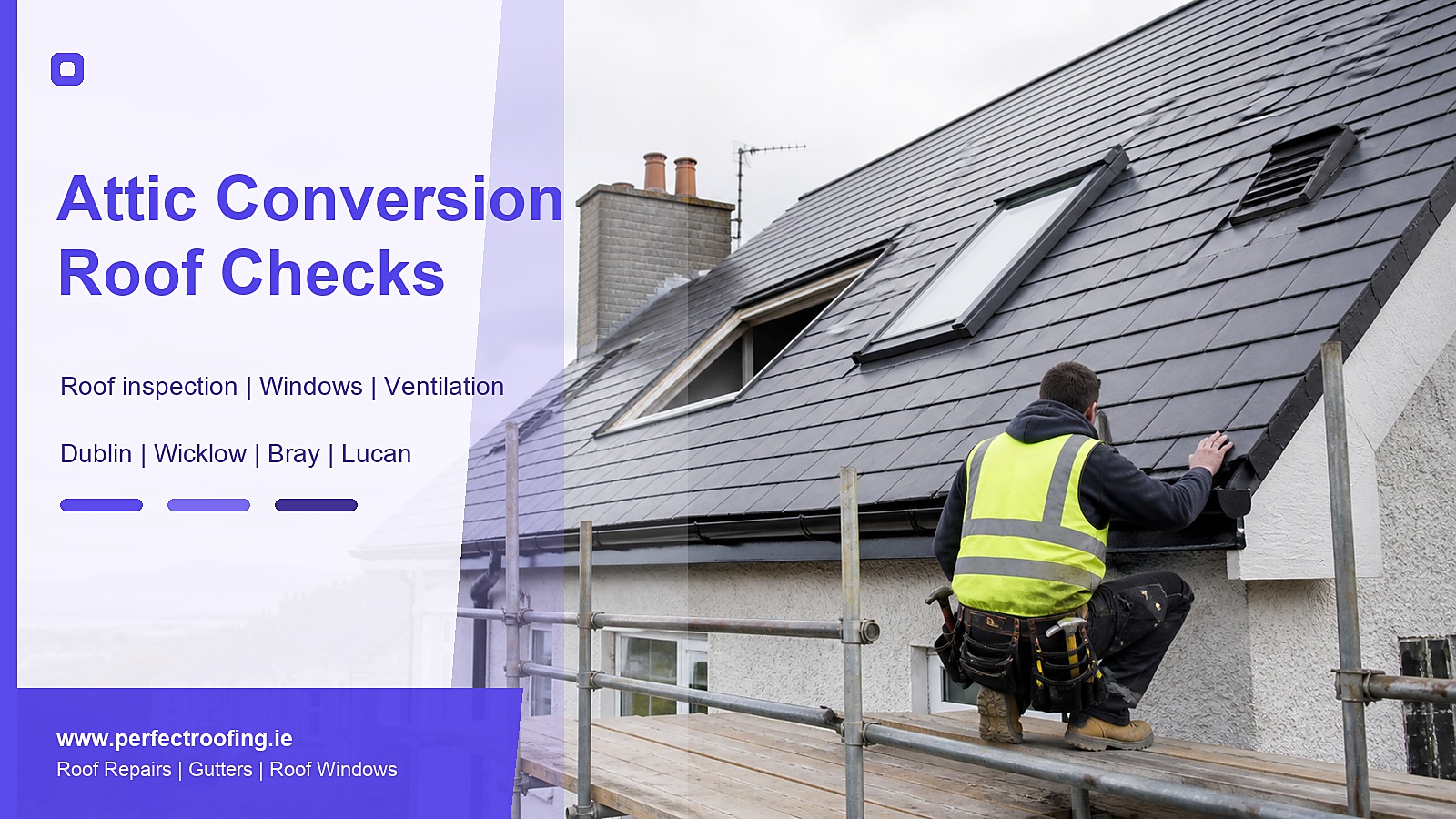
An attic conversion can make a home feel larger, brighter, and more useful, but the roof should be checked before builders, joiners, window installers, or insulation work begin. A small leak, blocked gutter, tired flashing detail, or poorly ventilated roof space can become harder to fix once the attic is finished and decorated.
For homeowners in Dublin City, North Dublin, South Dublin, Wicklow, Bray, Lucan, Naas, and nearby areas, a pre-conversion roof inspection is a practical way to understand what condition the roof is in now, what details may need repair first, and how roof windows, skylights, gutters, ventilation, and existing roof coverings should be planned around.
This guide explains what to check, what warning signs matter, and when to ask Perfect Roofing for a roof inspection before an attic conversion moves too far ahead.
Why check the roof before converting the attic?
An attic conversion changes how the roof space is used. Areas that were once cold, open, and easy to inspect may become insulated, lined, partitioned, and finished. That makes it more important to find roofing defects early.
A pre-conversion roof check can help identify:
- Slipped, cracked, loose, or weathered slates and tiles.
- Old underlay or sarking felt that is no longer protecting the roof space properly.
- Chimney, valley, dormer, or wall flashing defects.
- Damp staining around rafters, ceiling joists, chimney breasts, or roof windows.
- Gutters, downpipes, fascia, and soffits that may need repair while access is available.
- Ventilation gaps that are blocked, missing, or likely to be affected by insulation.
- Flat roof sections on rear extensions, dormers, porches, or garages that may leak into the same area.
- Roof-window or skylight positions that need careful flashing and drainage planning.
The aim is not to complicate the project. It is to avoid finishing an attic room around a roof problem that could have been repaired more easily before the conversion work started.
Start with safe signs inside the attic
Do not climb onto the roof to inspect it yourself. Roofs can be slippery, fragile, and unsafe without proper access equipment. Start inside the attic or from safe viewpoints only.
Before the space is lined, look for:
- Daylight showing through gaps in the roof covering.
- Damp or dark staining on timbers.
- Wet, compressed, or mould-marked insulation.
- Brown stains near chimney breasts, gable walls, valleys, or roof junctions.
- Musty smells after rain.
- Rusted fixings, nail staining, or water tracks on old underlay.
- Loose debris, broken slate pieces, or tile fragments.
- Areas where insulation blocks the eaves and reduces airflow.
Photos are useful. Take wide shots of the roof slopes, then closer safe photos of damp marks, chimney junctions, valleys, rafters, underlay, vents, and any existing roof windows. These can help a roofer understand the pattern before a site visit.
Check the existing slates, tiles, ridges, and valleys
Many attic conversions start with the assumption that the existing roof covering is sound. That assumption should be checked, especially on older Dublin terraces, semi-detached homes in South Dublin or Lucan, and more exposed properties around Bray and Wicklow.
From the ground, garden, street, or a safe upstairs window, look for:
- Slates or tiles that have slipped out of line.
- Cracked, missing, or mismatched replacement pieces.
- Uneven roof slopes or sagging patches.
- Loose ridge or hip tiles.
- Mortar gaps on older ridge, hip, or verge details.
- Moss, leaves, or grit collecting in valleys.
- Valleys that look blocked, patched, or stained.
- Exposed underlay near a damaged tile or slate.
If the roof covering is near the end of its useful life, it is worth discussing repair or replacement options before the attic is fitted out. A local repair may be enough for isolated damage, but repeated defects can point to a wider roofing issue.
Pay close attention to chimneys and roof junctions
Chimneys, party walls, parapets, dormers, gables, and extension junctions are common leak points because several materials meet in one place. These details deserve attention before attic plasterboard, insulation, storage, or built-in furniture makes access more awkward.
Warning signs include:
- Damp marks beside a chimney breast.
- Lead flashing that has lifted, cracked, slipped, or pulled out of the wall.
- Old sealant repairs around flashing.
- Cracked pointing, damaged render, or loose brickwork near the roof line.
- Staining below a party wall, parapet, or gable junction.
- Moss and debris collecting where two roof slopes meet.
- Damp that appears only during wind-driven rain.
A visible stain does not always sit directly below the entry point. Water can track along underlay, battens, rafters, or plasterboard before it appears indoors. That is why a proper roof inspection is better than guessing from one damp patch.
Plan roof windows and skylights around the roof, not just the room
Roof windows and skylights can transform an attic room, but they need to work with the existing roof covering, pitch, drainage, ventilation, and flashing details. The best position from inside the room is not always the easiest or most reliable position on the roof.
Before choosing locations, consider:
- Whether the surrounding slates or tiles are sound enough to disturb and refit.
- How water will drain around the window flashing.
- Whether the window sits too close to a valley, chimney, ridge, gutter, or side wall.
- Whether nearby gutters and downpipes can cope with the roof layout.
- How the window will be accessed safely for installation and maintenance.
- Whether condensation, not just rainwater, could become an issue in the finished room.
- Whether existing roof windows or skylights have signs of staining, poor flashing, or blocked drainage channels.
For homes in Dublin City, roof access and tight terraces can influence the installation plan. Around Bray and Wicklow, exposed roof slopes may need careful attention to flashing, wind-driven rain, and the surrounding roof covering. In Lucan and Naas, larger roof areas and rear extensions often need coordinated gutter and ventilation checks.
Ventilation matters before insulation closes the space
Attic conversions often involve insulation upgrades, airtightness work, heating changes, and new room layouts. If roof ventilation is not considered, moisture can collect behind finished surfaces and be mistaken for a roof leak later.
Before work progresses, check:
- Whether eaves ventilation is present and clear.
- If insulation has been pushed tightly into the eaves.
- Whether ridge, tile, slate, or soffit vents are blocked or missing.
- If bathroom or kitchen extract ducts pass through or discharge into the roof space.
- Whether old damp marks look like condensation rather than rainwater entry.
- How the new insulation build-up will maintain the roof space ventilation strategy.
Perfect Roofing can inspect visible roof ventilation details and roof covering issues, but a full attic conversion may also need input from the conversion contractor and other qualified professionals. The important point for homeowners is to raise ventilation before the roof space is closed up.
Gutters, fascia, soffits, and roofline checks
If scaffolding or safe access is being arranged for an attic conversion, it can be a good time to deal with roofline maintenance. Gutters, fascia, soffits, and downpipes are often easier to inspect and repair before access is removed.
Check for:
- Gutters that overflow, sag, or pull away from the fascia.
- Downpipes that are loose, blocked, cracked, or poorly connected.
- Fascia boards with staining, rot, gaps, or movement.
- Soffits with dark marks, open joints, or poor ventilation.
- Moss and tile grit building up in gutter runs.
- Water marks on walls below gutter joints or corners.
- Lower roofs, porch roofs, bay roofs, or garage roofs that receive runoff from the main roof.
For taller homes in North Dublin, South Dublin, Dublin City, and Naas, access can be a meaningful part of the job. Combining roof, gutter, fascia, soffit, roof-window, and ventilation checks can be more efficient than arranging separate visits after the attic is finished.
Flat roofs, dormers, and rear extensions
Some attic projects include dormers, flat roof sections, or work near existing rear extensions. These areas should be inspected as carefully as the main pitched roof because they often include rooflights, outlets, upstands, parapets, and wall junctions.
Flat roof warning signs include:
- Ponding water after rain.
- Cracks, splits, bubbles, or lifted trims.
- Blocked outlets, scuppers, or gutters.
- Soft decking or sagging areas.
- Low or damaged upstands around walls and rooflights.
- Previous patch repairs that have failed.
- Damp marks on ceilings below a dormer or extension.
A dormer or flat roof covering should not be selected only by appearance. Drainage, outlet position, upstand height, access, insulation build-up, foot traffic, and future maintenance all affect what specification is practical.
Questions to ask before work starts
Before the attic conversion moves into detailed build work, ask practical roofing questions such as:
- Has the roof been inspected recently by a roofer?
- Are there active leaks, damp marks, or old stains in the attic?
- Are any slates, tiles, ridge pieces, valleys, or flashings already damaged?
- Will new roof windows, skylights, or dormers disturb existing roof coverings?
- How will gutters, downpipes, fascia, soffits, and lower roofs be protected?
- Will attic ventilation be maintained after insulation is installed?
- Is any roof repair best done while scaffolding or access equipment is already in place?
- Who is responsible for roofing details if the conversion contractor finds a defect during the job?
Clear photos and a written repair list can help the homeowner, roofer, and conversion contractor stay aligned. It also reduces the chance of a roof issue being discovered only after the new attic room is plastered and painted.
When to repair before converting
Some roof issues can be monitored, but others should usually be addressed before the attic is finished.
Repair-first situations may include:
- Active leaks or damp timbers.
- Missing, cracked, or badly slipped slates and tiles.
- Failed chimney or wall flashing.
- Blocked or damaged valleys.
- Rotten fascia or soffit sections.
- Gutters overflowing into walls or lower roof areas.
- Known leaks around existing roof windows or skylights.
- Flat roof ponding, soft decking, or failed upstands.
- Poor roof ventilation that is likely to be affected by new insulation.
If the roof has several defects, repeated leak history, or widespread age-related wear, a wider repair or replacement discussion may be more sensible than patching isolated symptoms.
Ask Perfect Roofing before converting your attic
Perfect Roofing helps homeowners across Dublin City, North Dublin, South Dublin, Lucan, Bray, Wicklow, Naas, and nearby areas with roof inspections, roof repairs, roof replacements, new roofs, gutters, flat roofing, Velux windows, skylights, roof ventilation, and related roofing consultation.
If you are planning an attic conversion, contact Perfect Roofing by WhatsApp, phone, or email before the roof space is closed up. Send safe photos if you have them, and tell us the roof age, leak history, planned roof-window or dormer work, access situation, and any damp marks you have noticed. We can inspect the roof safely and recommend practical roofing work before the conversion moves too far ahead.
Need a roofer to take a look?
Send a few photos on WhatsApp, email us, or tap the number to call. We cover Dublin City, North Dublin, South Dublin, Lucan, Bray, Wicklow, Naas, and nearby locations.