Roof Replacement
Roof Replacement or Repair? A South Dublin and Wicklow Homeowner Guide
A practical guide for deciding whether roof repairs are enough or whether a roof replacement is the better long-term option for homes in South Dublin, Wicklow, Bray, Dublin City, Lucan, Naas, and nearby areas.
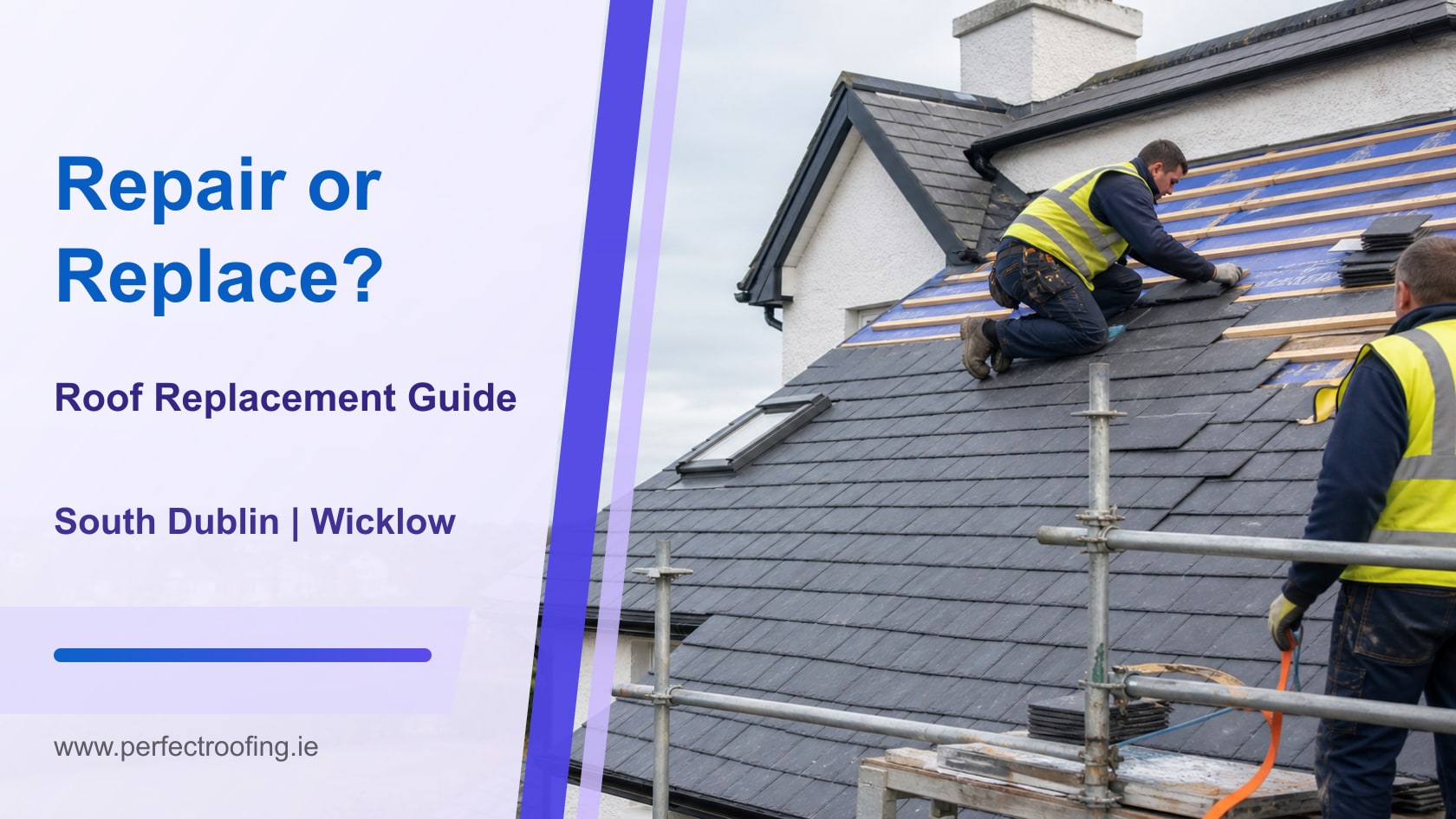
If a roof leaks once, a targeted repair may be all it needs. If the same roof keeps causing damp patches, loose slates, broken tiles, gutter problems, or attic moisture, the better question becomes: is another repair still good value, or is it time to plan a roof replacement?
For homeowners in South Dublin, Wicklow, Bray, Dublin City, Lucan, Naas, and nearby areas, the answer depends on the roof's age, condition, exposure, previous repairs, access, and how long you plan to stay in the property. This guide explains the practical signs Perfect Roofing looks for when helping homeowners choose between repair and replacement.
Start with the pattern, not just the latest leak
A single leak stain does not always mean the whole roof has failed. Water can enter through a slipped slate, cracked tile, damaged flashing, roof valley, chimney junction, flat roof outlet, or roof window detail, then travel before showing indoors.
The bigger concern is the pattern behind the problem:
- The same leak returns after previous repairs.
- New leaks appear in different rooms after each spell of heavy rain.
- Several slates or tiles are loose, cracked, or missing.
- The roof surface looks uneven, sagging, badly patched, or heavily weathered.
- Flashings, valleys, ridge details, and gutters are all showing wear at the same time.
- The attic has damp insulation, musty smells, dark staining, or poor airflow.
When several of these issues appear together, a replacement may be more sensible than repairing one visible defect at a time.
When a roof repair is usually the practical choice
Roof repair can be the right route when the covering is generally sound and the problem is localised. A professional inspection can often identify a clear cause and fix it without disturbing the rest of the roof.
Repairs may suit:
- A small number of slipped or cracked slates or tiles.
- A damaged section of flashing around a chimney, wall, valley, skylight, or Velux window.
- A blocked valley, gutter, outlet, or downpipe causing water to back up.
- Isolated storm damage where the surrounding roof is still in good condition.
- A minor leak on a roof that has otherwise been maintained well.
- Localised wear around an extension junction, porch roof, dormer, or garage roof.
This approach is especially useful if you need a fast fix, the roof has plenty of serviceable life left, or you are planning a larger home project later and want to avoid unnecessary work now.
When replacement starts to make more sense
A roof replacement is a bigger project, but it can be the better long-term decision when repairs are becoming frequent, disruptive, or uncertain. Instead of patching visible symptoms, replacement allows the roof covering, underlay, battens, fixings, ventilation, gutters, and roofline details to be reviewed together.
Replacement may be worth discussing when:
- Repairs have become a recurring expense.
- Large areas of slate, tile, underlay, or battens are failing.
- The roof has widespread nail fatigue, cracked coverings, or loose fixings.
- Water is entering through several weak points.
- The roof has poor ventilation and persistent condensation problems.
- You are renovating the attic, adding roof windows, or improving insulation.
- Scaffolding would be needed for several separate repairs anyway.
- You want a cleaner, more reliable finish before selling, renting, or staying long term.
In exposed areas near the coast around Bray and Wicklow, or on taller homes in South Dublin and Dublin City, wind exposure and access can also influence the decision. A repair that looks cheap on paper may not be good value if the same scaffolding and access setup will be needed again soon.
What Perfect Roofing checks before recommending replacement
The most useful roof replacement advice comes from seeing the whole roof, not only the damp patch indoors. A proper survey should look at the visible covering, key junctions, attic conditions, drainage, and access.
Important checks include:
- Roof covering: cracked slates, loose tiles, missing pieces, heavy moss, uneven courses, and past patching.
- Underlay and battens: signs of brittle felt, water tracking, rot, or fixing failure where visible.
- Ridges and hips: loose mortar, failed dry-fix details, cracked ridge tiles, or gaps.
- Valleys and gutters: blocked channels, poor falls, overflowing outlets, damaged fascia, and staining below gutters.
- Chimneys and flashings: lifted leadwork, damaged soakers, open joints, and damp around chimney breasts.
- Flat roof connections: weak upstands, cracked trims, ponding water, or poorly sealed junctions.
- Roof windows and skylights: flashing kits, frame seals, condensation, drainage channels, and surrounding slates or tiles.
- Attic ventilation: blocked soffits, damp insulation, musty air, and condensation on timbers or underlay.
Homeowners should not climb onto a roof to check these items. Use ground-level photos, upstairs windows, attic hatch views, or binoculars where safe, then ask a roofing professional to inspect anything uncertain.
Repair vs replacement: quick comparison
| Question | Repair may fit | Replacement may fit |
|---|---|---|
| Is the problem isolated? | One clear defect, such as a slipped slate or local flashing fault | Several defects across different roof areas |
| Has it happened before? | First issue in a long time | Repeated leaks or recurring callouts |
| How does the roof look overall? | Mostly even, secure, and well detailed | Patchy, uneven, worn, or visibly tired |
| Are you planning upgrades? | No major work planned | Attic conversion, insulation work, roof windows, or renovation |
| Is access expensive? | Easy access for a small repair | Scaffold needed for multiple repair areas |
| What is the priority? | A focused short-term fix | Long-term reliability and a cleaner finish |
There is no single rule that applies to every property. A terraced house in Dublin City, a detached home in Wicklow, and a semi-detached home in Lucan can all need different advice because access, pitch, roof shape, materials, and weather exposure vary.
Plan the replacement around the full roof system
If replacement is the right option, the best result comes from planning the roof as a system. That means looking beyond the visible slates or tiles.
A good roof replacement plan should consider:
- Suitable slate, tile, or flat roofing material for the property.
- Breathable underlay and battens appropriate for the roof build-up.
- Fixings and detailing suited to the roof pitch and exposure.
- Leadwork, valleys, ridges, hips, verges, and wall abutments.
- Gutter alignment, fascia condition, outlets, and downpipes.
- Roof ventilation so the attic can manage moisture properly.
- Any Velux windows, skylights, solar preparation, or future attic plans.
- Safe access, waste handling, neighbour impact, and weather windows.
This planning stage is where a site-specific recommendation matters. Two roofs can look similar from the street but need different approaches once the roof pitch, age, access, attic condition, and existing materials are checked.
How to prepare before asking for advice
You do not need to diagnose the roof yourself before contacting a roofer. A few practical details can make the first conversation more useful.
If it is safe, gather:
- Photos of the roof from the garden, driveway, or street.
- Photos of damp patches, ceiling staining, peeling paint, or attic marks.
- Notes on when the problem appears, such as wind-driven rain or long wet periods.
- A rough idea of the roof type: slate, tile, flat roof, extension roof, or mixed roof.
- Any history of previous repairs, roof window work, gutter work, or chimney repairs.
- Your location, especially if access is tight in Dublin City or exposure is higher near Bray or Wicklow.
Avoid going onto the roof or leaning out of windows for a better angle. A safe, slightly distant photo is better than taking a risk.
Ask Perfect Roofing for a practical roof assessment
If you are unsure whether another repair is enough, Perfect Roofing can inspect the roof and talk through the realistic options. We help homeowners across South Dublin, Wicklow, Bray, Dublin City, North Dublin, Lucan, Naas, and nearby areas with roof repairs, roof replacements, gutters, flat roofing, Velux windows, skylights, and roof ventilation.
Contact Perfect Roofing by WhatsApp, phone, or email for practical advice, a roof inspection, or a roof replacement quotation. Send clear photos if you can take them safely, and tell us what you have noticed, when the issue appears, and whether you are looking for a short-term repair or a longer-term upgrade.
Need a roofer to take a look?
Send a few photos on WhatsApp, email us, or tap the number to call. We cover Dublin City, North Dublin, South Dublin, Lucan, Bray, Wicklow, Naas, and nearby locations.