Roof Replacement
Semi-Detached Roof Replacement Planning for South Dublin and Bray Homes
A practical roof replacement planning guide for semi-detached homes in South Dublin, Bray, Dublin City, Lucan, Wicklow, Naas, and nearby areas.

Semi-detached homes often need careful roof replacement planning because one side of the roof connects closely with a neighbouring property. The roof covering, ridge line, gutters, chimney details, fascia, and shared boundary all need to be considered before work starts.
For homeowners in South Dublin, Bray, Dublin City, Lucan, Wicklow, Naas, and nearby areas, the right approach depends on the roof age, existing slates or tiles, access, weather exposure, previous repairs, attic condition, and whether your neighbour's roof is being affected by the same roofline details.
This guide explains when a semi-detached roof may need replacement, what Perfect Roofing checks before quoting, and how to prepare for a smoother project.
Why semi-detached roofs need careful planning
A semi-detached roof is not isolated in the same way as a detached house roof. Even when only one homeowner is replacing their side, the work may meet a shared ridge, chimney, valley, gutter run, party-wall junction, or roofline edge.
Planning matters because:
- The new covering must finish cleanly against the neighbouring roof.
- Ridge, hip, verge, and flashing details may need careful tying-in.
- Gutters and downpipes may run close to the boundary.
- Scaffold access may need to avoid blocking shared driveways, paths, or side entrances.
- Older roof coverings may not match modern replacements exactly.
- Attic ventilation and insulation work may affect how the roof performs after replacement.
- Chimneys, Velux windows, skylights, and flat roof sections may need to be coordinated with the main roof work.
A good replacement plan should make the roof weather-tight, practical to maintain, and tidy at the boundary, not just fresh from the street.
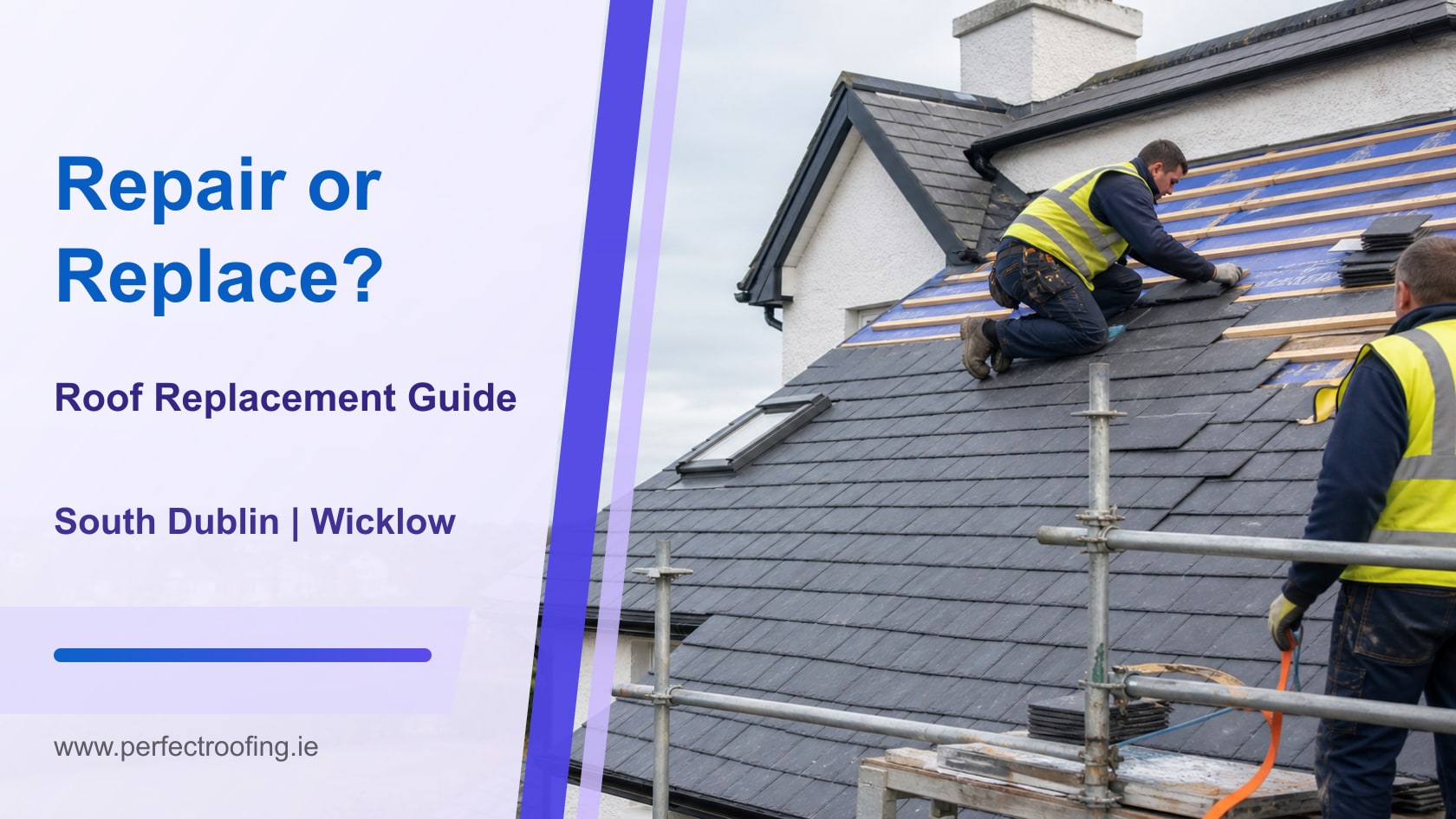
Signs replacement may be more sensible than another repair
A local repair can be the right option when the problem is clear and the rest of the roof is in sound condition. Replacement becomes more relevant when defects are widespread, repeated, or connected to the roof's age.
Consider asking for a roof replacement assessment if you notice:
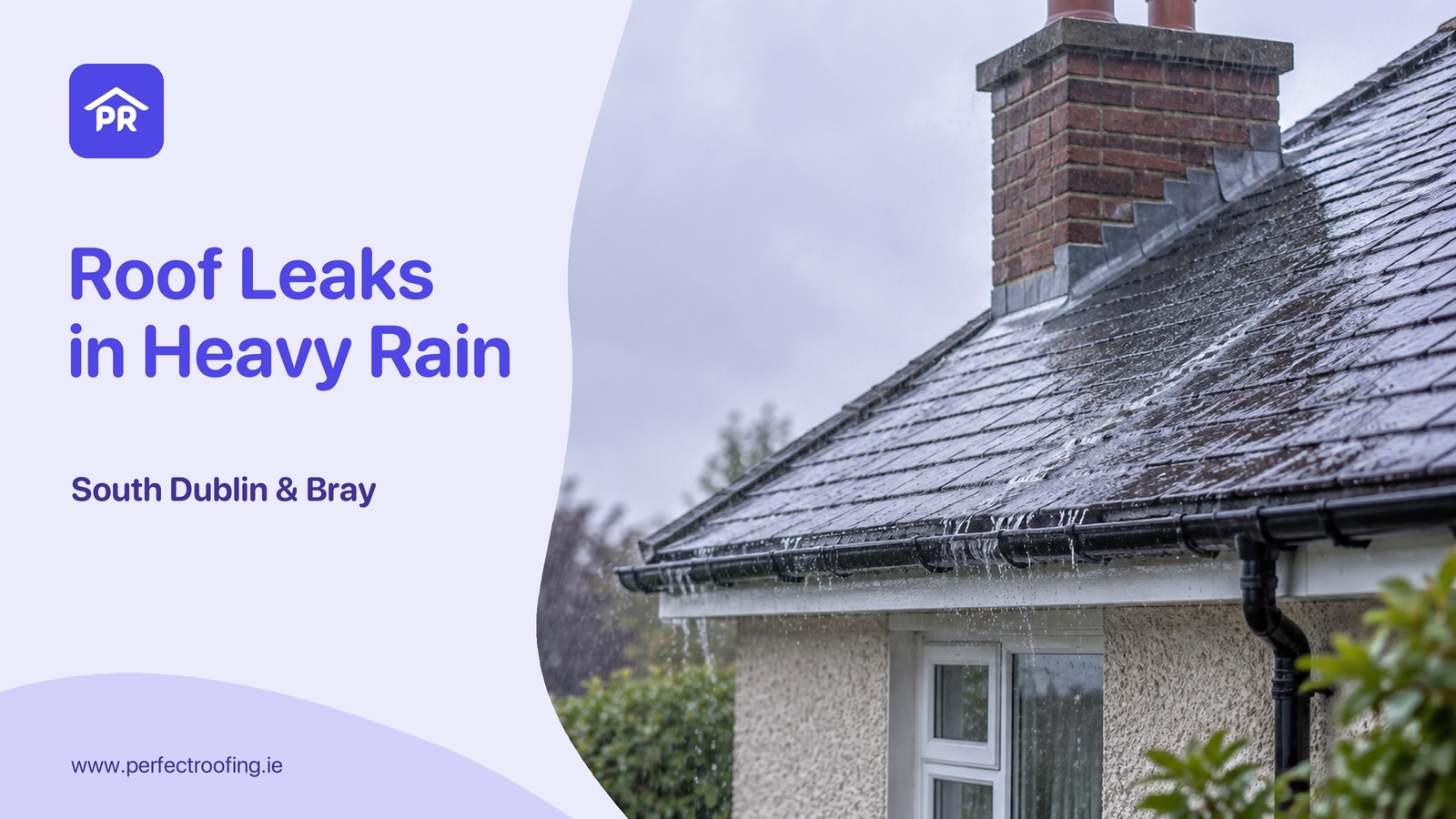
- Repeated leaks after several repair attempts.
- Slipped, cracked, missing, or uneven slates and tiles across several areas.
- Old roof felt or underlay that no longer sheds water properly.
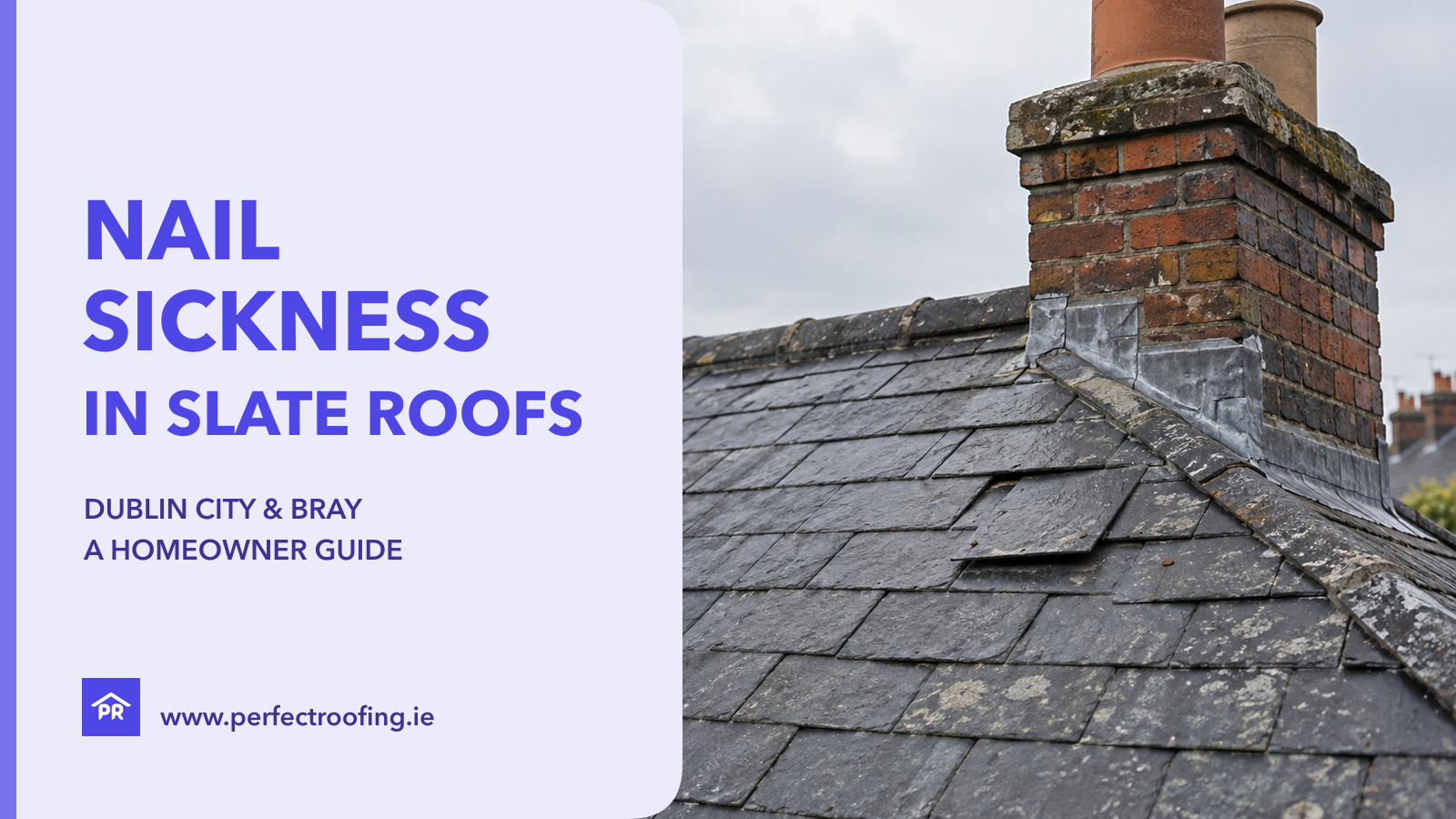
- Widespread nail fatigue, loose fixings, or patchy repairs.
- Damp insulation, musty attic smells, or staining on timbers.
- Loose ridge tiles, failed verge details, or recurring chimney flashing problems.
- Gutters that keep overflowing because the roofline or fascia is out of line.
- Several weak points appearing together, such as valleys, chimneys, gutters, and roof windows.
One damp mark does not automatically mean the whole roof needs replacing. The pattern matters. If each wet spell reveals a different defect, it may be time to look at the roof as a system rather than chasing one small repair after another.
What Perfect Roofing checks before recommending replacement
Before recommending replacement, a practical roof inspection should look beyond the visible leak stain. The roof covering, supporting details, drainage, ventilation, and access all influence whether replacement is the right investment.
Key checks include:
- Roof covering: slate or tile condition, missing pieces, cracked surfaces, uneven courses, moss build-up, and old patch repairs.
- Underlay and battens: visible signs of brittle felt, water tracking, soft timber, or fixing failure where safe to inspect.
- Ridges, hips, and verges: loose bedding, failed dry-fix details, open gaps, cracked ridge tiles, and exposed edges.
- Chimneys and leadwork: damaged flashing, open pointing, cracked flaunching, loose pots, cowls, caps, or back-gutter problems.
- Gutters and roofline: sagging gutters, poor falls, blocked downpipes, rotten fascia, loose soffits, and staining below the eaves.
- Roof windows and skylights: flashing kits, surrounding slates or tiles, drainage channels, condensation clues, and frame condition.
- Attic condition: damp insulation, dark staining, condensation, poor airflow, and daylight through gaps.
- Neighbouring junctions: changes in roof height, mismatched coverings, party-wall details, and shared drainage points.
Homeowners should not climb onto the roof to check these areas. Use safe ground-level photos, attic hatch observations, or upstairs window views where practical, then ask a roofer to inspect the roof properly.
Boundary details with the neighbouring roof
The join between two semi-detached roofs is one of the most important planning points. If the neighbouring roof is older, newer, higher, lower, or covered with a different material, the replacement needs a neat transition.
Important boundary questions include:
| Detail | Why it matters |
|---|---|
| Roof covering match | The new slate or tile needs to finish neatly where it meets the neighbour's roof |
| Ridge line | Ridge tiles or dry-ridge systems should be planned so the boundary is secure and tidy |
| Party-wall junction | Water should not be able to track sideways through poor flashing or exposed edges |
| Shared chimney | Chimney leadwork, flaunching, cowls, and pointing may affect both sides of the roof |
| Gutter run | Falls, outlets, and brackets need to move rainwater away without spilling at the boundary |
| Scaffold access | Safe access should be planned around shared paths, drives, and neighbouring property |
If the neighbouring roof also has visible damage, that does not mean both homes must replace their roofs together. It does mean the boundary should be inspected carefully, photographed, and discussed before work starts.
Plan materials around the house, not just the colour
The visible roof covering matters, but the best material choice is not only about colour. A semi-detached roof replacement should suit the pitch, existing structure, roof shape, local exposure, and surrounding homes.
Planning should consider:
- Whether slate, concrete tile, clay tile, or another suitable covering is appropriate.
- How the new covering will look beside the neighbouring roof.
- The roof pitch and whether the selected covering suits it.
- The condition of battens, underlay, fixings, valleys, and flashings.
- Whether ridge, hip, verge, and eaves details should be upgraded at the same time.
- Whether ventilation improvements are needed to reduce condensation risk.
- Whether gutters, fascia, soffits, or downpipes should be repaired while access is in place.
- Whether future Velux windows, skylights, solar preparation, or attic work should be considered before the roof is closed up.
In areas such as Bray and Wicklow, exposure can be different from a sheltered suburban estate in South Dublin or Lucan. The right recommendation should come from the actual roof, not a generic material preference.
Access, scaffold, and household disruption
Access can shape the project as much as the roof itself. Semi-detached homes may have side entrances, shared driveways, narrow gardens, extensions, sheds, parked cars, and neighbouring boundaries close to the work area.
Before a roof replacement, it helps to discuss:
- Where scaffold can be positioned safely.
- Whether the side passage, garden, or driveway needs to be cleared.
- How materials will be delivered and stored.
- How waste will be removed.
- Whether gutters, downpipes, or roofline details will be temporarily affected.
- Whether neighbours need notice about access or temporary disruption.
- Which roof areas are most weather-sensitive during the work.
Clear planning helps avoid rushed decisions once materials and access equipment are already on site.
Add related work while access is in place
If scaffolding is already needed for a roof replacement, it can be efficient to review other roof and roofline items at the same time. This does not mean adding unnecessary work, but it can prevent paying for the same access twice.
Useful items to discuss include:
- Replacing damaged gutters or realigning poor falls.
- Repairing fascia, soffits, and verge details.
- Upgrading old lead flashing around chimneys or wall junctions.
- Checking chimney pots, cowls, caps, and flaunching.
- Reviewing roof ventilation if the attic has condensation signs.
- Installing, replacing, or repairing Velux windows or skylights.
- Checking flat roof sections, porch roofs, bay roofs, or extension junctions.
- Preparing for future attic insulation, storage, or renovation plans.
The best timing depends on budget, urgency, and the condition of each item. A site-specific quote should separate essential roof replacement work from optional improvements.
What to prepare before asking for a quotation
You do not need to diagnose the roof yourself before contacting Perfect Roofing. A few practical details can make the first conversation more useful.
If it is safe, gather:
- Photos of the front, rear, and side roof slopes from the ground.
- Photos of damp marks, attic staining, loose gutters, or visible roof defects.
- Notes on when leaks appear, such as during wind-driven rain or long wet periods.
- Any information about previous roof repairs, chimney work, gutter work, or roof-window installation.
- Whether the roof is slate, tile, flat roof, or a mix of roof types.
- Any access limits, such as shared driveways, rear lanes, extensions, or restricted side passages.
- Your preferred timing, especially if the work links to selling, renovating, or moving in.
Avoid climbing, leaning from windows, or walking on flat roofs without proper safety equipment. A safe wide photo is more useful than a risky close-up.
Ask Perfect Roofing for semi-detached roof advice
Perfect Roofing helps homeowners across South Dublin, Bray, Dublin City, North Dublin, Lucan, Wicklow, Naas, and nearby areas with roof inspections, roof repairs, roof replacements, emergency roof repairs, gutters, flat roofing, Velux windows, skylights, roof ventilation, and related roofing consultation.
If your semi-detached roof has repeated leaks, loose slates or tiles, failing underlay, gutter problems, chimney defects, or several ageing details at once, contact Perfect Roofing by WhatsApp, phone, or email. We can inspect the roof, explain whether repair or replacement is more practical, and recommend an approach based on your roof, access, budget, weather exposure, and long-term plans.
Need a roofer to take a look?
Send a few photos on WhatsApp, email us, or tap the number to call. We cover Dublin City, North Dublin, South Dublin, Lucan, Bray, Wicklow, Naas, and nearby locations.