Flat Roofing
EPDM vs GRP vs Torch-On Felt Flat Roofs for Dublin Extensions
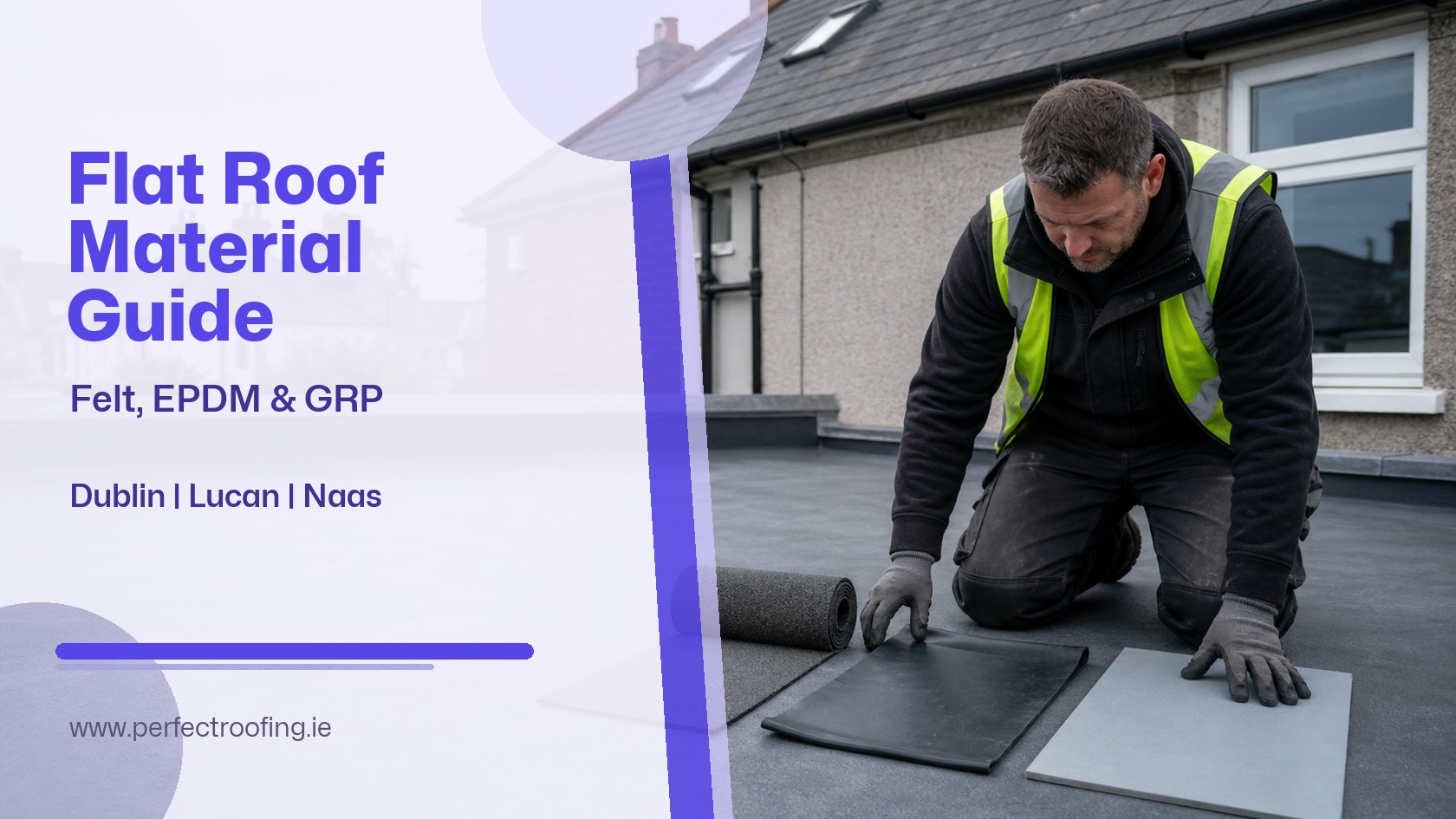
A practical flat roof covering comparison for Dublin, Lucan, Bray, Wicklow, Naas, and nearby homeowners comparing EPDM rubber, GRP fibreglass, and torch-on felt.
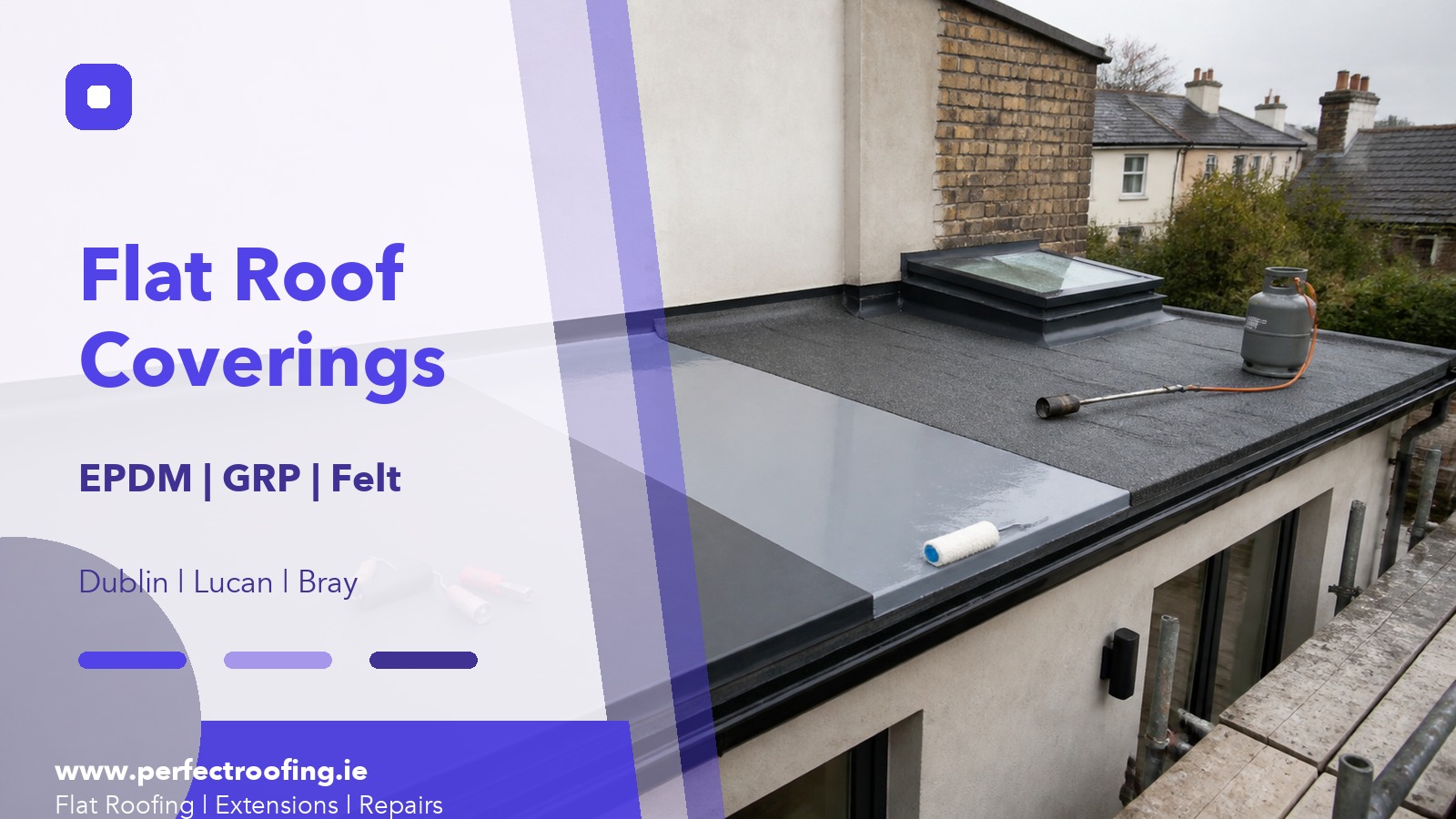
Flat roofs are common on rear extensions, garages, dormers, porches, roof terraces, and small utility rooms across Dublin, Lucan, Bray, Wicklow, Naas, and nearby areas. When a flat roof starts leaking, ponding, blistering, cracking, or needing repeated patch repairs, homeowners often hear three options: EPDM rubber, GRP fibreglass, and torch-on felt.
Each covering can work well when it is specified and installed correctly. The better choice depends on the roof size, roof shape, drainage, upstands, rooflights, foot traffic, access, budget, and whether the existing deck is sound enough to keep. This guide compares the options in practical homeowner terms so you can ask clearer questions before approving a flat roof repair or replacement.
Quick comparison
| Flat roof covering | Often worth considering when | Check carefully before choosing |
|---|---|---|
| EPDM rubber | You want a flexible single-ply rubber membrane for a simple extension, garage, dormer, or porch roof | Edge trims, seams, outlets, rooflights, upstands, adhesive choice, and whether the roof shape suits a sheet membrane |
| GRP fibreglass | You want a hard, seamless-looking finish that can suit neat edges, trims, and some more detailed shapes | Deck preparation, movement, resin curing conditions, trims, corners, rooflights, and whether the roof will be walked on |
| Torch-on felt | You want a familiar reinforced bitumen system with layered detailing and a mineral or cap-sheet finish | Fire safety method, installer competence, number of layers, laps, outlets, upstands, ventilation, and condition of the existing deck |
No flat roof covering fixes poor drainage by itself. If the roof falls the wrong way, has a blocked outlet, low upstand, soft decking, or badly detailed rooflight, the new surface may inherit the same problem.
EPDM rubber flat roofs
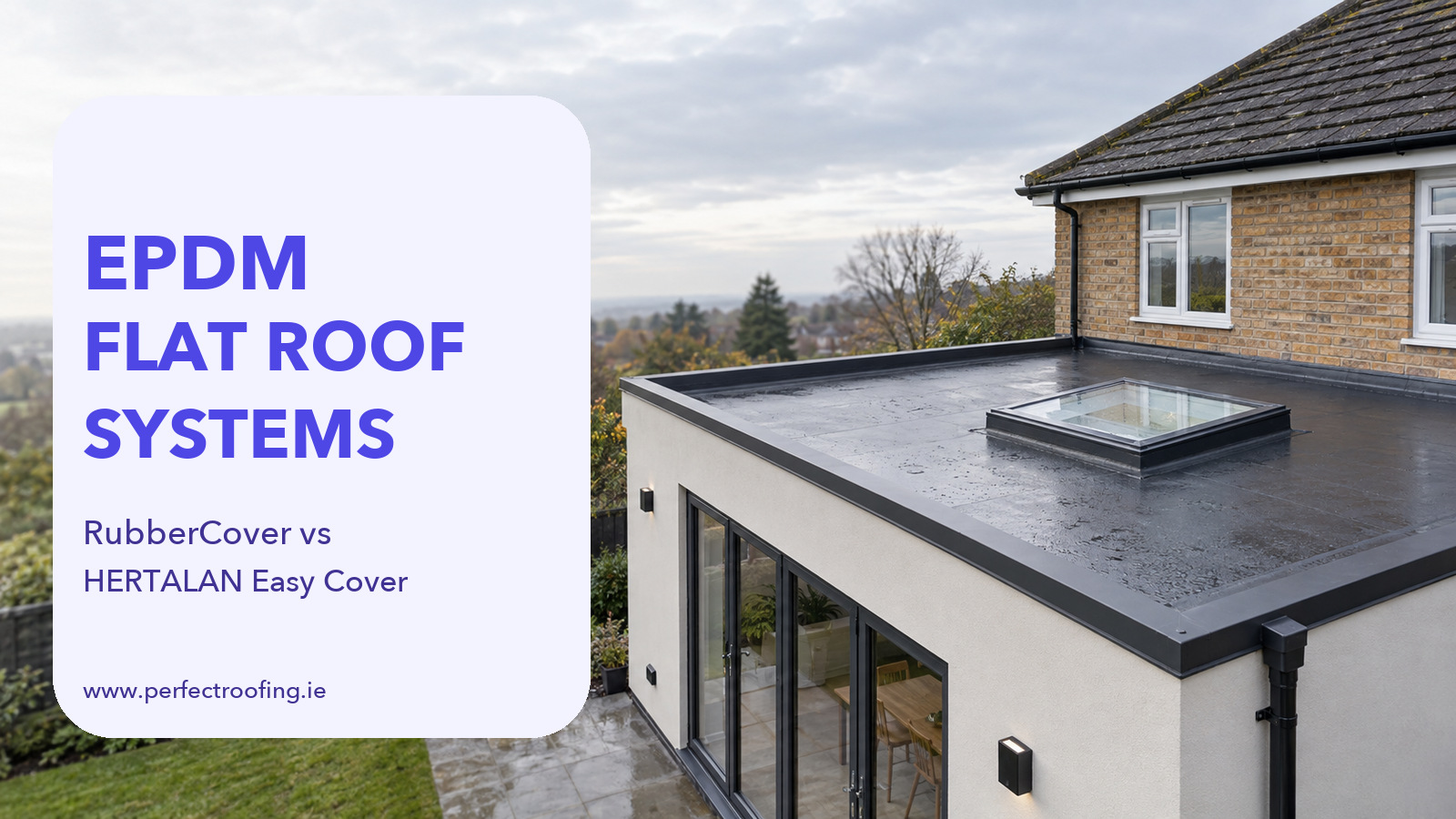
EPDM is a synthetic rubber flat roof membrane. Official product information for systems such as Elevate RubberCover EPDM describes EPDM as a rubber membrane used on smaller residential flat roofs, including sheds, garages, porches, extensions, carports, dormers, and balconies.
EPDM may suit:
- Simple rear extensions where a large sheet can reduce the number of joints.
- Garage or porch roofs with straightforward edges.
- Dormer roofs where flexibility around movement can be useful.
- Roofs where a clean dark membrane finish is acceptable.
- Homeowners who want a practical modern flat roof option without a decorative finish.
The details matter more than the material name. A good EPDM installation still needs correct deck preparation, adhesive, perimeter trims, outlet detailing, upstand height, rooflight flashing, and neat joins where a single sheet cannot cover the whole area.
EPDM can be less ideal where the roof has many awkward penetrations, complex corners, heavy regular foot traffic, or details that make neat sheet layout difficult. It should also be protected from careless ladder feet, sharp tools, and later trade damage.
GRP fibreglass flat roofs
GRP, often called fibreglass roofing, uses resin and reinforcement over a suitable deck to create a hard weatherproof surface. Official GRP system information from manufacturers such as Cure It presents GRP as a wet-laid flat roofing system applied to OSB3 decking, with resin, reinforcement mat, topcoat, trims, and accessories forming part of the system.
GRP may suit:
- Small to medium flat roofs where a clean, crisp finish is important.
- Porches, bay roofs, and extensions with visible edges.
- Roofs with trims, outlets, and upstands that can be detailed neatly.
- Homeowners who prefer a firmer surface feel than a rubber membrane.
- Projects where the installer can work in suitable dry conditions.
The main caution is preparation and movement. GRP usually needs a sound, suitable deck, good weather during installation, correct resin and reinforcement application, and careful detailing at corners, trims, and upstands. Poor preparation can lead to cracking, pinholes, edge failure, or water finding a weak point.
GRP is not just a coat of paint. It is a system. Ask what deck will be used, how joints will be handled, what trims are included, how outlets and rooflights will be formed, and whether the finish is appropriate for the way the roof will be used.
Torch-on felt flat roofs
Torch-on felt is a reinforced bitumen flat roofing method built up in layers. Manufacturer information for systems such as Bauder reinforced bitumen membranes describes polymer-modified reinforced bitumen membrane systems for new build and refurbishment projects, with different systems, membranes, cap sheets, accessories, rooflights, and outlets depending on the specification.
Torch-on felt may suit:
- Extensions, garages, and utility roofs where a layered bitumen system is appropriate.
- Roofs where a mineral cap sheet finish is acceptable.
- Projects where the details suit felt laps, upstands, outlets, and edge trims.
- Some repair or overlay scenarios, subject to inspection.
- Homeowners who want a familiar flat roofing method with a practical finish.
The important question is how the system is specified and installed. Felt should not be judged by old, cracked, thin, or badly patched roofs alone. A properly specified torch-on system is different from a quick patch. Ask how many layers are included, what condition the deck is in, how fire risk will be managed, and whether cold-applied alternatives are more suitable around sensitive details.
Avoid DIY torch work. Flat roof membranes, heat, old decking, hidden voids, and nearby walls or rooflights can create serious risks when handled without the right training and equipment.
Irish supply and specification context
Irish merchants and distributors can influence what is practical on a Dublin or Wicklow project. QBM is one Ireland-facing roofing supplier that lists contractor solutions such as single-ply roofing systems, bitumen waterproofing, roof outlets and accessories, and says its trade counter supports flat roofing products and expert advice.
That matters because a flat roof covering is rarely only the main membrane. A complete job may also need:
- Decking boards or deck repairs.
- Vapour control layers or insulation, depending on the roof build-up.
- Primers, adhesives, resin, trims, laps, or cap sheets.
- Outlets, gutters, scuppers, and downpipes.
- Upstands around walls, parapets, rooflights, and doors.
- Edge trims, drips, fascias, and soffit repairs.
- Safe access for removal, installation, and waste handling.
For a small Lucan extension, the best answer may be different from a larger South Dublin roof terrace or an exposed Bray dormer. Supply, installer familiarity, weather window, and long-term maintenance all influence the recommendation.
Pros and cons by homeowner priority
| Priority | EPDM rubber | GRP fibreglass | Torch-on felt |
|---|---|---|---|
| Simple roof shapes | Strong option when sheet layout is straightforward | Works well when deck and edges are prepared properly | Works well with correct layered detailing |
| Complex details | Needs careful seams, corners, and penetrations | Can form neat details, but preparation and movement control matter | Familiar for upstands, laps, outlets, and layered work |
| Finish | Dark rubber membrane appearance | Smooth, hard, often cleaner-looking finish | Mineral or cap-sheet finish, more traditional look |
| Movement | Flexible membrane can be useful | More rigid, so deck movement and joints matter | Layered bitumen system can tolerate many common flat roof details when specified well |
| Foot traffic | Needs protection if regularly accessed | Firmer feel, but still not a general walking surface unless designed for it | Needs suitable cap sheet or protection if accessed regularly |
| Repair planning | Local repairs may be possible, depending on defect and age | Repairs depend on surface condition and preparation | Repairs or overlays may be possible, but old failed layers can hide deck problems |
Do not choose on headline price alone. A cheaper surface can become poor value if the roof still ponds, the deck is soft, the outlet is too small, or the rooflight/upstand detail is wrong.
Questions to ask before replacing a flat roof
Before choosing EPDM, GRP, torch-on felt, or another flat roofing system, ask your roofer:
- Is the existing deck sound, dry, and suitable to keep?
- Does the roof have enough fall toward the outlet or gutter?
- Are outlets, gutters, and downpipes large enough and clear?
- Will any rooflights, skylights, or wall upstands need new detailing?
- Is insulation or ventilation part of the roof build-up?
- Are old layers being removed or overlaid, and why?
- What happens around door thresholds, parapets, fascia, and edge trims?
- How will the work be protected if rain arrives during the job?
- Will the roof need protection from future foot traffic, ladders, or maintenance work?
- What maintenance checks should be done after installation?
Do not climb onto a flat roof to inspect it yourself. Older flat roofs can hide soft decking, slippery surfaces, weak rooflights, and fragile edges. Safe photos from a window, garden, or upstairs room are much better than risking a fall.
Which option suits common local roof types?
For many Dublin City terraces, flat roofs are often found over rear returns, kitchens, bathrooms, dormers, and small extensions. Access can be tight, so waste removal, material handling, and weather protection may influence the system as much as the covering itself.
In Lucan and Naas, larger rear extensions and garages often need careful drainage planning. A broad flat roof with one small outlet may need more attention to falls, gutters, and overflow routes before the covering is chosen.
In Bray and Wicklow, exposure to wind-driven rain can make edge details, upstand height, wall junctions, rooflights, and gutters especially important. The surface material matters, but the detailing around it usually decides whether the roof stays dry.
For South Dublin homes with roof terraces or walk-on areas, the conversation changes again. EPDM, GRP, or felt may need protective finishes, paving supports, insulation build-ups, or a different specification altogether. A standard flat roof surface should not be treated as a balcony unless it was designed that way.
When repair may be better than replacement
Not every flat roof leak needs a full replacement. A local repair may be sensible when:
- The roof covering is generally sound and the defect is isolated.
- A gutter, outlet, or downpipe blockage caused the issue.
- A trim, flashing, or small puncture can be repaired properly.
- The leak is recent and the deck has not softened.
- The roof is due for wider works soon and a short-term repair is realistic.
Replacement is more likely to make sense when the roof has repeated leaks, widespread cracking, extensive ponding, soft decking, many old patches, failed upstands, poor falls, or damage around rooflights and outlets.
Ask Perfect Roofing which flat roof covering suits your home
Perfect Roofing helps homeowners across Dublin City, North Dublin, South Dublin, Lucan, Bray, Wicklow, Naas, and nearby areas with flat roofing, roof repairs, roof replacements, roof inspections, gutters, Velux windows, skylights, roof ventilation, new roofs, and related roofing consultation.
If you are comparing EPDM rubber, GRP fibreglass, torch-on felt, or another flat roof option, contact Perfect Roofing by WhatsApp, phone, or email. Send safe photos if you have them, and tell us the roof location, age, leak history, access, drainage, rooflight details, budget, and long-term plans. We can inspect the roof safely and recommend a practical flat roofing option for your home.
Need a roofer to take a look?
Send a few photos on WhatsApp, email us, or tap the number to call. We cover Dublin City, North Dublin, South Dublin, Lucan, Bray, Wicklow, Naas, and nearby locations.