Flat Roofing
Flat Roof Overlay or Replacement? A Dublin Homeowner Guide
Can a new covering go over your old flat roof? Learn what to ask about moisture, deck condition, drainage and quote scope before choosing an overlay or replacement.
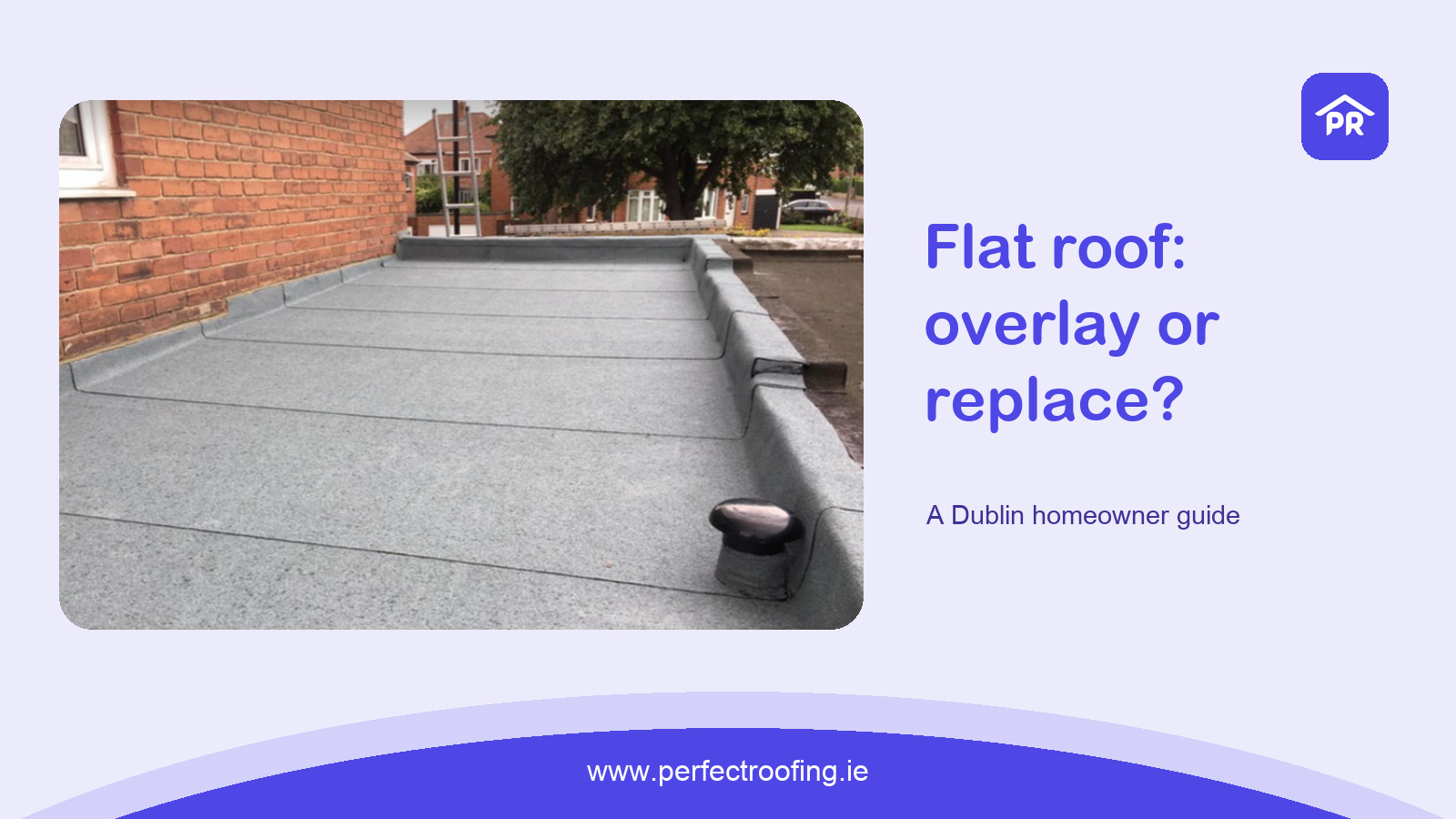
If an extension or garage roof needs work, one quotation may offer a new covering over the existing roof while another proposes stripping it back. Both approaches can have a place, but they are only useful options once the condition underneath is understood.
For Dublin homeowners, the key question is whether the existing roof is suitable to retain. This guide explains what an overlay involves, when removal deserves consideration, and how to compare proposals for the same roof.
What Is a Flat Roof Overlay?
An overlay retains an assessed part of the existing roof and adds a compatible waterproofing system above it. It should include specified preparation and work at the roof's edges, outlets and junctions. It is more than applying a patch to the latest leak.
The Liquid Roofing and Waterproofing Association's overlay guidance confirms that many liquid-applied membranes can be used over existing waterproofing. That does not mean any coating can go over any roof: the proposed system needs to suit the actual substrate and its condition.
Ask the contractor to identify what will remain, what will be removed locally, and how the new system will connect to retained details. A description such as “re-cover flat roof” leaves too much open to interpretation.
When Might an Overlay Be Suitable?
An overlay may be worth considering when the retained roof can provide a suitable base and the surrounding details can be renewed or adapted properly.
Bauder's roof survey guidance says an existing covering can be overlaid when it is sound, dry and free from water damage, with compatible materials used above it. The same guidance recommends removing coverings where significant moisture or doubt about long-term integrity is present.
Before accepting an overlay proposal, ask for an explanation of:
- The existing covering and layers identified during inspection.
- Evidence about moisture within the retained build-up.
- The condition of the supporting roof deck.
- Any local repairs needed before the overlay starts.
- Compatibility between the proposed system and retained materials.
- How edges, wall junctions, outlets and rooflights will be finished.
A tidy-looking surface is useful evidence about appearance, but it does not establish the condition of concealed layers.
When Should Removal and Replacement Be Considered?
If an inspection finds wet layers, a damaged deck, or an unsuitable base, covering everything again may leave the original problem in place. The extent of removal should follow the findings, rather than an assumption that every layer can stay or every component must go.
Questions that deserve particular attention include:
- Has water entered the insulation or other concealed layers?
- Do repeated patches conceal an unresolved leak route?
- Is there uncertainty about the condition of the deck?
- Can the existing drainage layout be corrected within the proposed work?
- Will retained edges or wall details suit the finished roof level?
“Full replacement” also needs a definition. Does it mean new waterproofing only, removal to the deck, new insulation, replacement of damaged decking, or a wider rebuild? Ask for a written description and an agreed process for pricing discoveries after opening up.
If the inspection raises concerns about the supporting structure, ask what specialist assessment is needed before proceeding. A new surface alone cannot establish structural adequacy.
What Should the Inspection Establish?
The inspection needs to answer the questions that affect the choice of work. Depending on the roof and uncertainty involved, the contractor may recommend agreed opening-up or moisture investigation. Ask what the inspection covers and what remains unverified.
Bauder describes core sampling and moisture mapping among the methods used to investigate existing roof build-ups. The suitable method depends on the roof. Ask which investigation is proposed, who will carry it out, and how any openings will be made weatherproof.
For a small rear extension in Dublin City, access may affect how an investigation is arranged. For an exposed site around Bray or Wicklow, ask how the proposal addresses the actual exposure and perimeter details. The recommendation should explain the roof in front of you.
Can an Overlay Fix Poor Drainage or Add Insulation?
An overlay proposal should say explicitly whether drainage or insulation work is included. Simply adding waterproofing does not explain how a low area will drain or how the roof's insulation arrangement will change.
Bauder's flat roof design guidance highlights compatibility and additional loading when considering overlays. Those checks belong in the specification, rather than being left to assumptions about the covering's thickness.
If the proposal changes roof levels, ask how the finished surface will meet outlets, wall flashings, rooflight kerbs and edge trims. If insulation is being changed, ask for the complete proposed build-up and how moisture control will be addressed.
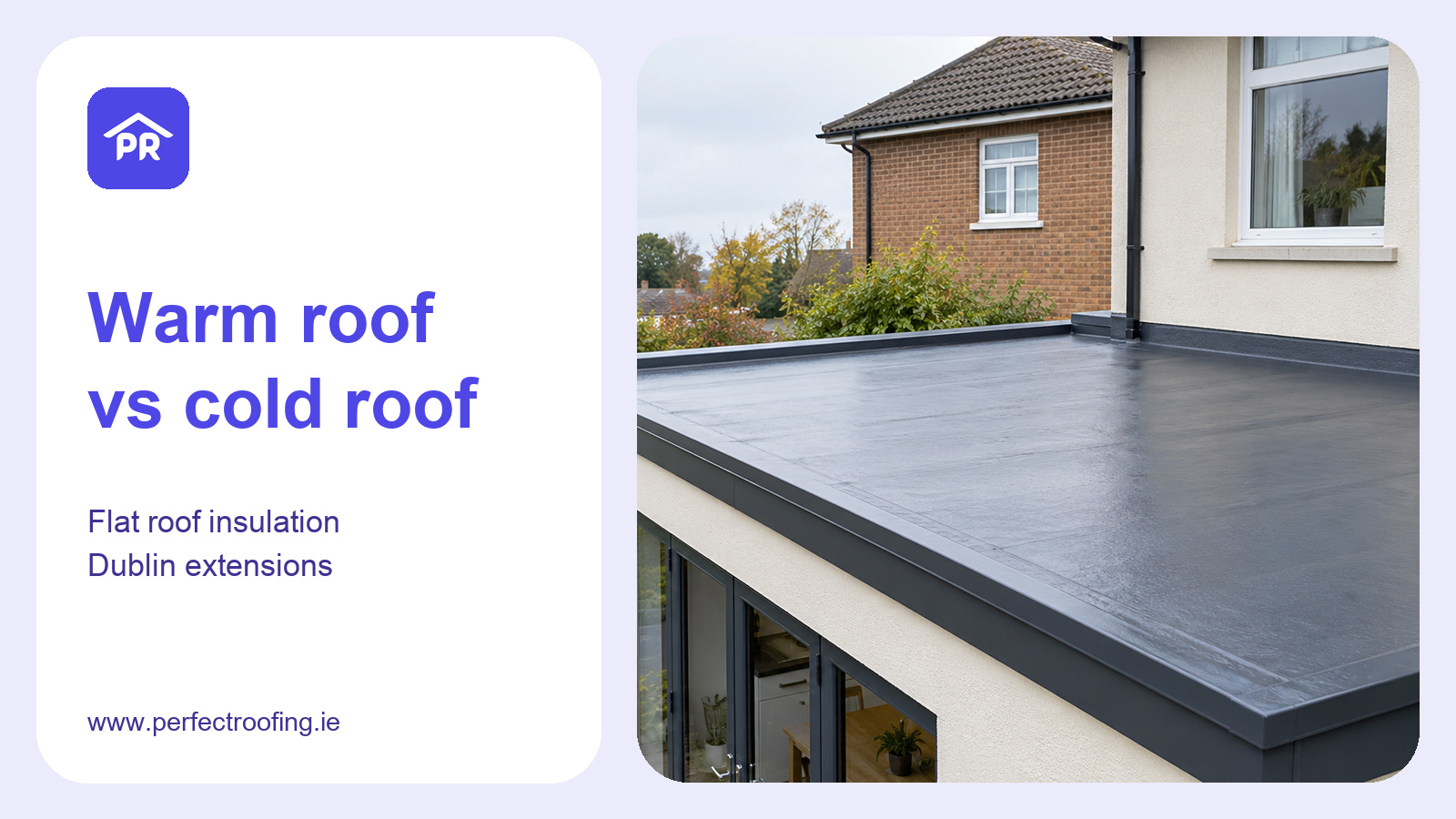
For more context, see our guides to flat roof drainage checks and warm roof versus cold roof insulation.
Compare the Work Included in Each Quote
Use the same questions for both proposals so that you can see where their scope differs.
| Item to clarify | Overlay proposal | Removal and replacement proposal |
|---|---|---|
| Existing layers | What stays, and why is it suitable? | What is removed, and to what level? |
| Moisture and deck condition | What evidence supports retention? | What investigation and repair are included? |
| Drainage | What corrections are included? | How will falls and outlets be formed or retained? |
| Junctions and rooflights | Which details will be adapted or renewed? | Which details will be rebuilt or retained? |
| Unexpected findings | What could change the agreed approach? | How will additional work be agreed and priced? |
| Handover | What specification and written cover are supplied? | What specification and written cover are supplied? |
Also clarify safe access, waste removal, temporary weather protection and exclusions. An overlay is not automatically the better-value choice, and a replacement quotation should explain why its extra scope is needed. Compare the work and evidence before comparing the total.
Ask Perfect Roofing About Your Flat Roof
Do not climb onto a roof without proper safety equipment and suitable access. Avoid stepping onto it to test whether it feels firm. Send photos taken from a safe position, indoor leak pictures, any previous repair paperwork, and the wording of quotations you want to discuss.
Perfect Roofing helps with flat roof repairs and replacements across Dublin, Lucan, Naas and nearby areas. We can discuss the inspection needed and a recommendation based on your roof's condition, budget, weather exposure, access and long-term plans.
Message us on WhatsApp, call 083 066 3462, or email hi@perfectroofing.ie to arrange a flat roof assessment or discuss a repair quotation.
Need a roofer to take a look?
Send a few photos on WhatsApp, email us, or tap the number to call. We cover Dublin City, North Dublin, South Dublin, Lucan, Bray, Wicklow, Naas, and nearby locations.