Roof Inspections
Pre-Purchase Roof Inspection Checklist for Dublin and Naas Buyers
A practical roof inspection checklist for buyers viewing homes in Dublin, Lucan, Naas, Bray, Wicklow, and nearby areas, including leaks, gutters, flat roofs, chimneys, ventilation, and roof windows.

Buying a home is exciting, but roof problems can be easy to miss during a busy viewing. Fresh paint, staged rooms, and a quick walk-through rarely tell you how well the roof is dealing with Irish rain, wind, blocked gutters, older chimneys, flat roof extensions, or roof windows.
For buyers looking at homes in Dublin City, North Dublin, South Dublin, Lucan, Naas, Bray, Wicklow, and nearby areas, a roof inspection before you commit to work can give you a clearer view of likely repairs, short-term maintenance, and bigger replacement decisions. This checklist explains what you can look for safely from the ground and inside the property, plus when it is worth asking Perfect Roofing for a roof-specific inspection.
Start With Safe Ground-Level Clues
You do not need to climb a ladder to spot many roof warning signs. In fact, buyers should not go onto a roof without proper access, safety equipment, and permission. A careful ground-level check can still tell you a lot.
Look for:
- Slipped, cracked, missing, or uneven slates and tiles
- Wavy roof lines, sagging areas, or dips that look different from the rest of the roof
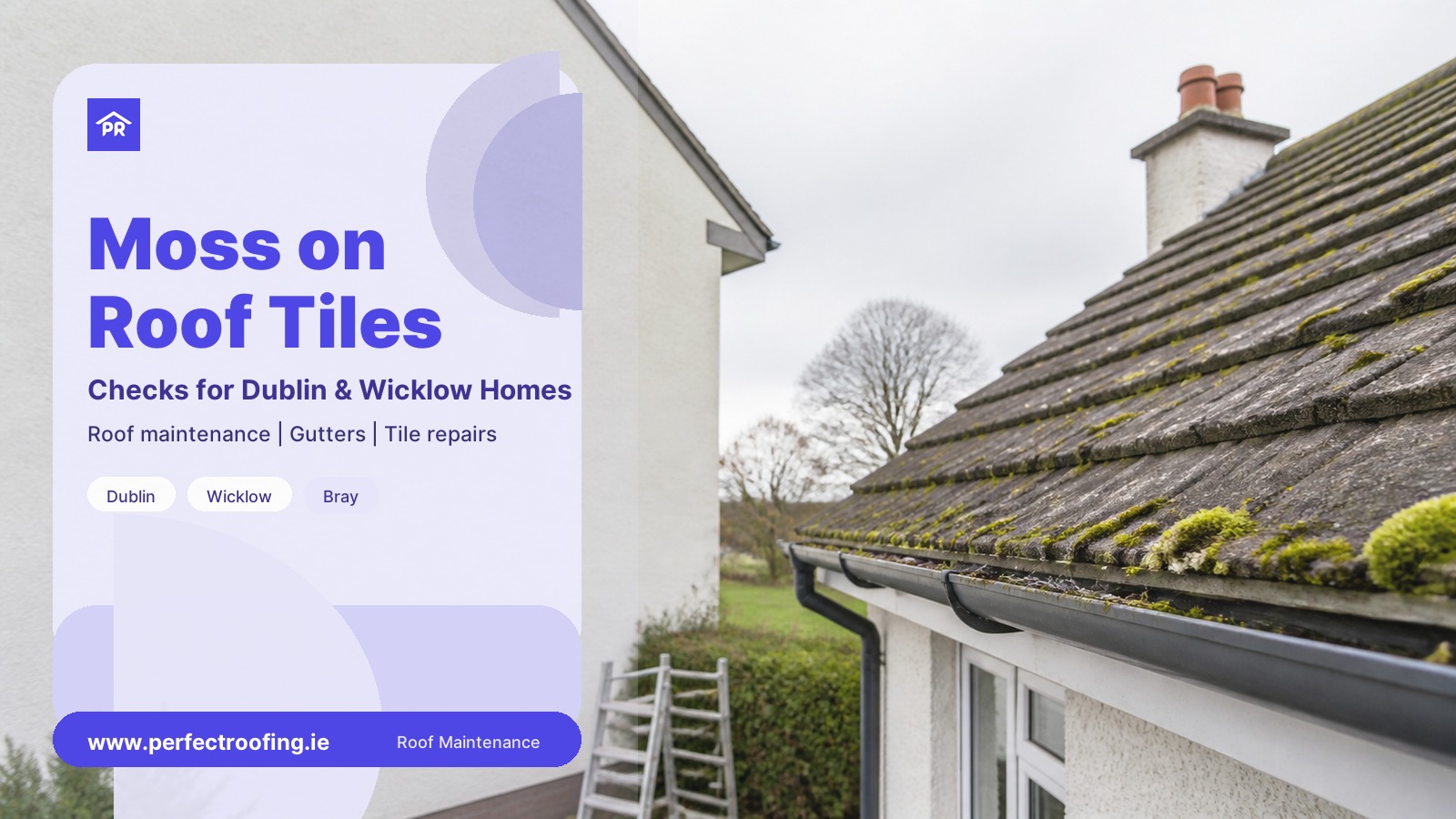
- Moss or debris collecting heavily in valleys, gutters, or behind chimneys
- Staining on render, brickwork, fascia, soffits, or walls below the roof edge
- Rust, cracks, gaps, or movement around gutters and downpipes
- Previous patch repairs that look messy, mismatched, or temporary
- Missing ridge tiles, loose mortar, or open gaps along the roof peak
- Chimneys with cracked pointing, damaged flashing, or vegetation growth
One small defect is not always a deal-breaker. What matters is the pattern. A single slipped slate may be a straightforward repair. Several signs across the roof can point to poor maintenance, ageing materials, or water tracking through more than one area.
Check Ceilings, Attics, and Upper Rooms
Internal marks can be more useful than exterior photos because they show where water, condensation, or poor ventilation may already be affecting the house. During a viewing, pay particular attention to top-floor bedrooms, attic rooms, landings, hot presses, bathrooms, and the inside face of external walls.
Watch for:
- Brown, yellow, or grey water stains on ceilings
- Peeling paint or bubbling plaster near corners and chimney breasts
- Damp marks around roof windows, skylights, or ceiling slopes
- Musty smells in attic rooms or storage spaces
- Black spotting near cold corners, rafters, or poorly ventilated slopes
- Newly painted ceiling patches that stand out from the rest of the room
- Buckled plasterboard, warped timber trims, or soft-looking finishes
If attic access is available, use a torch and stay on safe boarded areas only. Do not step between joists or disturb insulation. From a safe position, look for daylight showing through the roof covering, damp timbers, staining below valleys or chimneys, wet insulation, poor airflow, or signs of previous temporary patching.
Pay Extra Attention to Extensions and Flat Roofs
Many Dublin, Lucan, and Naas homes have rear extensions, garages, converted porches, dormers, or small flat roof sections added after the original house was built. These areas can be practical and long-lasting when installed well, but they need good falls, outlets, upstands, trims, and junction details.
Ask yourself:
- Does water have a clear path to an outlet or gutter?
- Are there signs of ponding, blistering, cracking, splits, or open laps?
- Do edges and wall junctions look neat and weather-tight?
- Are rooflights or skylights properly raised and flashed?
- Is there staining inside below the flat roof area?
- Has the seller mentioned recent patch repairs after leaks?
Flat roof issues are often hidden until persistent rain tests the detail. If the house depends on a large flat roof over a kitchen, extension, dormer, or garage conversion, a roof-specific inspection can help you understand whether you are looking at simple maintenance or a more involved replacement.
Gutters and Drainage Matter More Than They Look
Gutters are not just cosmetic. Poor drainage can soak walls, damage fascia boards, overflow onto lower roofs, and make leak tracing much harder. In built-up parts of Dublin, mature trees, moss, shared rooflines, and older pipework can all add to the problem. In towns such as Naas and Lucan, extensions and altered rooflines can create awkward drainage paths.
From ground level, check:
- Gutters pulling away from the fascia
- Overflow marks, staining, or algae below joints and outlets
- Downpipes that discharge onto paths, flat roofs, or lower walls
- Loose brackets, cracked joints, or sections with poor falls
- Plants, moss, leaves, or grit sitting in the gutter
- Water stains below valleys or roof sections that feed into one small outlet
If gutters look neglected, ask whether they have been cleaned and whether any roofline repairs have been carried out. A clear gutter system helps protect the roof, wall finishes, and the areas around windows and doors.
Chimneys, Flashing, and Valleys Deserve a Close Look
Chimneys and roof valleys are common leak points because they interrupt the main roof surface. A chimney has brickwork or render, lead flashing, side soakers, a back gutter, and nearby slates or tiles all working together. A valley has to carry a high volume of water from two roof slopes into the gutter.
Potential warning signs include:
- Cracked chimney pointing, render, or flaunching
- Lead flashing that looks lifted, torn, patched, or poorly dressed
- Damp staining beside chimney breasts inside the house
- Debris sitting behind a chimney stack
- Broken valley tiles, worn leadwork, or uneven cut slates
- Moss, grit, or leaves building up where roof slopes meet
- Water stains below a valley or extension junction
These details can be hard to judge from the ground. If the house has several chimneys, valleys, old leadwork, or a complex extension roof, it is sensible to get a roofer to inspect the junctions before you rely on a seller's verbal reassurance.
Roof Windows, Skylights, and Ventilation Checks
Roof windows and skylights are valuable features, especially in attic rooms, stairwells, bathrooms, and extensions. They also need the surrounding roof covering, flashing, insulation, and internal finish to be correct.
Look for:
- Water marks below the frame or along the plaster line
- Condensation between panes or regular moisture on the glass
- Mould or staining in corners around the reveal
- Cracked internal finishes near the window
- Loose, uneven, or patched flashing outside
- Signs that the room feels stuffy or poorly ventilated
Condensation and roof leaks can look similar from inside, so the pattern matters. Moisture after showers or cold nights may point to ventilation and humidity. Staining that follows rainfall may point to flashing, roof covering, or drainage issues. A proper inspection can separate these causes before you plan repairs.
Questions to Ask Before You Buy
A seller, estate agent, or survey report may not have every roofing detail, but the right questions can reveal useful context.
Ask:
- When was the roof last inspected by a roofer?
- Have there been leaks, insurance repairs, storm repairs, or emergency callouts?
- Are there invoices or photos for previous roof, gutter, chimney, or flat roof work?
- Were any roof windows, skylights, or attic conversions installed later?
- Are gutters shared with a neighbouring property?
- Has the attic had insulation, ventilation, or condensation work carried out?
- Are any repairs temporary, or are there quotes already available?
Keep notes and photos from each viewing. If you are comparing two similar homes, roof condition can affect the urgency and budget of your first year of ownership.
When to Book a Roof-Specific Inspection
A general property survey is useful, but it may not fully diagnose roofing details from close range. A roof-specific inspection is worth considering when you see visible defects, the roof is older, the house has a flat roof extension, there are damp marks upstairs, or the property has complex chimneys, valleys, dormers, or roof windows.
Perfect Roofing can help buyers and homeowners across Dublin City, North Dublin, South Dublin, Lucan, Bray, Wicklow, Naas, and nearby areas understand what is urgent, what can be maintained, and what may need planning into a future budget.
We can inspect roof coverings, gutters, leadwork, flat roofs, roof windows, skylights, ventilation details, and visible leak paths, then discuss practical next steps. For a roof inspection before or after a purchase, contact Perfect Roofing by WhatsApp, phone, or email and tell us the property location, roof type, and the issues you have noticed.
Need a roofer to take a look?
Send a few photos on WhatsApp, email us, or tap the number to call. We cover Dublin City, North Dublin, South Dublin, Lucan, Bray, Wicklow, Naas, and nearby locations.