Velux Windows
Velux Window Leak or Condensation? Checks for South Dublin and Bray Homes
A practical guide to telling the difference between Velux window condensation, flashing problems, blocked drainage, and roof leaks in South Dublin, Bray, Wicklow, and nearby areas.
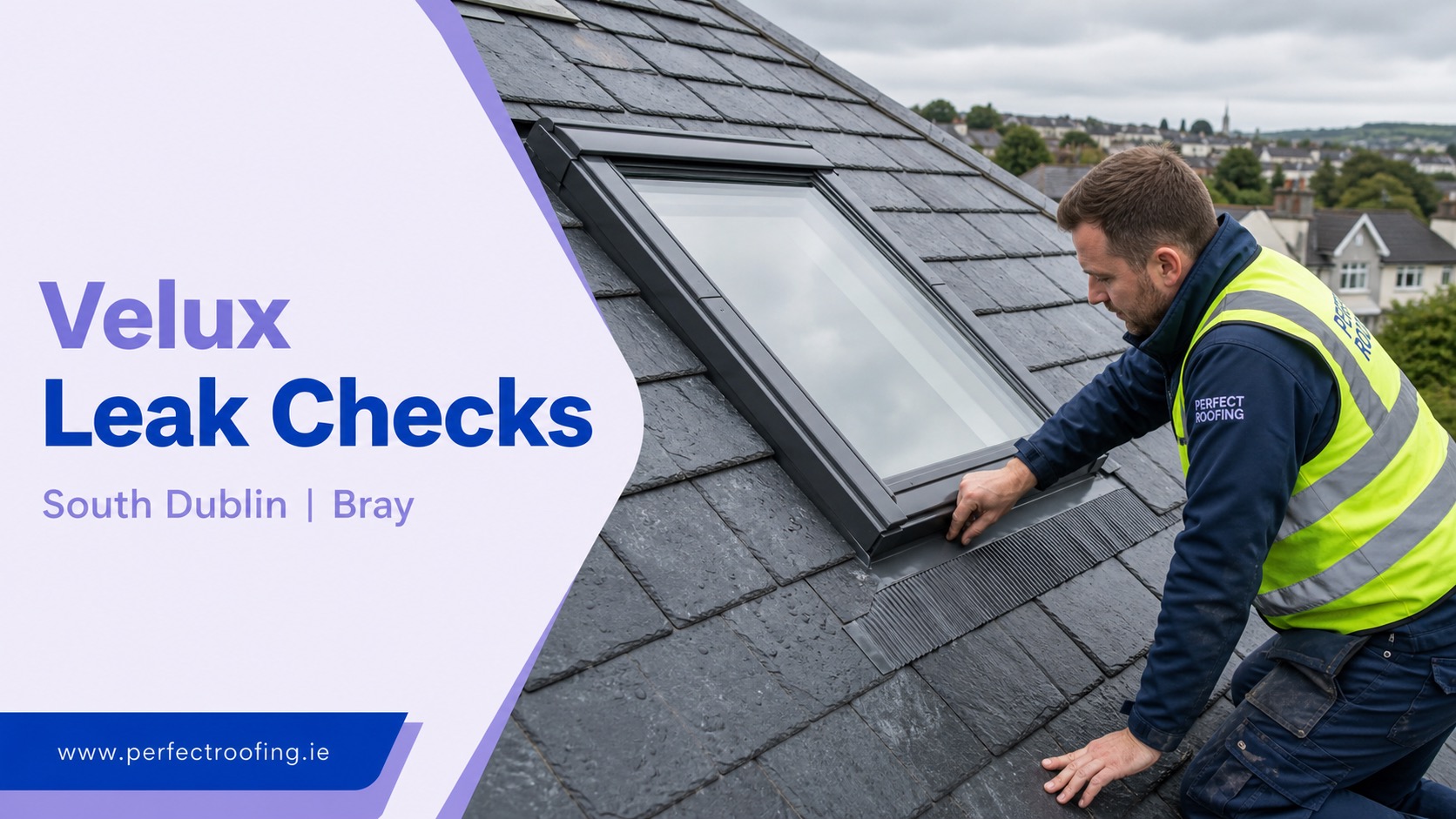
Water marks around a Velux window can be worrying, but the cause is not always a failed roof window. In many South Dublin and Bray homes, damp staining near a roof window comes from condensation, blocked drainage channels, flashing movement, cracked surrounding roof materials, or water tracking from higher up the roof.
This guide explains how to look at the symptoms safely, what usually causes problems around Velux windows and skylights, and when it is time to ask Perfect Roofing for a professional inspection.
Condensation or a Leak: Why the Difference Matters
VELUX roof windows are designed to bring daylight and fresh air into lofts, bathrooms, extensions, and attic rooms. Because they sit within the roof slope, they also need the surrounding roof covering, flashing, insulation, and internal finishing to work together.
Condensation usually starts inside the room. A roof leak starts outside the weather line. They can look similar from below, so the pattern matters.
Condensation is more likely when:
- Moisture appears on the inside face of the glass
- Beads of water form after showers, cooking, drying clothes, or cold nights
- Marks are worst in bathrooms, kitchens, attic bedrooms, or poorly ventilated rooms
- The problem improves when the room is aired and heated evenly
- There is no clear link with rain
A leak is more likely when:
- Staining appears after rain or wind-driven showers
- Water marks spread from one corner of the frame or reveal
- Plaster bubbles, cracks, or softens near the opening
- Drips appear even when the room has been ventilated
- There is moss, debris, slipped slate, cracked tile, or damaged flashing above the window
If you are unsure, take photos over a few days. Note whether the mark appears after rain, after heavy room use, or after cold overnight conditions.
Safe Checks You Can Do From Inside
Do not climb onto a roof without proper access, fall protection, and roofing experience. Many useful checks can be done from inside the room or from a safe window view.
From inside, look for:
- Condensation on the glass, frame, or internal lining
- Dark staining at the corners of the reveal
- Peeling paint or swollen timber around the frame
- Damp patches that only appear on one side
- Mould-like spotting on cold surfaces
- Cracks where plasterboard meets the window lining
- Signs that the window is not closing fully
Open the window only if it is safe to do so. Check whether leaves, moss, or grit are visible in the drainage area around the external frame. Do not lean out to clear debris or touch the exterior flashing.
External Causes Around Velux Windows
When Perfect Roofing checks a suspected Velux leak, the window itself is only one part of the inspection. The surrounding roof often tells the real story.
Common external causes include:
- Blocked drainage channels around the roof window frame
- Loose or lifted flashing where the window meets the roof covering
- Slipped slates or tiles above or beside the window
- Cracked mortar or leadwork at nearby abutments, chimneys, or valleys
- Moss build-up slowing water flow around the opening
- Poorly detailed older installations where the window, underlay, and roof covering do not overlap correctly
- Flat roof or low-pitch details that hold water near a skylight or rooflight
In exposed parts of Bray and Wicklow, wind-driven rain can find small weaknesses around flashing or roof junctions. In South Dublin suburbs, we often see roof-window issues connected with older attic conversions, extensions, and roof areas where moss and debris collect above the opening.
Internal Causes That Can Look Like Leaks
Not every water mark means rain is getting through the roof. Condensation can be heavy around roof windows because warm moist air rises and meets a colder surface.
The risk is higher in:
- Bathrooms and en-suites with limited extraction
- Attic bedrooms where heating is uneven
- Kitchens or utility spaces below sloped glazing
- Rooms where clothes are dried indoors
- Poorly insulated window reveals
- Spaces with furniture or blinds restricting airflow around the glass
If moisture is mostly on the glass or lower frame, improving ventilation and reducing indoor humidity may help. If the plaster, roof timbers, or external corners are damp after rain, the roof and flashing need to be checked.
What a Professional Inspection Should Include
A useful Velux window inspection should not stop at "the window is leaking." It should separate the likely causes and explain the right repair path.
Perfect Roofing checks:
- The visible condition of the roof window frame and sash
- Flashing pieces around the top, sides, and bottom apron
- Slates, tiles, battens, and underlay around the opening
- Moss, grit, leaves, and blocked drainage paths
- Nearby ridges, valleys, chimneys, gutters, and roof junctions
- Internal plaster marks, timber swelling, and condensation patterns
- Whether a repair, reseal, flashing correction, or replacement is the sensible option
Photos can be very helpful, especially when the issue is intermittent. If you can safely photograph the internal staining, the window label, and any visible outside debris from a safe position, send those when asking for advice.
Repair, Replace, or Improve Ventilation?
The right answer depends on what is failing.
A targeted repair may be enough when:
- One flashing section has moved
- A small area of slate or tile damage is letting water track toward the opening
- Moss or debris is blocking drainage
- Internal finishing needs local repair after a minor leak
Replacement may be more sensible when:
- The roof window is old, stiff, damaged, or repeatedly leaking
- The frame is swollen, rotten, or no longer closing correctly
- Previous patch repairs have failed
- The surrounding roof needs wider work at the same time
- The homeowner wants to improve light, ventilation, and weather performance as part of a larger roof upgrade
Ventilation and insulation improvements may be the priority when:
- Moisture forms mainly during cold mornings or after showers
- The glass is wet but the surrounding roof is dry
- The room has poor extraction or little fresh air
- The reveal feels cold compared with the rest of the room
Good advice should explain which of these routes fits the evidence, rather than assuming every stain needs a new window.
Local Help Across South Dublin, Bray, and Nearby Areas
Roof-window problems vary by property type. South Dublin homes may have attic conversions, dormers, and older slate roofs. Bray and Wicklow properties can face more exposed wind and rain depending on location. Lucan, Naas, and North Dublin homes often include newer extensions with skylights or roof windows over kitchens and living spaces.
Perfect Roofing helps homeowners with Velux window repairs, skylight checks, flashing work, roof repairs, gutters, flat roofing, and roof inspections across Dublin, Bray, Wicklow, Naas, Lucan, and nearby areas.
Need a Velux Window Checked?
If you have water marks, persistent condensation, a suspected flashing problem, or staining around a roof window, do not climb onto the roof to investigate it yourself.
Contact Perfect Roofing by WhatsApp, phone, or email for practical advice, a roof-window inspection, or a repair quotation. Clear photos taken safely from inside the room can help us understand whether the issue looks like condensation, a flashing fault, blocked drainage, or a wider roof problem.
Need a roofer to take a look?
Send a few photos on WhatsApp, email us, or tap the number to call. We cover Dublin City, North Dublin, South Dublin, Lucan, Bray, Wicklow, Naas, and nearby locations.