Roofline
Fascia Capping vs Full Replacement: A Dublin Homeowner Guide
Comparing fascia quotes in Dublin? Learn when capping sound timber may suit, when full replacement needs discussing, and what to ask about gutters, soffits, and hidden damage.
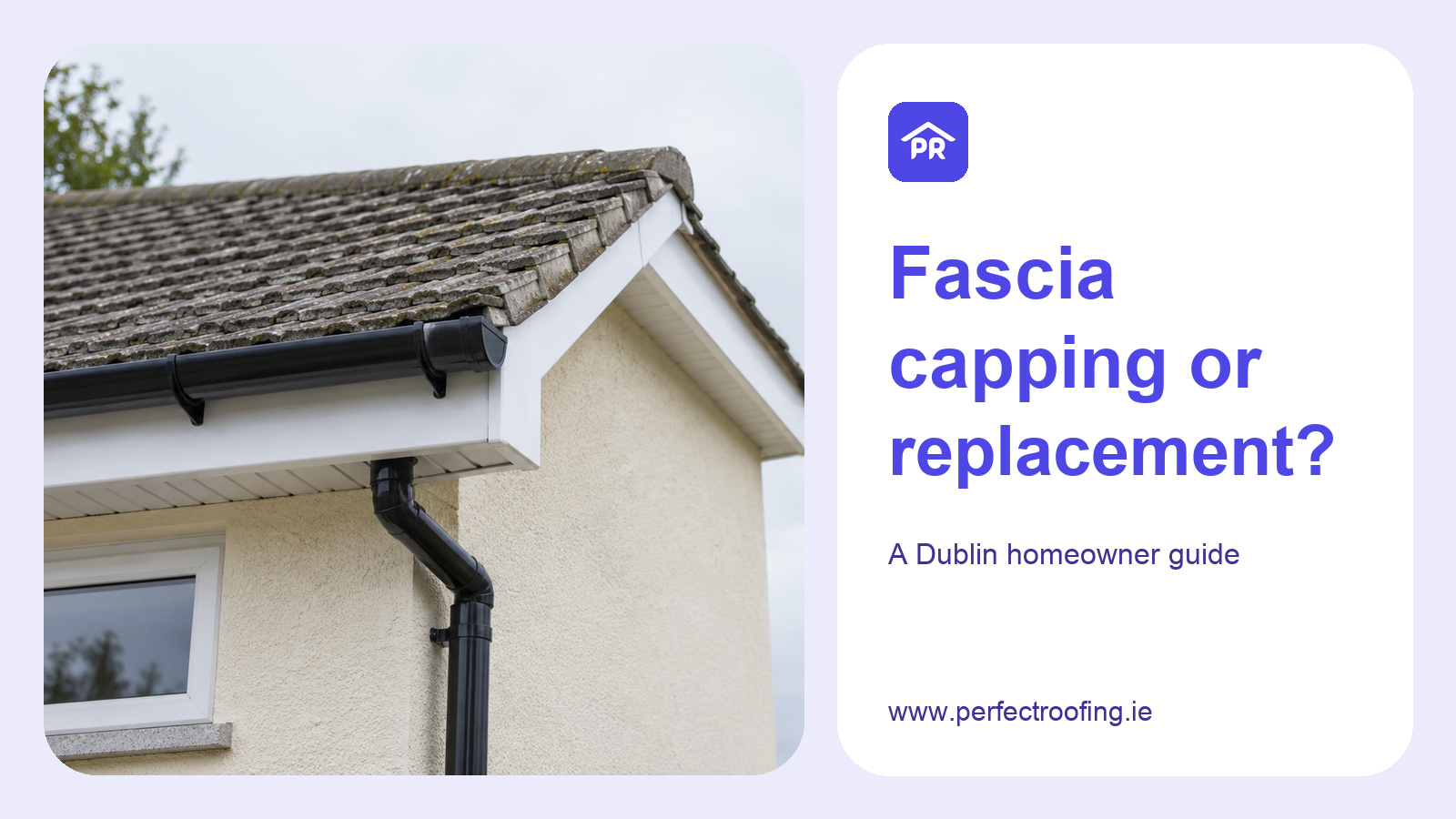
New white fascia boards can make a tired roof edge look much neater. Before accepting a quote, though, ask one question: will the existing timber be covered or removed? Those are different jobs, even if the finished rooflines look similar from the driveway.
For Dublin homeowners planning fascia and soffit work, the choice should begin with an inspection of what is already there. A clean outer finish does not tell you whether the backing timber, gutter fixings, or roof edge beneath it are sound.
What is fascia capping?
Fascia capping, also called overcapping, fits a covering board over an existing timber fascia. It retains the timber behind the new finish. It is therefore important to establish the timber's condition before covering it.
Freefoam's capping guidance describes this approach for existing timber fascias that remain sound. Capping should not be treated as a way to conceal decay or avoid repairing insecure backing.
The distinction also affects support. Swish's range overview explains that its capping profiles do not carry the gutter and eaves-tile loads themselves; the sound backing remains important. Its replacement fascia boards use a different supporting arrangement. Ask about the actual system proposed for your house, rather than assuming all white boards do the same job.
How does full fascia replacement differ?
Full replacement removes the existing fascia and installs a replacement system. The quote should explain how the new board will be supported, what surrounding timber will be inspected, and how any defects will be addressed.
Replacing the visible board does not automatically include replacing every soffit, gutter, or damaged rafter end. These items need a clear scope. If deterioration extends beyond the fascia, ask the contractor to assess it and explain any further work before proceeding.
| Question | Fascia capping | Full fascia replacement |
|---|---|---|
| What happens to the old fascia? | Sound backing is retained beneath a covering board | Existing fascia is removed |
| What must the inspection establish? | Whether retained timber and fixings are suitable | Whether the exposed supports are suitable for the replacement system |
| Main practical benefit | Refreshes the finish while retaining suitable backing | Allows the existing fascia to be removed and the supporting area checked |
| Main limitation | Hidden condition matters; a new surface is not a timber repair | Opening up may reveal additional work outside the original quote |
| Who might it suit? | A homeowner whose existing backing is confirmed sound | A homeowner with deteriorated fascia or a roofline needing more extensive renewal |
When might capping be a sensible option?
Discuss capping when the existing fascia is securely fixed, the timber is confirmed sound, and your main aim is to renew the outer finish. Ask how the contractor will establish that condition, including at corners, board ends, and previous repair areas.
The advantages are retaining suitable existing material and avoiding unnecessary removal. The limitation is that the new finish can hide the timber you are relying on. A quotation based only on photographs may need revising after a proper inspection.
Before choosing it, ask:
- What backing will remain, and how will it be checked?
- Will gutters be taken down to inspect the area behind them?
- What happens if weak or wet timber is discovered?
- How will the gutter brackets be secured?
- What soffit and ventilation details will remain or change?
When should full replacement be discussed?
Ask for a replacement assessment if the fascia appears swollen, split, loose, or repeatedly wet, or if gutter brackets keep pulling away. These signs are reasons for inspection, rather than proof that every board needs replacing.
Full replacement offers an opportunity to assess the exposed roof edge. Its trade-offs include removal work, waste, and the possibility of discoveries that change the scope. Request photographs and an explanation of additional work instead of agreeing to an open-ended allowance.
Our fascia and soffit warning-sign guide covers what you can observe safely. Do not climb onto a roof without proper safety equipment and competent assessment, or pry boards open yourself to test the timber.
Include gutters, soffits, and ventilation in the discussion
A fascia decision belongs in a wider roofline discussion. Ask the roofer to check where rainwater goes, how the gutters are supported, and whether water has been running behind them. Otherwise, the cause of the staining may remain after the fascia finish changes.
Swish's capping design guide calls for checking existing boards and supports, replacing degraded timber, and planning ventilation. Those are useful inspection questions; the exact installation must follow the chosen system and the requirements of your roof.
Request a written explanation of:
- Whether soffits are retained, covered, or replaced.
- How the required eaves airflow will be maintained.
- Whether damaged roof-edge underlay or drainage details need attention.
- Whether gutters are reused or replaced, with their alignment and outlets checked.
- How corners, joints, and the ends of the new boards will be finished.
Do not choose an unventilated finish solely because it looks tidier. Ask how ventilation will work in the completed roof.
Compare the same scope in each Dublin roofline quote
A short front elevation and a house with several extensions are different projects. Access to the rear, the length of the roofline, existing repairs, and the condition of hidden timber all deserve attention. For a Dublin City terrace, rear access may shape the plan; on a South Dublin home, a porch or extension may need its own roofline detail.
Neither method has a reliable universal price. Ask for a site-specific quote identifying the installation method, exact board system, retained materials, gutter and soffit work, access equipment, waste removal, and how discoveries will be priced and approved.
If two proposals differ, ask each contractor to explain what their quote includes. Compare the completed roofline and the repairs beneath it, as well as the colour and outer appearance.
Ask Perfect Roofing about your fascia and soffits
Perfect Roofing can inspect roofline concerns across Dublin, Lucan, Naas, Bray, Wicklow, and nearby areas. Send your location, photographs taken from a safe ground-level position, and details of any leaking gutters, loose boards, or earlier repairs.
Contact us by WhatsApp, call 083 066 3462, or email hi@perfectroofing.ie. We can discuss whether capping, local repairs, or full fascia replacement deserves consideration based on the existing roof edge, your budget, weather exposure, access, and long-term plans.
Need a roofer to take a look?
Send a few photos on WhatsApp, email us, or tap the number to call. We cover Dublin City, North Dublin, South Dublin, Lucan, Bray, Wicklow, Naas, and nearby locations.